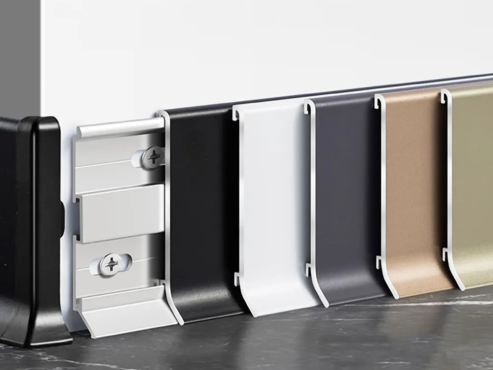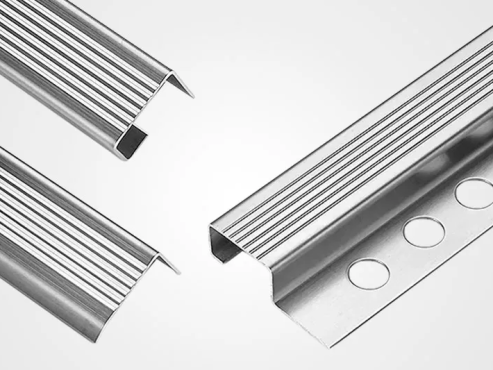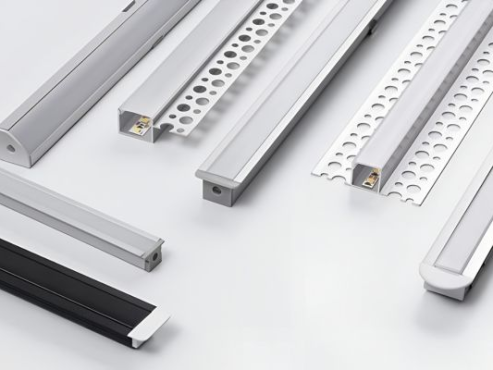
Stair edges receive more concentrated wear than almost any other part of a staircase. Each step places pressure directly on the front edge of the tread. Over time, this can damage the flooring, reduce grip, and make the stair edge difficult to see.
This is where vinyl stair nosing can help.
Vinyl stair nosing is a flexible stair-edge profile designed to cover and protect the front edge of a stair tread. It can improve grip, reduce wear, and create a cleaner transition between the horizontal tread and vertical riser.
It is also relatively economical compared with many metal stair nosing systems. However, lower cost does not mean it is suitable for every staircase. Traffic level, temperature, substrate condition, installation quality, and maintenance requirements all affect its long-term performance.
In this guide, we will explain the main advantages and drawbacks of vinyl stair nosing and show you when this material makes sense for a project.
What Is Vinyl Stair Nosing?
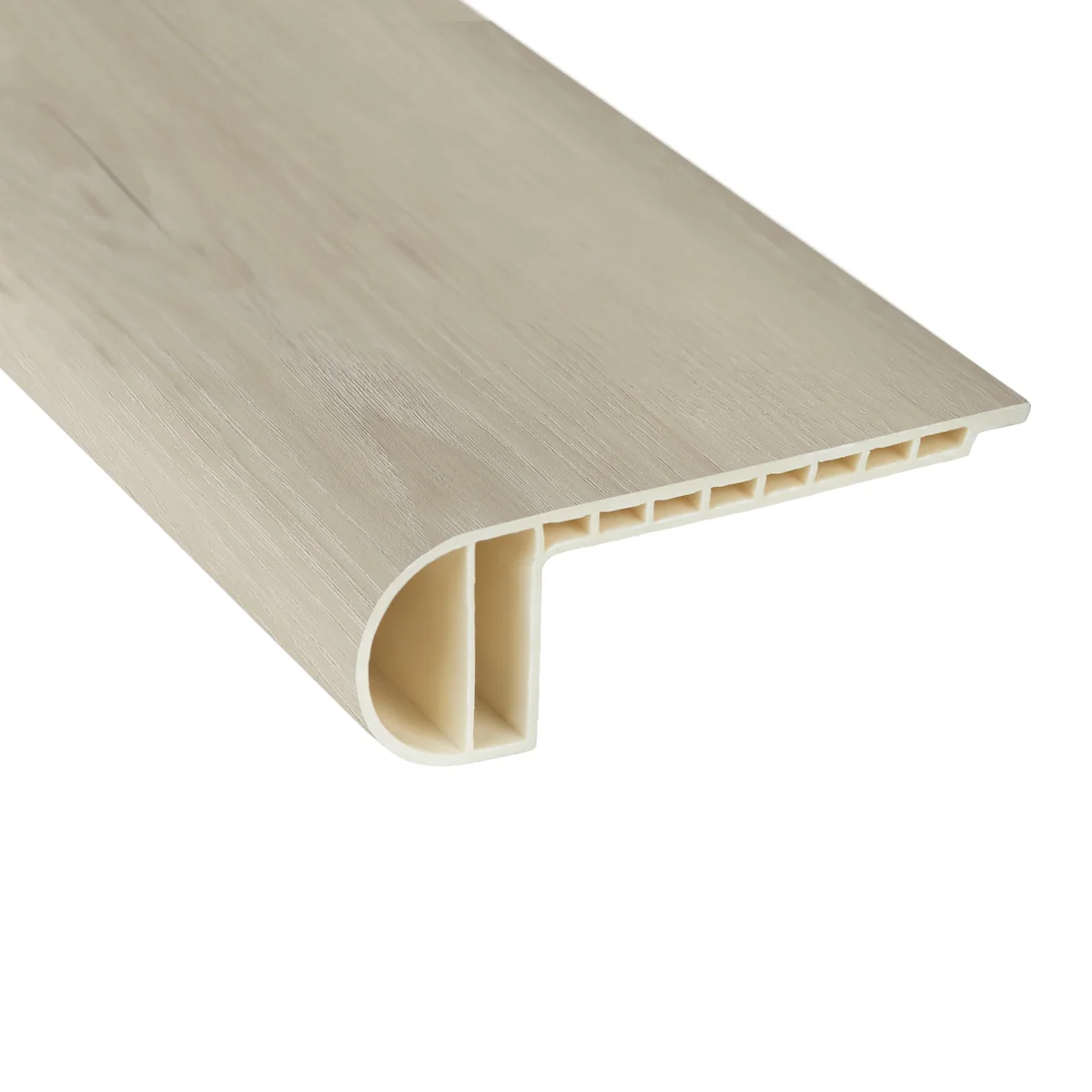
Vinyl stair nosing is a protective profile installed along the exposed front edge of a stair tread. Depending on the design, the profile may cover only the tread edge or extend partly across the tread and down the riser.
Many products described as vinyl stair nosing are made from flexible PVC or other resilient thermoplastic compounds. The exact formulation varies between suppliers, so material hardness, flexibility, wear resistance, and surface texture can differ significantly.
A typical profile has three basic functions:
- Protect the stair edge from impact and abrasion.
- Improve traction around the front of the step.
- Provide a finished transition between the tread and riser.
Some designs include raised ribs or textured surfaces for additional grip. Others are produced with contrasting colors so that the stair edge is easier to identify.
Unlike structural stair components, the nosing is primarily a finishing and protection product. It cannot correct an unstable tread or seriously damaged substrate.
That distinction is important when selecting vinyl stair nosing for renovation work.
Key Advantages of Vinyl Stair Nosing
There is no single stair nosing material that works best for every project. Vinyl performs particularly well when cost, flexibility, installation speed, and surface comfort are important.
1. It Provides an Economical Stair Edge Solution
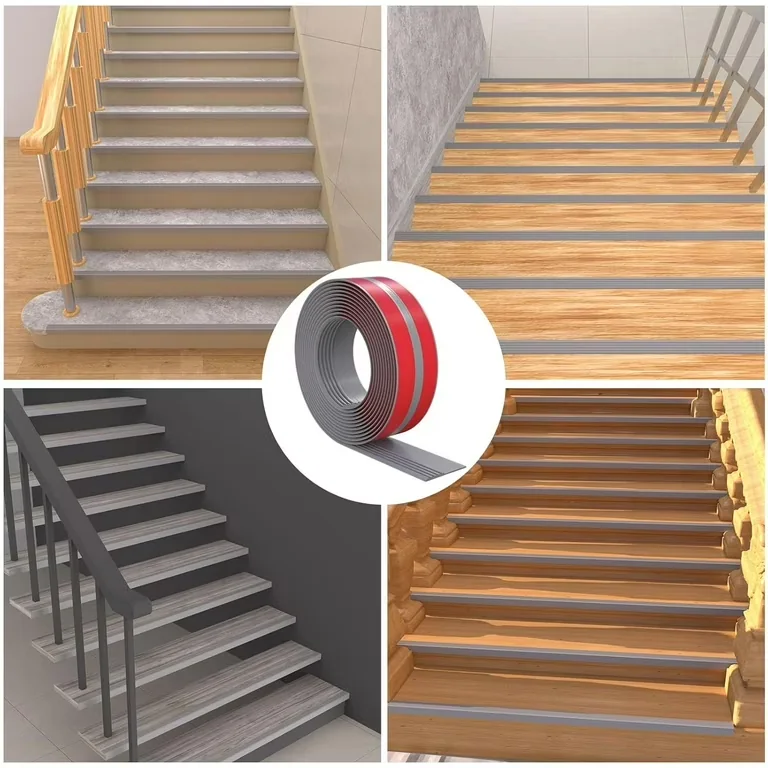
One of the main reasons buyers choose vinyl stair nosing is cost.
The material itself is generally less expensive than stainless steel or heavy-duty aluminum systems. It is also lightweight, which can reduce transportation costs for larger orders.
Installation is usually straightforward. Many vinyl profiles can be cut with basic tools and fixed with compatible adhesive. Contractors therefore do not always need specialized metal-cutting equipment.
For projects containing a large number of similar stairs, these differences can have a noticeable effect on the total installed cost.
However, price should always be considered together with expected service life. A low initial price provides little benefit if the profile has to be replaced frequently in a very high-traffic environment.
2. Vinyl Stair Nosing Can Improve Slip Resistance
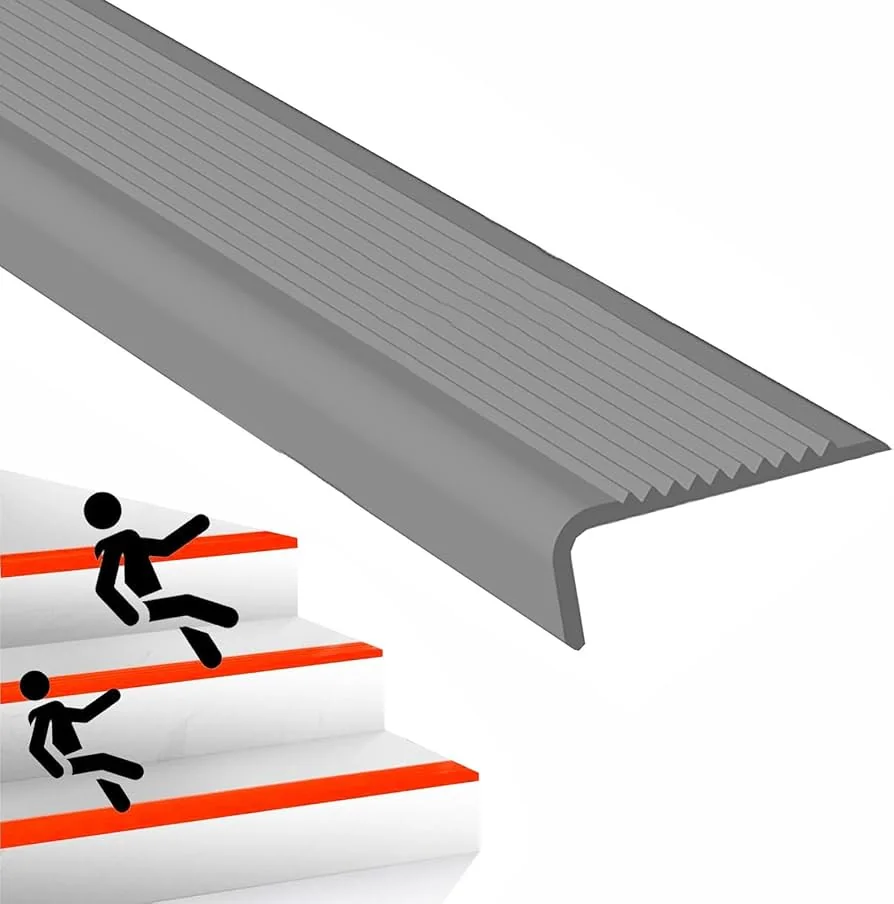
The front edge of a step is one of the most important areas for traction.
Smooth flooring can become slippery, especially when dust or moisture is present. Many vinyl stair nosing profiles use ribs, grooves, or textured surfaces to create additional friction underfoot.
This can be useful on stairs finished with resilient flooring and other relatively smooth surfaces.
The softer surface also feels different from a polished metal edge, which may be desirable in some interior applications.
Still, the word “anti-slip” should not be treated as a guarantee. Slip performance depends on the surface design, material formulation, contamination, wear, and test standard.
For commercial specifications, we recommend checking actual slip-resistance data rather than selecting a profile based only on appearance.
3. It Protects Vulnerable Stair Edges
The edge of a stair tread receives repeated impact.
Without protection, resilient flooring may begin to lift, crack, or wear around the front corner. Once the edge starts to fail, continued foot traffic usually makes the damage worse.
Vinyl stair nosing forms a protective layer around this area.
Instead of shoes, cleaning equipment, and normal traffic repeatedly contacting the finished flooring edge, much of the wear is transferred to the nosing profile.
This can help extend the useful life of the stair finish.
The protection is particularly valuable when the flooring material is relatively soft or when its exposed edge would otherwise be difficult to finish neatly.
4. The Material Is Flexible
Flexibility is another practical advantage.
Metal stair profiles need the stair edge to match the profile quite closely. A flexible vinyl profile can tolerate small surface variations more easily.
This does not mean it should be installed over badly damaged concrete or an uneven stair.
However, minor irregularities are generally easier to accommodate.
This flexibility also makes vinyl stair nosing easier to handle during installation. Long profiles can be positioned without the same risk of denting or permanently bending that may occur with thin metal sections.
5. Cutting and Installation Are Relatively Simple
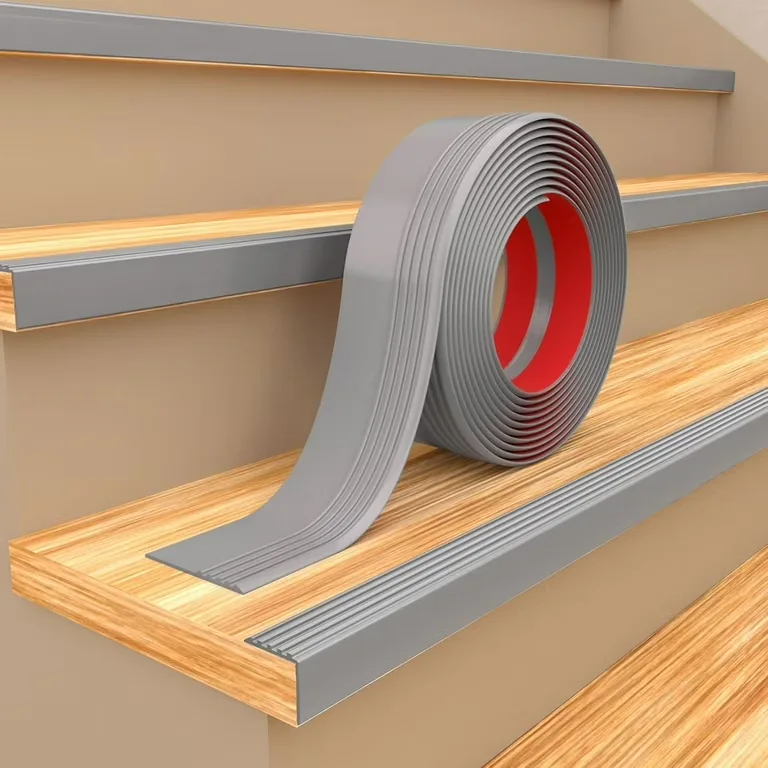
Vinyl is easy to process on site.
Most profiles can be measured and cut without heavy machinery. Depending on the thickness, contractors may use a suitable knife, fine-tooth saw, or other recommended cutting tool.
Adhesive installation is also common.
The general process is simple:
- Inspect and clean the stair edge.
- Measure and cut the profile accurately.
- Test-fit the stair nosing.
- Apply the specified adhesive.
- Press the profile firmly into position.
- Keep the profile secure until the adhesive develops sufficient strength.
The exact method should always follow the supplier’s instructions.
A simple installation process is especially useful for renovation projects where completing stairs quickly can reduce disruption.
6. A Wide Range of Colors Is Possible
Vinyl can be produced in many colors.
This allows vinyl stair nosing to either blend with the floor or deliberately contrast with it.
A similar color can create a more continuous visual finish. A contrasting color can make the front edge of the stair easier to identify.
For larger commercial programs, color consistency is worth discussing before ordering. Different production batches can sometimes show slight variation.
If several floors of the same building will use one color, purchasing the main quantity from a controlled production batch can help maintain a consistent appearance.
7. Maintenance Is Usually Straightforward
Vinyl does not require polishing in the same way as some decorative metals.
For normal interior use, regular cleaning is usually sufficient.
The smooth or lightly textured surface can generally be maintained with standard cleaning procedures, provided the cleaning chemical is compatible with the material.
This makes vinyl stair nosing useful where the project requires a practical stair finish without complicated maintenance.
Again, compatibility matters. Strong chemicals can affect some vinyl formulations, so cleaning agents should be checked before widespread use.
Common Drawbacks of Vinyl Stair Nosing
The advantages are useful, but understanding the limitations is equally important.
In our experience, problems often occur when a light-duty profile is expected to perform like a heavy-duty metal system.
1. It Has Lower Mechanical Strength Than Metal
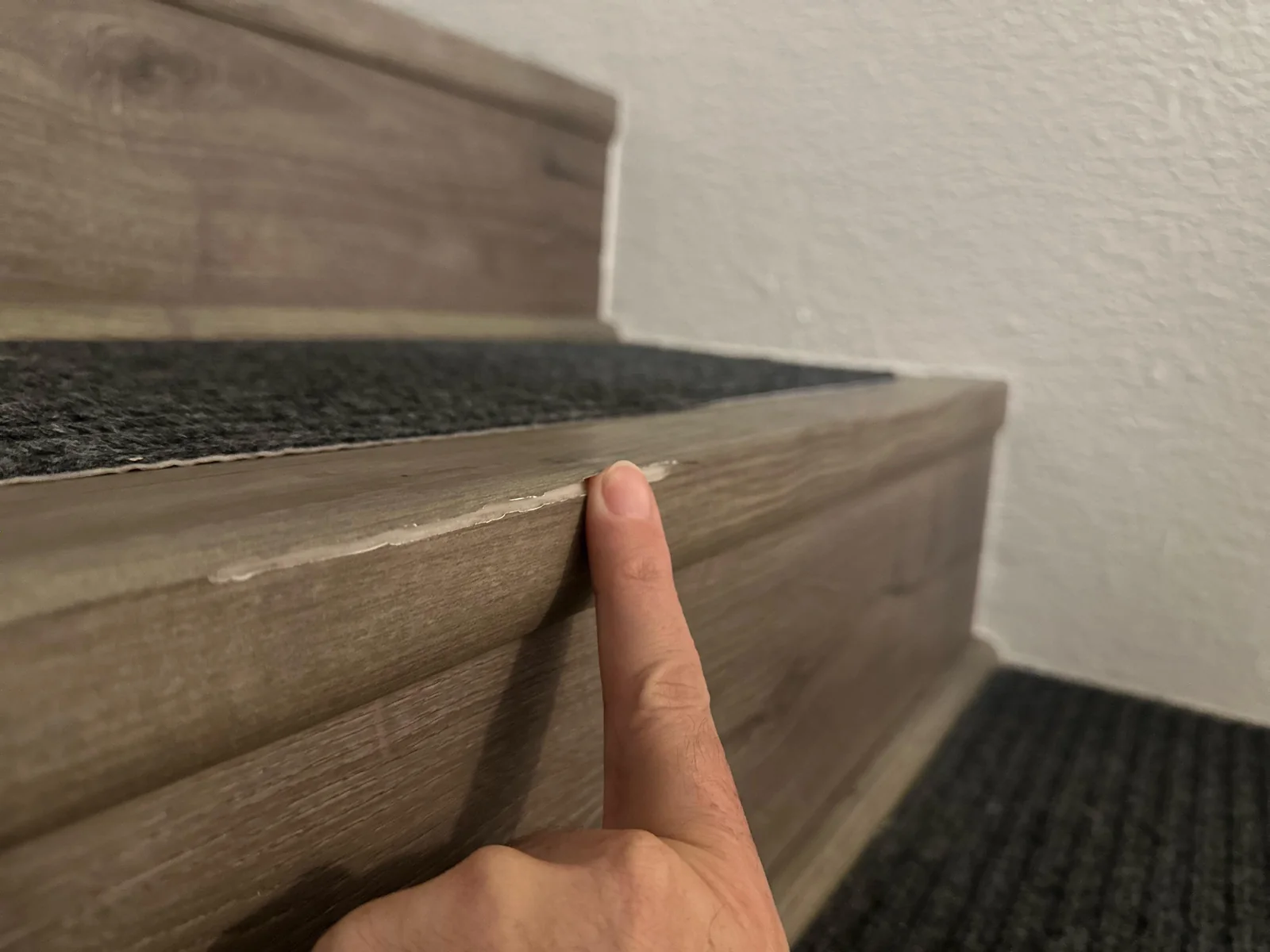
The biggest limitation of vinyl stair nosing is its mechanical strength.
Vinyl is softer than aluminum or stainless steel. This is helpful for flexibility, but it also means the material is generally more vulnerable to heavy impact, cutting, and concentrated loads.
On a staircase exposed to extremely high pedestrian traffic or frequent equipment movement, the front edge may gradually wear or deform.
For this reason, we would not automatically specify vinyl simply because the purchasing price is lower.
Traffic conditions should come first.
For moderate indoor traffic, vinyl can provide a practical solution. For demanding public environments, a metal stair nosing or a metal base with a replaceable anti-slip insert may provide better long-term value.
2. Temperature Can Affect the Material
Vinyl is a thermoplastic material.
Its physical behavior changes with temperature. In very cold conditions, some formulations become harder and less flexible. Under excessive heat, the profile may soften or become easier to deform.
This is one reason vinyl stair nosing is commonly used indoors.
Outdoor installations need much more careful evaluation. Temperature cycles, direct sunlight, rain, and UV exposure can all affect performance.
Some vinyl formulations are designed for more demanding environments, but this should be confirmed with the supplier instead of assumed.
Manufacturer’s Tip: If a project is outdoors or close to large areas of direct sunlight, request information about UV resistance and operating temperature before approving the material.
3. Surface Wear Can Become Visible
Textured vinyl stair nosing receives direct contact every time someone uses the stairs.
Over time, raised ribs and anti-slip patterns may become smoother.
The rate of wear depends on traffic, cleaning practices, dirt, shoe type, and material hardness.
Dark surfaces may also show scratches differently from lighter colors.
This does not necessarily mean the profile has failed. However, buyers should understand that vinyl stair nosing is a wear component.
For projects where appearance must remain nearly unchanged for many years, metal may provide a more stable finish.
4. Appearance Is More Functional Than Premium
Vinyl can create a clean and professional finish, but it does not provide the same visual character as anodized aluminum, brushed stainless steel, or brass.
This becomes important in architectural interiors.
For a service staircase, practical performance may matter more than decorative value. In a premium entrance or feature staircase, the edge detail may be part of the overall interior design.
In these situations, metal profiles usually provide sharper lines and more refined surface finishes.
The choice is therefore not simply vinyl versus metal. It is a question of what the staircase needs to achieve.
5. Adhesive Quality Becomes Critical
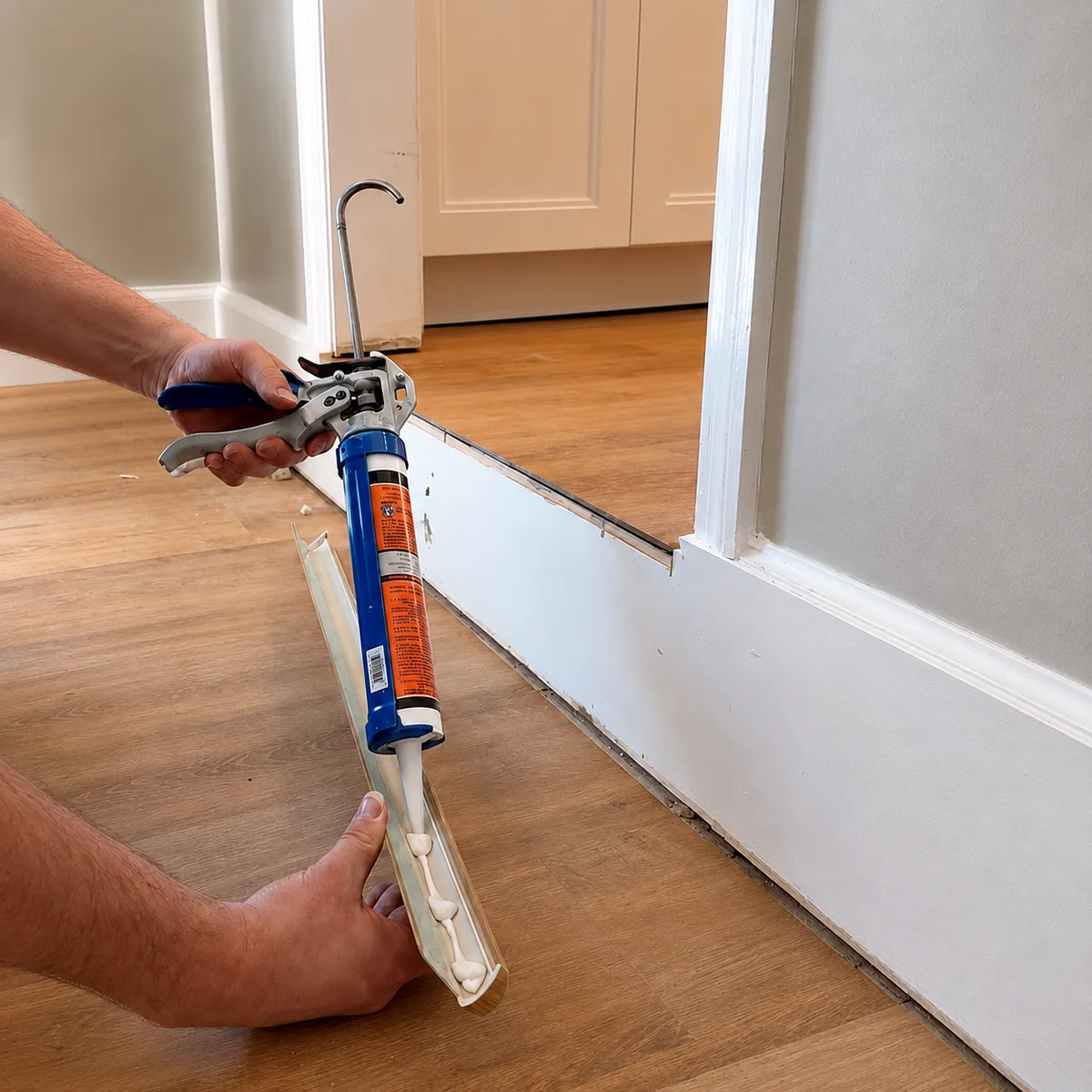
Many vinyl profiles rely heavily on adhesive.
If the substrate is dusty, oily, damp, or unstable, even good vinyl stair nosing can become loose.
Incorrect adhesive selection can create the same problem.
Concrete, wood, tile, and resilient flooring do not always require the same bonding system. The stair nosing material must also be chemically compatible with the adhesive.
A common installation mistake is applying more adhesive to compensate for poor surface preparation. This rarely solves the real problem.
The substrate should be clean, dry, sound, and reasonably level before installation begins.
We recommend testing the adhesive system before a large project starts, especially when the substrate or flooring material is unusual.
6. Damaged Profiles May Need Complete Replacement
Some heavy-duty metal stair nosing systems use removable anti-slip inserts. When the insert becomes worn, only that section needs replacement.
A one-piece vinyl profile is different.
If the front edge tears or suffers serious wear, the whole section of vinyl stair nosing may need to be removed and replaced.
The replacement material itself may be inexpensive, but labor and access costs can become significant in a completed commercial building.
For high-traffic projects, maintenance strategy should therefore be considered during specification rather than after installation.
Vinyl Stair Nosing vs. Aluminum Stair Nosing
Buyers often compare vinyl with aluminum because both are widely used stair-edge materials.
Here is a simple comparison:
| Factor | Vinyl Stair Nosing | Aluminum Stair Nosing |
|---|---|---|
| Initial cost | Generally lower | Moderate |
| Flexibility | High | Low to moderate |
| Cutting | Easy | Easy with proper tools |
| Impact resistance | Moderate | High |
| Heavy traffic | Limited depending on grade | Generally better |
| Surface feel | Softer | Hard |
| Color options | Wide | Wide with surface finishing |
| Outdoor suitability | Product dependent | Good with suitable finish |
| Architectural appearance | Functional | More refined |
| Maintenance | Simple | Simple |
Neither material is automatically better.
For an economical indoor renovation with moderate traffic, vinyl stair nosing can be the more practical choice.
For a busy public staircase where impact resistance and long service life are priorities, aluminum is usually worth considering.
How to Choose the Right Vinyl Stair Nosing
Selecting the correct profile requires more than choosing a color from a catalog.
Check the Stair Construction First
Start with the substrate and flooring.
Is the stair made from concrete or wood? Is the tread covered with vinyl flooring, carpet, or another finish?
The nosing must fit the actual stair geometry.
Measure the tread thickness, front edge, riser position, and any existing floor covering before confirming the profile.
A few millimeters can make a significant difference to the final fit.
Match the Product to Traffic Level
Ask how the stairs will actually be used.
A lightly used internal staircase has very different requirements from a main circulation stair.
For higher traffic levels, pay more attention to material hardness, profile thickness, anti-slip surface design, and replacement requirements.
Do not rely only on the general description “commercial grade.”
Request the relevant technical information when necessary.
Consider Slip Resistance and Visibility
The shape and texture of vinyl stair nosing should provide secure footing without creating an uncomfortable raised edge.
Color contrast may also be required by the project specification or local accessibility rules.
Building requirements vary between markets, so local regulations should always be checked before final approval.
Confirm the Installation Method
Some stair nosings are designed to work with specific flooring systems. Others are retrofit profiles installed over an existing surface.
Before ordering, confirm:
- How the profile is fixed.
- Which adhesive is recommended.
- Whether mechanical fixing is required.
- How the ends and corners will be finished.
These are small details during purchasing, but they can become major issues during installation.
Check Production Consistency for Bulk Orders
For distributors and project purchasing, one sample is not enough to evaluate a large supply program.
Important points include dimensional tolerance, color consistency, surface quality, profile straightness, packaging, and batch identification.
The approved sample should ideally become the reference for mass production.
As a manufacturer, we also recommend confirming cutting length and packing method before production begins. Proper packaging is particularly important for long flexible profiles because poor handling can create bending or distortion during transportation.
When Is Vinyl Stair Nosing a Good Choice?
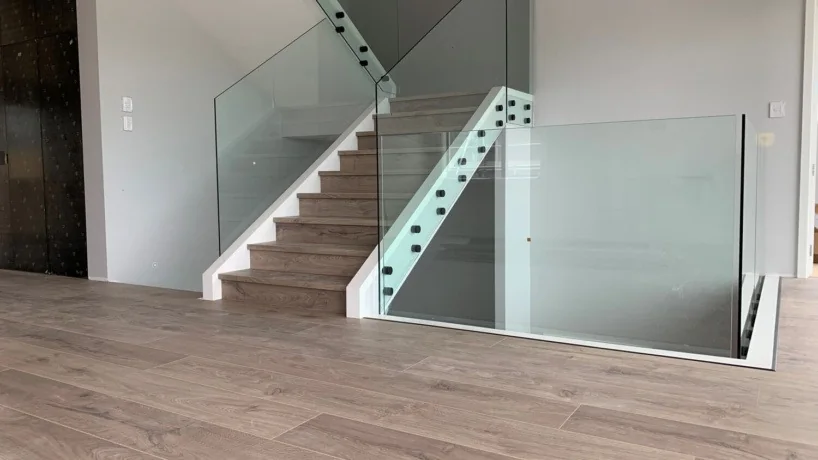
Vinyl stair nosing works best when the project needs a practical, economical, and easy-to-install stair edge.
It is particularly useful where:
- Traffic is moderate rather than extremely heavy.
- The installation is mainly indoors.
- A flexible edge profile is helpful.
- Fast installation is important.
- The design requires coordinated or contrasting colors.
It becomes less suitable when the stairs receive severe impact, strong outdoor exposure, or when a premium metal appearance is required.
The correct decision should always come from the application rather than material price alone.
Buying Vinyl Stair Nosing for a Project or Bulk Order
For bulk purchasing, product consistency can be just as important as the unit price.
Before confirming an order, provide the supplier with drawings or clear dimensions of the required profile. Specify the stair construction, expected quantity, color, length, surface requirements, and installation method.
A physical sample is useful when color or fit is critical.
OEM projects may also require custom packaging, labels, profile dimensions, or project-specific colors.
Chenhao Aluminum Business works as a direct manufacturer serving bulk and project requirements. We support custom profiles, OEM service, stable production, factory pricing, bulk supply, and global shipping.
For custom vinyl stair nosing requirements, defining the application first helps us determine whether a vinyl profile, metal profile, or combined stair-edge system is the better solution.
The objective should not be to choose the cheapest profile. It should be to choose a profile that performs reliably for the expected service conditions.
FAQs About Vinyl Stair Nosing
Is vinyl stair nosing durable?
Yes, when it is used in the correct environment.
Quality vinyl stair nosing can provide good wear resistance for normal indoor stairs. However, it does not usually offer the same impact strength as aluminum or stainless steel.
Traffic level and material quality have a major influence on service life.
Can vinyl stair nosing be used outdoors?
Some products may be suitable, but standard indoor vinyl should not automatically be specified outdoors.
UV exposure, temperature changes, and moisture can affect the material. Always confirm outdoor suitability with the supplier.
Can vinyl stair nosing be installed over existing stairs?
Yes. Many retrofit profiles are designed to fit over existing stair edges.
The original surface must still be stable, clean, and suitable for the selected adhesive or fixing system.
How do you clean vinyl stair nosing?
Routine cleaning normally requires removing dirt and wiping the surface with a compatible cleaning solution.
Avoid aggressive chemicals unless the manufacturer has confirmed chemical resistance.
Keeping textured surfaces free from dirt is especially important because contamination can reduce traction.
Is vinyl stair nosing better than aluminum?
Not in every situation.
Vinyl is flexible, economical, and easy to install. Aluminum provides greater mechanical strength and usually performs better under demanding traffic.
The better option depends on the staircase, budget, expected service life, and design requirements.
Conclusion
Vinyl stair nosing is a practical stair-edge solution when flexibility, cost control, slip resistance, and easy installation are important.
The right stair nosing is not simply the one with the lowest price. It is the profile that fits the stair correctly and continues to perform after the project is complete.