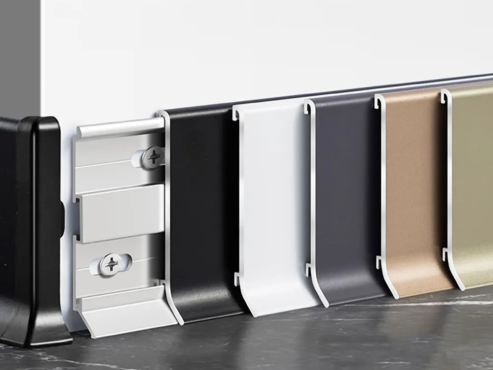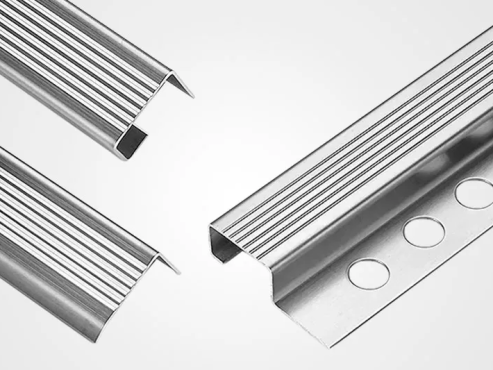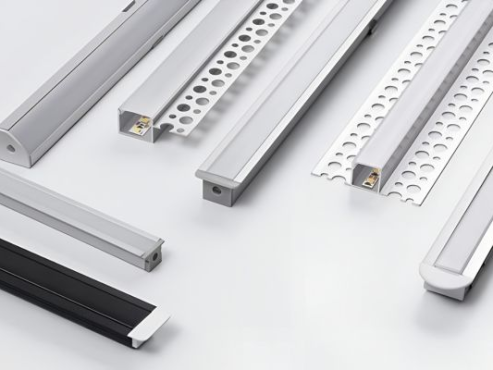
Tile corners are some of the most exposed areas in any tiled surface. Even when the tile itself is strong, the exposed corner can still chip, crack, or become damaged after repeated impact.
This is where Tile Corner Trim becomes important. It covers the vulnerable tile edge, creates a more stable corner, and gives the finished surface a clean and controlled appearance. In many projects, it also reduces the need for difficult tile edge finishing.
For contractors, designers, and project buyers, choosing the right trim is not only about appearance. The profile must suit the tile thickness, installation method, traffic level, and surrounding environment.
In this guide, we will explain how Tile Corner Trim protects tile corners, which profiles are commonly used, and what to consider before selecting one for a project.
Why Are Tile Corners More Vulnerable Than Flat Tile Surfaces?
A finished tile surface is usually supported by adhesive and the substrate behind it. A corner is different. Part of the tile edge may be exposed, and the force from an impact is concentrated on a much smaller area.
This creates several common problems.
Chipping at Exposed Edges
Ceramic and porcelain tiles are hard, but a cut or exposed edge can still be brittle. If a cart, tool, vacuum cleaner, piece of furniture, or other object hits the corner, a small chip can appear quickly.
Once the edge is damaged, the defect is difficult to hide without replacing the tile or covering the damaged area.
Cracking From Repeated Impact
One strong impact can crack a tile corner, but repeated smaller impacts can also cause damage over time. This is common in corridors, commercial interiors, kitchens, public washrooms, retail spaces, and other high-use areas.
Sharp and Unfinished Edges
A cut tile edge may be rough or sharp. It can also expose the body of the tile, which may have a different color from the glazed face.
Tile Corner Trim covers this unfinished section and creates a more consistent line around the corner.
Difficult Corner Alignment
Without a trim profile, installers may need to miter tile edges to form a neat external corner. Mitering can create an attractive result, but it requires accurate cutting and careful installation. The finished edge can also remain relatively thin and vulnerable.
For many projects, using a trim profile is a more practical way to achieve consistent corners.
How Does Tile Corner Trim Protect Tile Edges?
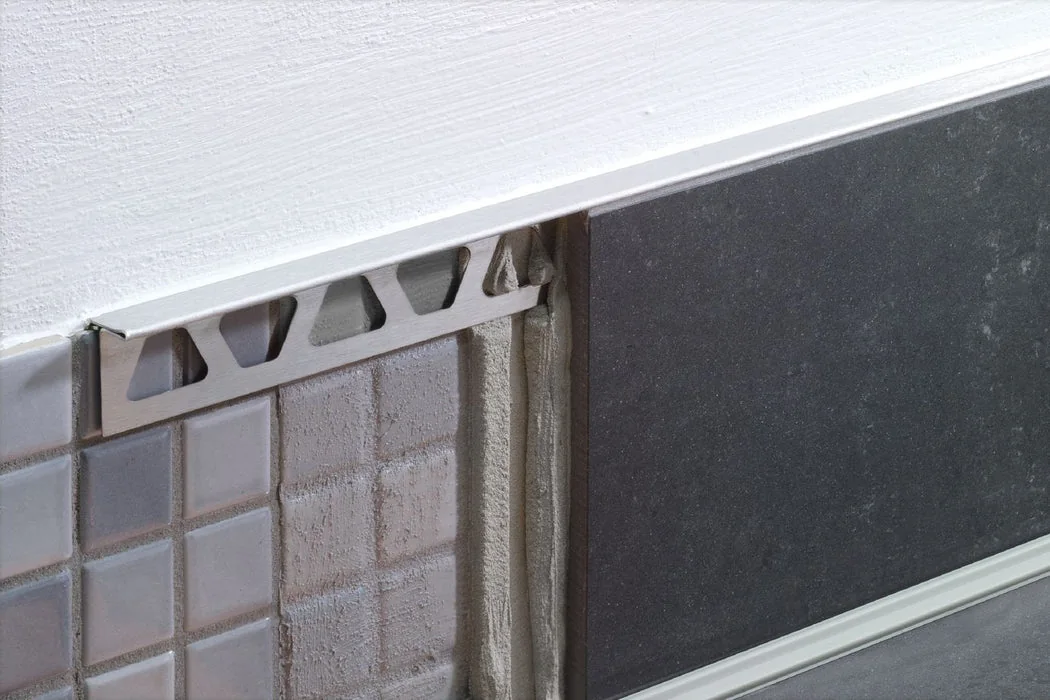
The main function of Tile Corner Trim is simple: it creates a protective barrier around the exposed edge of the tile.
However, the protection comes from several design features working together.
1. It Covers the Weak Tile Edge
The visible face of the tile is usually stronger and more finished than the cut edge. By wrapping or covering that edge, the trim reduces direct contact between the tile and objects that may strike the corner.
Instead of the impact reaching the tile edge first, the trim receives much of the contact.
This is especially useful on outside wall corners, tiled columns, shower niches, countertop edges, and step edges.
2. It Spreads Impact Over a Larger Area
A direct hit on a narrow tile corner concentrates force in one point. A properly installed metal or PVC profile spreads that force along a longer section of the edge.
This does not make the corner impossible to damage, but it can significantly reduce localized chipping during normal use.
As a manufacturer, we often recommend stronger profiles for locations where carts, luggage, equipment, or frequent cleaning tools may contact the tiled edge.
3. It Supports the Tile During Installation
Many Tile Corner Trim profiles include a perforated anchoring leg. This leg is embedded into the tile adhesive before the tile is pressed into position.
The adhesive passes through the perforations and locks the trim into the tiled assembly. This helps keep the profile aligned and provides stable support along the edge.
A trim that is only attached to the visible surface after tiling may work for some retrofit applications, but embedded profiles generally provide a more integrated finish in new installations.
4. It Creates a Controlled Corner Shape
A raw tile corner can be sharp, uneven, or difficult to align. Trim gives the corner a defined geometry.
Depending on the profile, the finished edge can be square, rounded, straight, or slightly curved. This makes it easier to create consistent corners across a large project.
5. It Helps Reduce Future Repair Work
Replacing a chipped corner tile can be inconvenient, especially after grout, fixtures, or adjacent finishes are already complete.
Using Tile Corner Trim during the original installation adds protection at the stage when it is easiest to do so. For larger commercial or multi-unit projects, this can help reduce small maintenance problems later.
Where Is Tile Corner Trim Most Useful?
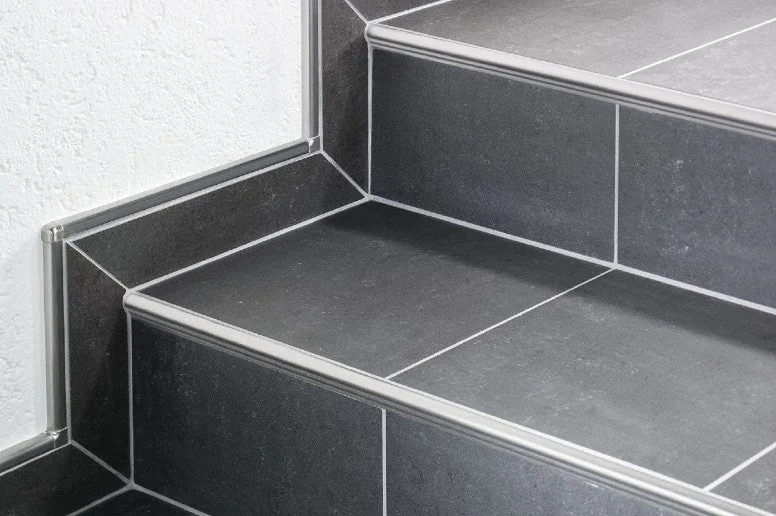
Not every tiled edge has the same exposure. The value of trim becomes more obvious in areas where corners are frequently touched, hit, or visually noticeable.
Common applications include:
- External tiled wall corners
- Shower walls and bathroom niches
- Kitchen backsplashes
- Countertop and worktop edges
- Tiled columns
- Window and door returns
- Tiled steps and raised platforms
- Retail interiors
- Hotel and apartment corridors
- Public washrooms
- Commercial kitchens
- Decorative tiled features
For low-contact decorative areas, the main benefit may be a cleaner finish. In busy areas, protection becomes the higher priority.
Common Tile Corner Trim Profiles for Edge Protection
The profile shape affects both the appearance and the way the trim covers the tile edge.
Square Edge Tile Corner Trim
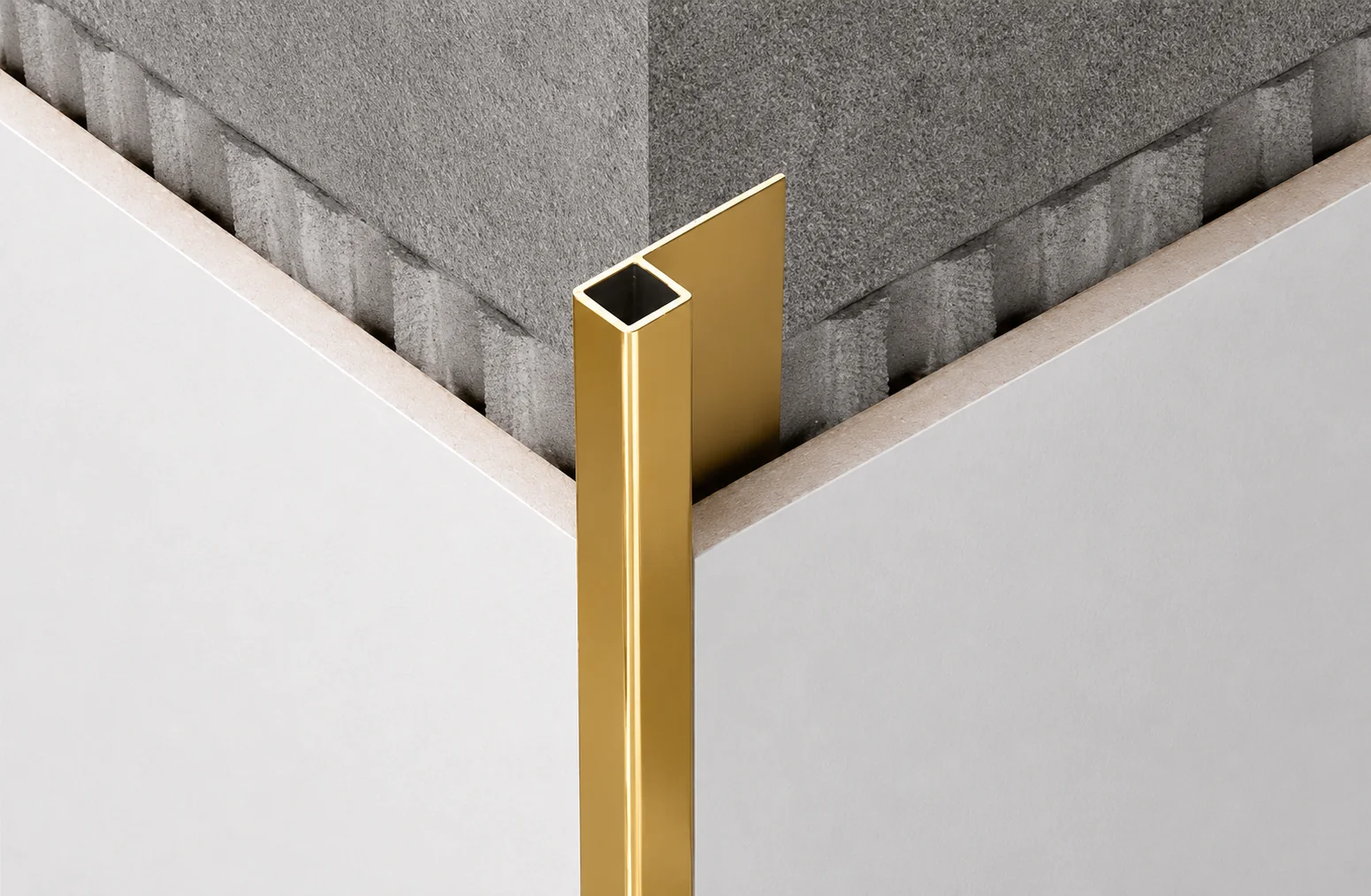
Square profiles create a straight, modern corner line. They are commonly used with large-format porcelain, stone-look tiles, and contemporary interiors.
The square face gives clear edge definition and can match other linear metal details in the project.
For architectural projects where consistent lines are important, this is one of the easiest profiles to coordinate.
Round Edge Tile Corner Trim
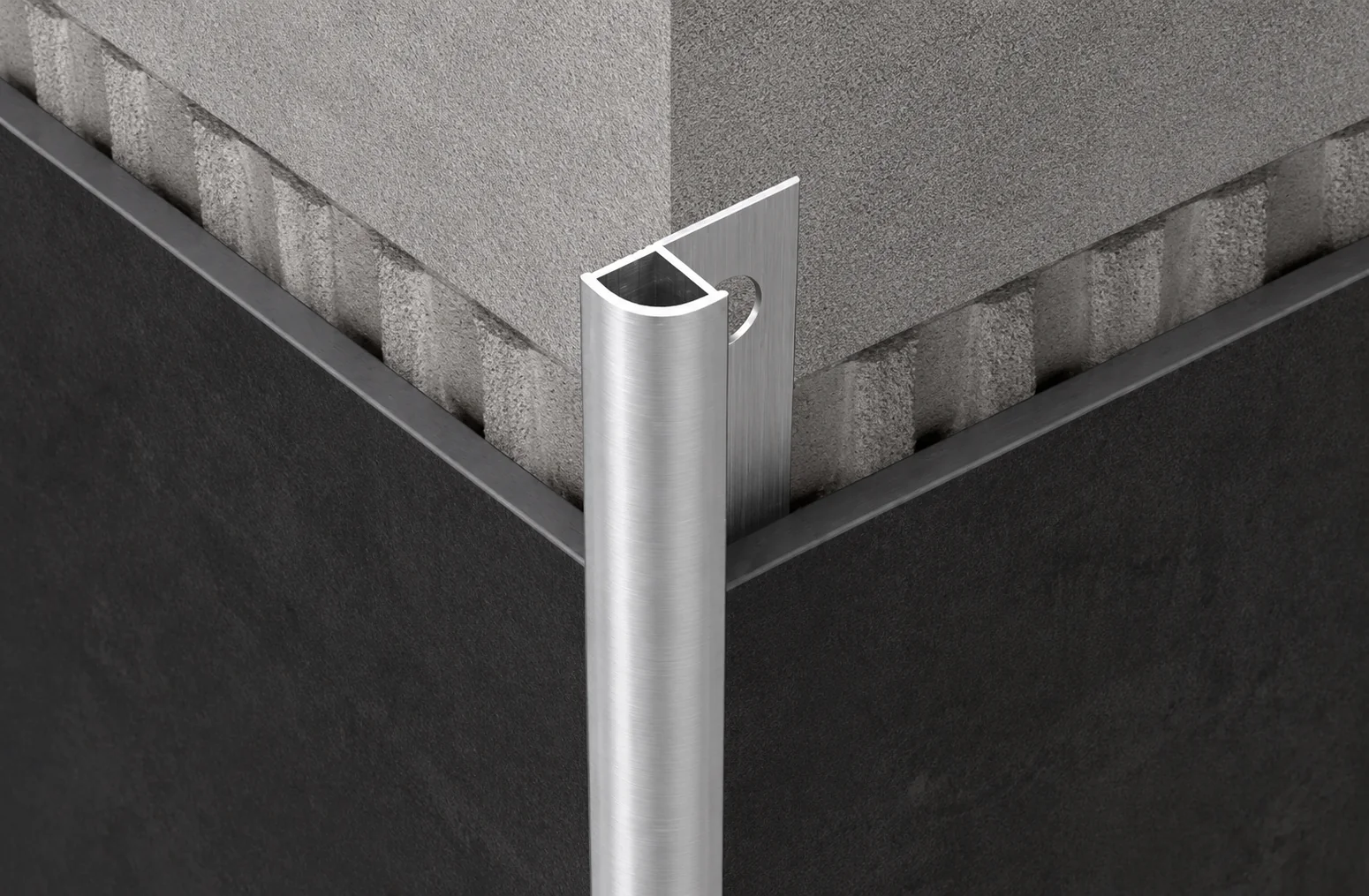
Round or quadrant profiles create a softer corner. The curved surface avoids a sharp external line and is often selected for bathrooms, kitchens, residential interiors, and spaces where people may frequently touch the edge.
The rounded section also helps the trim receive impact without presenting a narrow sharp corner.
L-Shaped Edge Trim
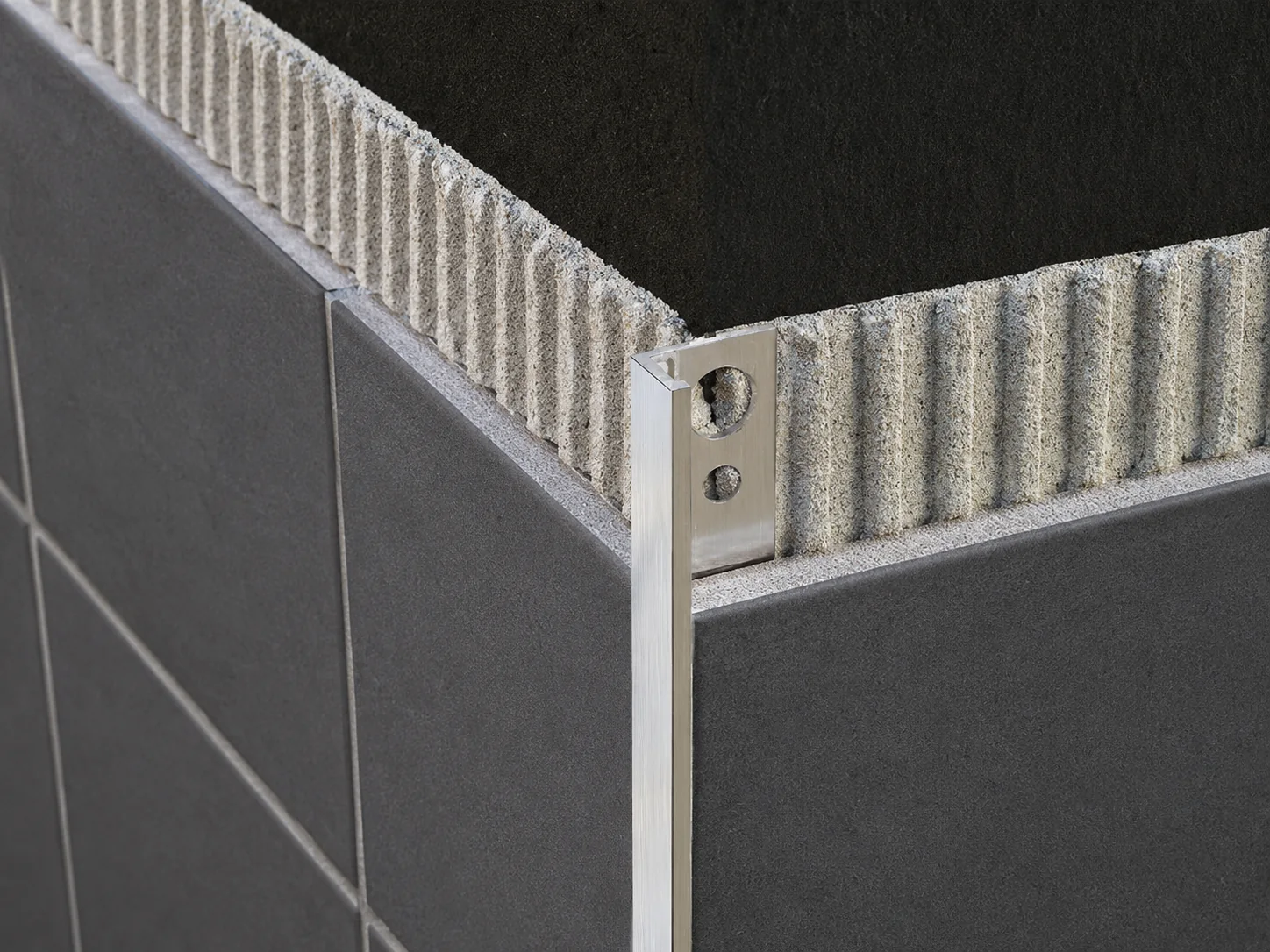
L-shaped trim is simple and practical. Depending on the design, it may be used as an embedded edge profile or as a surface-mounted protective angle.
Surface-mounted L profiles can also be useful for renovation work when existing tile corners need additional protection.
Corner Pieces and Connectors
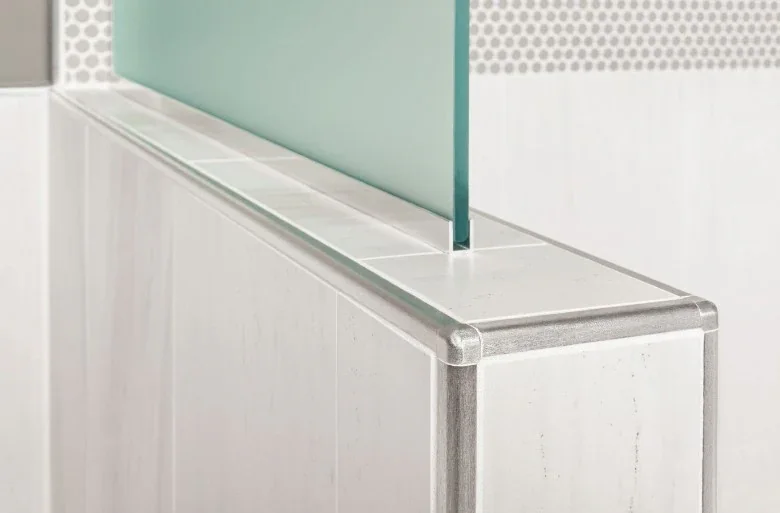
Some systems include matching internal corners, external corners, end caps, and connectors.
These accessories can reduce the need for complicated miter cuts and help installers create a more consistent finish where several trim lengths meet.
For large projects, using matching corner accessories can also improve installation speed and repeatability.
Which Material Is Best for Tile Corner Trim?
Material selection should be based on traffic, moisture, appearance, maintenance, and budget.
Aluminum Tile Corner Trim
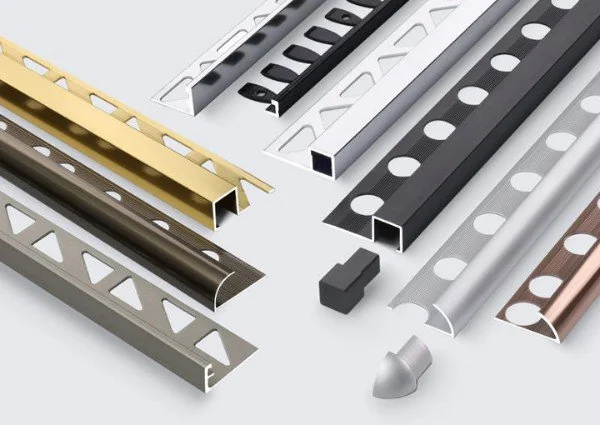
Aluminum is one of the most common choices because it combines low weight, good durability, easy cutting, and a wide range of finishes.
Anodized aluminum is widely used where improved surface protection and a metallic appearance are required. Powder-coated aluminum is useful when the trim needs to match black, white, gray, or other specified colors.
For distributors and project buyers, aluminum also offers good flexibility for custom extrusion profiles and bulk production.
Stainless Steel Tile Corner Trim
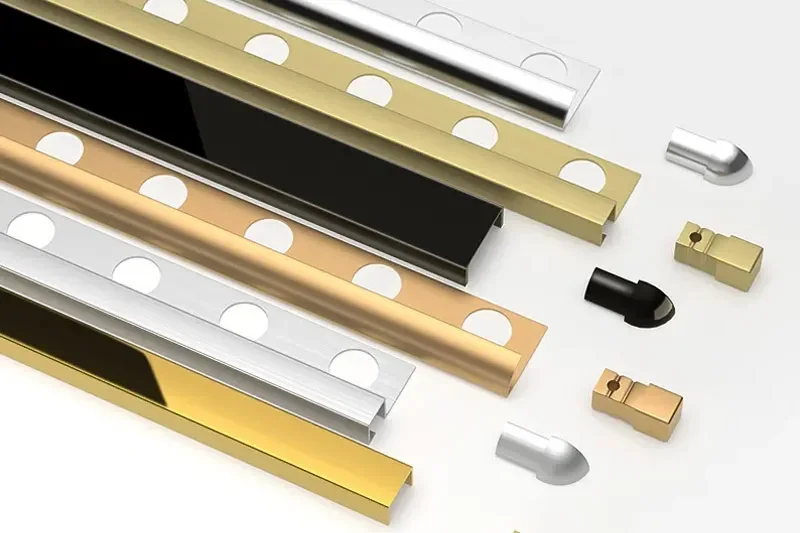
Stainless steel is suitable for demanding environments where stronger impact resistance or a more robust metal surface is needed.
It is often considered for commercial kitchens, transportation areas, healthcare settings, public buildings, and other heavy-use locations.
The material is harder to cut than aluminum, so installation planning is important.
Brass Tile Corner Trim
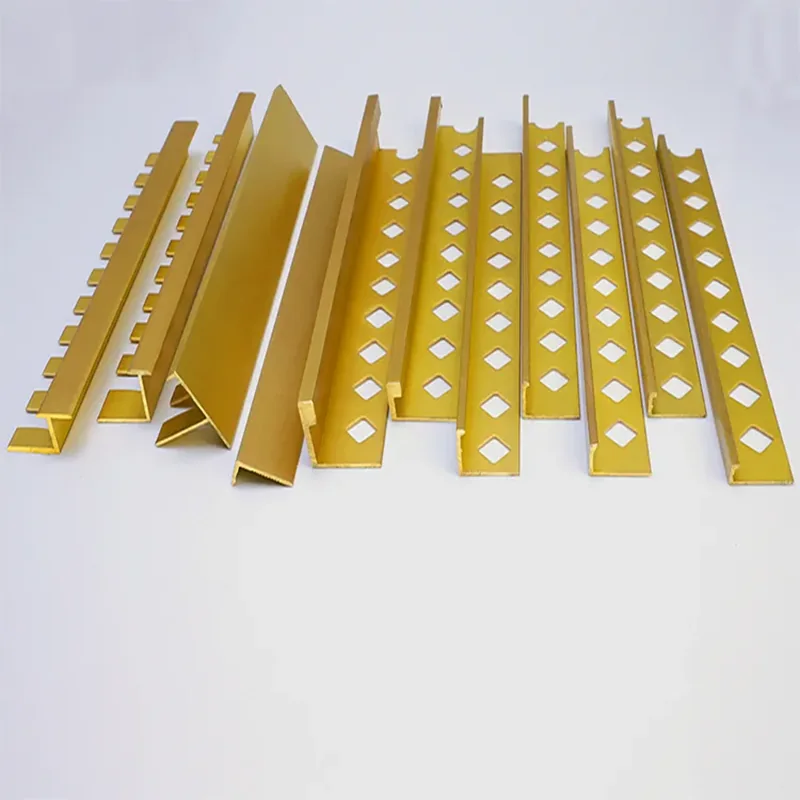
Brass is generally selected when appearance is a major design requirement. It can create a warm metallic detail that works well in hotels, restaurants, premium residential projects, and decorative interiors.
Because brass is usually chosen as a visible design feature, surface finish consistency is important.
PVC Tile Corner Trim
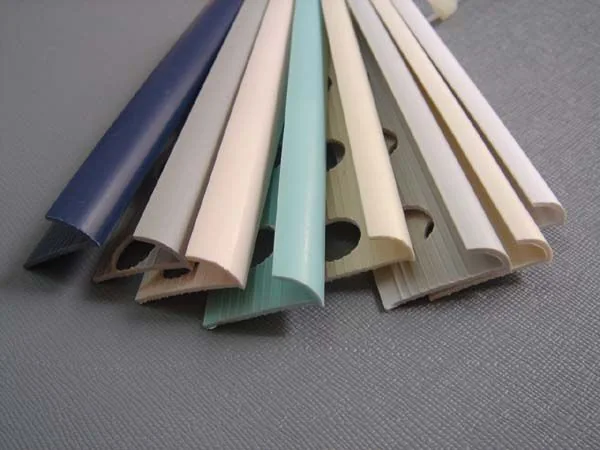
PVC is lightweight, economical, easy to cut, and available in many colors.
It can be suitable for lighter-duty residential or commercial applications. However, for high-impact corners, metal Tile Corner Trim is usually the better choice.
Manufacturer’s Tip: Match the material to the actual service condition. A decorative corner in a private bathroom does not need the same profile strength as a tiled corner beside a busy commercial corridor.
How to Choose the Right Tile Corner Trim Size
The trim depth should match the tile assembly correctly. This is one of the most important details in selection.
If the trim is too shallow, the tile edge may sit above the profile and remain exposed. If the trim is too deep, the trim may project beyond the tile surface.
Before ordering, check:
- Actual tile thickness
- Adhesive bed allowance
- Profile depth
- Corner angle
- Required visible face width
- Installation method
- Project tolerance
Do not rely only on the nominal tile size shown in a catalog. Measure the actual tile sample whenever possible.
For bulk orders, we recommend approving a sample profile with the project tile before full production. This simple step can prevent size problems across the entire installation.
Installation Details That Affect Protection
Even a strong trim cannot protect the corner properly if it is badly installed.
Keep the Profile Straight
The trim should form a straight and continuous line. If it twists or moves during tile installation, the finished corner may look uneven and the tile edge may not remain fully covered.
Fully Embed the Anchoring Leg
For embedded Tile Corner Trim, the anchoring leg should sit properly in the adhesive. Adhesive should pass through the perforations so the profile becomes part of the tile installation.
Avoid leaving unsupported sections behind the trim.
Keep the Tile Flush With the Trim
The tile face should finish level with, or very slightly below, the protective edge of the profile according to the trim design.
If the tile projects beyond the trim, the exposed tile can still receive direct impact.
Cut Corners Accurately
Where two trim lengths meet, inaccurate cutting can leave gaps or sharp points.
Use suitable cutting tools for the material. Deburr metal edges after cutting, and use corner connectors where the profile system provides them.
Clean the Surface During Installation
Remove adhesive and grout residue before it hardens on the visible trim surface. This is especially important for brushed, anodized, polished, or colored finishes.
For a concise step-by-step overview, read our guide on how to install Tile Corner Trim on a wall.
Tile Corner Trim vs. Mitered Tile Corners
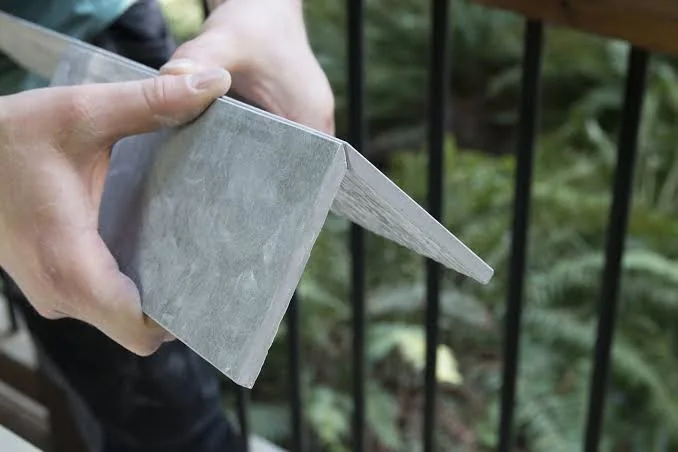
A common question is whether trim is necessary if tiles can be mitered.
Both methods can work, but they serve different priorities.
A mitered corner creates a nearly continuous tile appearance. It is often selected when the design requires minimal visible metal. However, it needs precise fabrication and installation, and the thin mitered edge may still be vulnerable to impact.
Tile Corner Trim adds a visible profile, but it gives the edge a dedicated protective material. It can also make installation more repeatable across multiple rooms or units.
For decorative areas with low traffic, mitering may be suitable. For high-use corners, large projects, and locations where maintenance matters, trim is often the more practical option.
What Should B2B Buyers Check Before Ordering?
For a small installation, choosing a few lengths of trim is straightforward. For a commercial project or distribution order, more details need to be controlled.
Before placing a bulk order, confirm:
- Alloy or material grade
- Profile drawing and dimensions
- Tile depth
- Length tolerance
- Wall thickness of the profile
- Surface finish
- Color standard
- Corner accessories
Consistency is especially important when the same Tile Corner Trim will be installed across many rooms or project phases.
Chenhao Aluminum Business is a direct manufacturer of aluminum decorative profiles. We supply standard and custom profiles for bulk projects, with OEM service, stable production, factory pricing, and global shipping support.
For custom Tile Corner Trim, a drawing, sample, or section size is usually the best starting point. The profile can then be reviewed for extrusion feasibility, finish, tile fit, and packaging before bulk production.
How to Maintain Tile Corner Trim
Maintenance is generally simple.
For most metal trims, routine cleaning with a soft cloth, water, and a mild neutral cleaner is sufficient. Avoid aggressive abrasives or chemicals that are not suitable for the specific finish.
Also check high-traffic corners occasionally for:
- Dents
- Loose sections
- Damaged sealant
- Grout cracking
- Exposed tile edges
- Finish wear
Early attention to a small problem is easier than repairing a broken tile corner later.
FAQs About Tile Corner Trim
Is Tile Corner Trim Only Decorative?
No. It can improve appearance, but its main practical role is to cover and protect exposed tile edges. On vulnerable external corners, this protection can reduce chipping and edge damage.
Can Tile Corner Trim Be Used in Bathrooms?
Yes. It is commonly used around shower walls, niches, tiled returns, and other bathroom edges. The material and finish should be suitable for the moisture level and cleaning conditions.
Is Aluminum Strong Enough for Tile Corners?
For many residential and commercial applications, aluminum provides a good balance of strength, corrosion resistance, weight, and workability. For very heavy impact conditions, stainless steel may be more suitable.
Should the Trim Be Installed Before or After the Tile?
Embedded profiles are normally positioned in the tile adhesive as the tiles are installed. Surface-mounted protective angles may be installed later, depending on the profile design.
Can Tile Corner Trim Be Customized?
Yes. Aluminum profiles can be customized in section shape, size, length, finish, color, perforation pattern, and packaging. Custom tooling may be needed for a new profile.
How Do I Know Which Profile Is Right for My Project?
Start with the tile thickness, corner location, expected impact level, desired appearance, and installation method. For bulk projects, reviewing the drawing and tile sample before ordering is the safest approach.
Conclusion
Tile corners are small details, but they are often the first areas to show visible damage. A chipped edge can affect both the appearance and long-term maintenance of an otherwise well-installed tiled surface.
Tile Corner Trim provides a simple way to cover vulnerable edges, distribute everyday impact, create a controlled corner shape, and improve the consistency of the final finish.
For standard or custom Tile Corner Trim, Chenhao Aluminum Business can support bulk supply, OEM profiles, custom extrusion, stable quality, factory pricing, and global shipping. If you have a tile sample, drawing, or project specification, it can be used to confirm the most suitable profile before production.