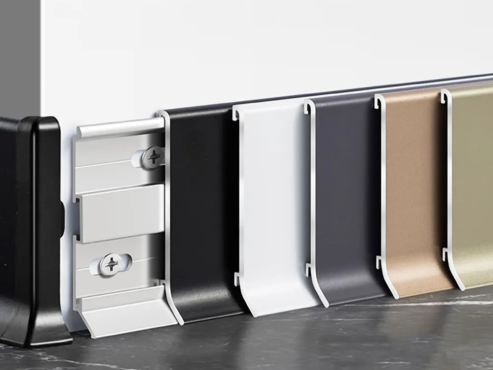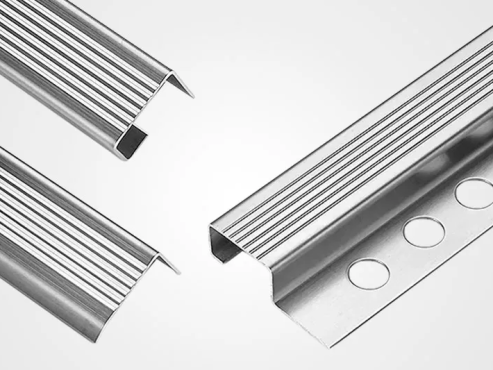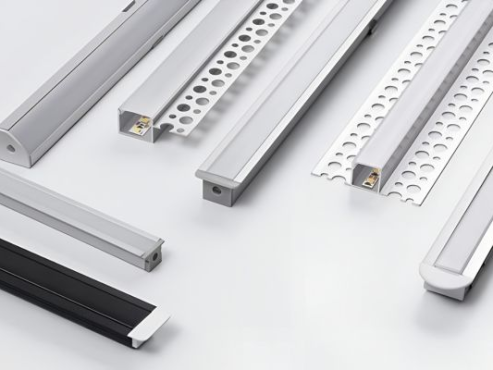
Choosing the right tile edge trim turns an exposed tile edge into a durable, safe, and polished finish. Aluminum, stainless steel, and PVC can all protect tile, but they differ significantly in strength, appearance, price, and installation requirements.
For most residential walls, bathrooms, and backsplashes, aluminum tile trim offers the best balance of appearance, corrosion resistance, workability, and price. Choose stainless steel for demanding commercial or high-impact areas, and PVC for low-cost, low-heat indoor projects.
What Is Tile Edge Trim?
Tile edge trim is a finishing profile installed along exposed tile edges, outside corners, transitions, steps, and other vulnerable areas. It performs two essential jobs:
- Edge protection: It shields fragile tile edges from chipping, cracking, and daily impact.
- Safety and finish: It covers sharp edges and creates a clean visual transition between tile and surrounding surfaces.
The best material depends on where the trim will be installed, the amount of traffic or moisture it will face, the desired finish, and the tools available to the installer.
Common Tile Edge Trim Materials
Aluminum Tile Trim
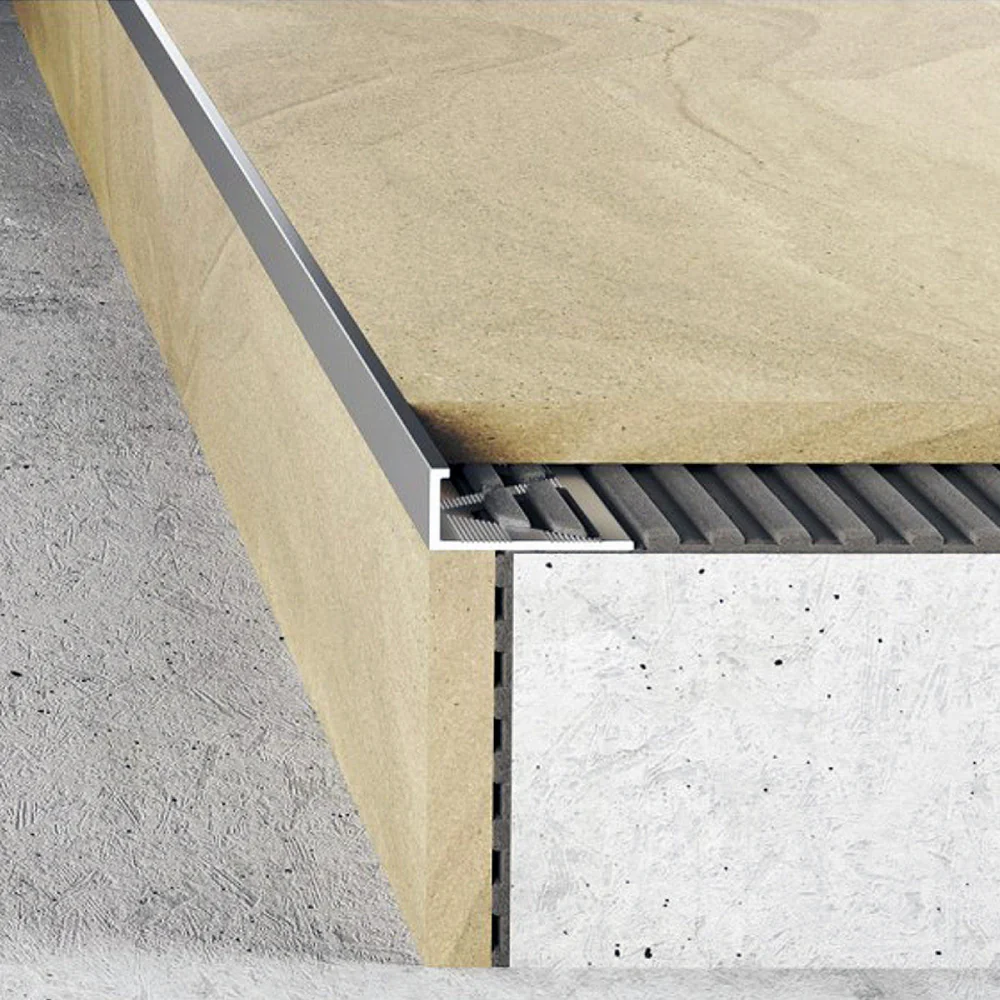
Aluminum tile trim is commonly extruded from 6063 aluminum alloy, which provides a useful combination of dimensional stability, corrosion resistance, and clean profile definition.
Typical finishes include:
- Anodized aluminum: An electrochemical oxide layer becomes part of the metal surface, creating a durable metallic finish that does not peel like paint.
- Powder coating: A broad range of solid colors and textures can coordinate with tiles, grout, fixtures, or other interior finishes.
Why choose aluminum:
- Lightweight and easy to handle during installation.
- Easy to cut and shape with common metalworking tools.
- Good resistance to moisture and everyday corrosion.
- Available in many profiles, colors, and surface finishes.
- A strong balance of performance and cost for residential work.
Aluminum can dent under severe impact and should be isolated from incompatible metals or highly alkaline materials when required by the installation system. For most walls, bathrooms, and kitchen backsplashes, however, it is the most versatile all-round choice.
Stainless Steel Tile Trim
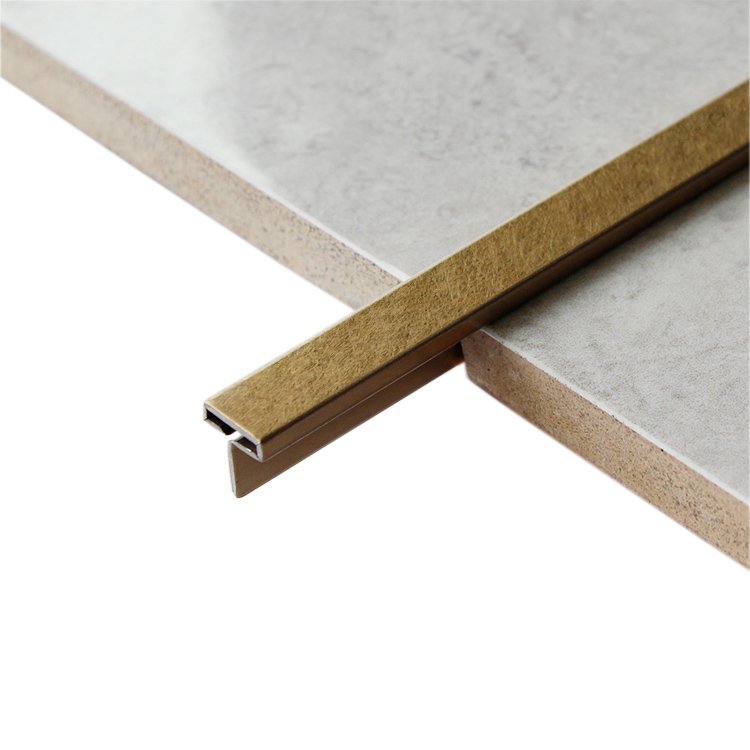
Stainless steel tile trim is usually formed from 304-grade stainless sheet. Higher-alloy grades such as 316 may be preferred for coastal, chloride-rich, or particularly aggressive environments.
Common finishes include:
- Natural: A straightforward metallic finish suited to practical and industrial interiors.
- Polished: A mirror-like surface that works well with luxury fixtures and high-gloss details.
- Brushed: A directional finish that helps conceal fingerprints, water marks, and minor scratches in busy areas.
Why choose stainless steel:
- Excellent resistance to impact, denting, and abrasion.
- Strong performance in commercial and high-traffic locations.
- High-end appearance with good long-term durability.
- Better tolerance of many cleaning chemicals than PVC or coated finishes.
Stainless steel costs more and is harder to cut than aluminum. Professional tools and careful deburring are important because poorly cut stainless edges can remain sharp. It is highly corrosion resistant, but the correct grade and cleaning method still matter.
PVC Tile Trim
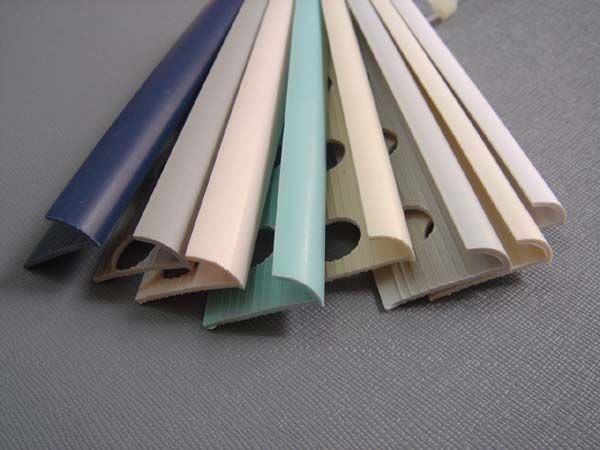
PVC tile trim is available in rigid profiles for straight edge protection and softer or more flexible profiles for movement joints and curved details.
Why choose PVC:
- The lowest upfront material cost.
- Waterproof and not subject to metallic corrosion.
- Easy to cut with a utility knife or PVC shears.
- Useful for straightforward DIY installations.
- Available in common colors for discreet, low-contrast finishes.
PVC is less resistant to impact, heat, scratching, and UV exposure than metal trim. Prolonged sunlight can cause fading or brittleness, while heat near stoves or radiators may deform the profile. As with any trim system, poor sealing or water trapped behind the installation can contribute to mold growth in surrounding materials.
Aluminum vs. Stainless Steel vs. PVC
Use this comparison as a quick starting point before checking project-specific requirements and manufacturer guidance.
| Material | Cost | Durability | Cutting | Best for |
|---|---|---|---|---|
| Aluminum | Moderate | Medium-high | Easy with standard metalworking tools | Residential walls, bathrooms, backsplashes, and modern interiors |
| Stainless steel | Premium | Very high | Difficult; specialist blades and deburring recommended | Commercial spaces, steps, heavy traffic, and high-impact areas |
| PVC | Budget | Low-medium | Very easy with a utility knife or PVC shears | Budget renovations and low-impact indoor areas away from heat and UV |
How to Choose the Right Tile Edge Trim
Choose by Installation Environment
- High-traffic floors and commercial steps: Stainless steel is usually the strongest choice because it resists repeated impact, heavy footwear, and rolling loads.
- Wet rooms and showers: Anodized aluminum and suitable stainless steel grades perform well. PVC is waterproof, but every system still needs correct waterproofing and sealing behind the trim.
- Outdoor or sun-exposed walls: Avoid standard PVC where long-term UV exposure is expected. Anodized aluminum or a suitable stainless steel grade provides better durability.
- Coastal locations: Confirm alloy, stainless grade, finish, and maintenance requirements. 316 stainless or appropriately specified anodized aluminum may be preferable.
- Near stoves or heat sources: Use aluminum or stainless steel rather than PVC, while maintaining required clearances and following local building guidance.
Choose by Design Style
- Industrial or luxury interiors: Brushed, polished, or colored stainless steel provides a substantial high-end accent.
- Contemporary and minimalist spaces: Anodized aluminum offers slim profiles and controlled metallic, matte, or color-matched finishes.
- Low-cost and visually discreet installations: PVC can blend with standard white or neutral tiles when performance demands are modest.
Check Size, Shape, and Finish
Material is only one part of the decision. Match the trim height to the tile thickness plus the adhesive bed, select a profile shape suitable for the corner or transition, and confirm that the finish will coordinate with grout, fixtures, and nearby metalwork. Always review the trim manufacturer’s installation instructions before cutting or bonding the profile.
Final Recommendation
PVC is a practical budget option for simple indoor projects away from heat, sunlight, and heavy impact. Stainless steel is the strongest long-term investment for commercial, high-traffic, or premium architectural applications. For most residential walls, wet rooms, and backsplashes, aluminum tile trim is the best overall choice because it combines clean design, easy installation, corrosion resistance, and reasonable cost.