A modern baseboard does more than cover the joint between a wall and a floor. It protects the lower wall, conceals expansion gaps, and creates a clean transition between different surfaces.
Compared with traditional decorative skirting, modern designs usually feature straight lines, slim profiles, and simple finishes. Some are mounted directly onto the wall, while others sit flush with the wall or create a recessed shadow gap.
This guide explains nine common styles and offers practical advice for selecting the right profile for residential and commercial interiors.
What Is a Modern Baseboard?
A modern baseboard, also called a modern skirting board, is installed along the bottom of an interior wall.
Its main functions include:
- Covering the gap between the wall and flooring
- Protecting the wall from shoes, furniture, and cleaning tools
- Concealing minor construction imperfections
- Creating a neat wall-to-floor transition
- Providing space for cables or LED lighting in certain systems
Modern baseboards are commonly made from MDF, wood, PVC, stainless steel, or aluminum. Aluminum baseboards are especially suitable for contemporary projects because they are straight, moisture-resistant, easy to maintain, and available in many custom shapes.
9 Modern Baseboard Styles
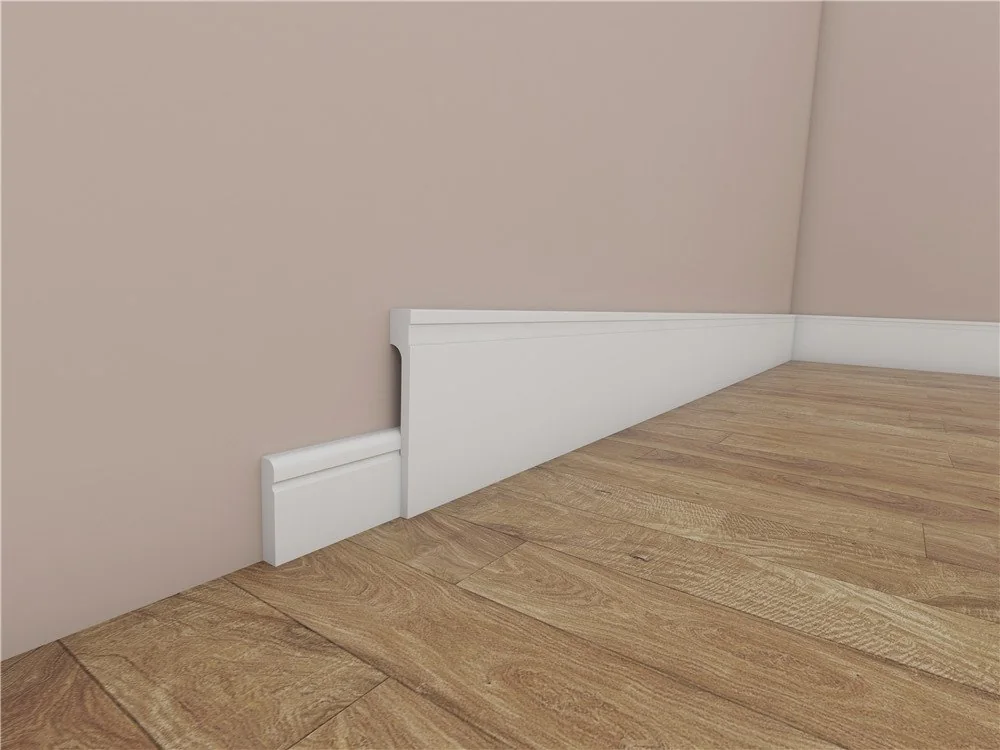
1. Flat Modern Baseboard
Flat baseboards have a smooth front surface without grooves, curves, or decorative details. Their simple appearance works well in minimalist interiors.
They can match the wall color for a discreet finish or contrast with the wall to create a clear horizontal line.
Flat profiles are easy to cut, clean, and install. They are commonly used in apartments, offices, corridors, living rooms, and retail spaces.
MDF is suitable for dry rooms, while aluminum is a better option for areas that require improved moisture resistance and dimensional stability.
Installation difficulty: Easy
Best for: General modern interiors and projects requiring efficient installation.
2. Square Edge Baseboard
Square edge baseboards have a straight face and a clearly defined upper edge. They create a sharper and more architectural look than rounded profiles.
This style coordinates well with rectangular doors, modern wall panels, large-format tiles, and straight furniture lines.
Because the shape is simple, inaccurate cuts and uneven corners are easy to notice. Careful measuring and miter cutting are important.
Installation difficulty: Easy to moderate
Best for: Bedrooms, offices, studies, retail stores, and minimalist commercial interiors.
3. Tall Baseboard
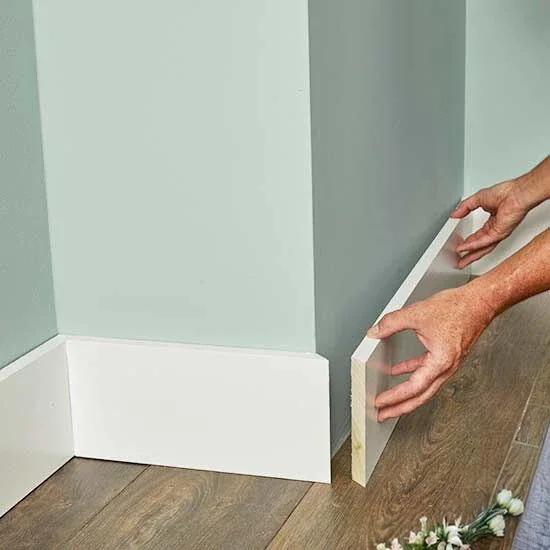
Tall baseboards create a stronger visual boundary around the room. They can add character without using traditional decorative patterns.
This style is often selected for large rooms, high walls, hotels, reception areas, and premium residential interiors. A taller profile also provides more protection to the lower wall.
However, floor and wall unevenness becomes more visible when the profile is tall. Accurate alignment is therefore important.
Installation difficulty: Moderate
Best for: Entryways, hotels, formal living spaces, and large commercial areas.
4. Shadow Line Modern Baseboard
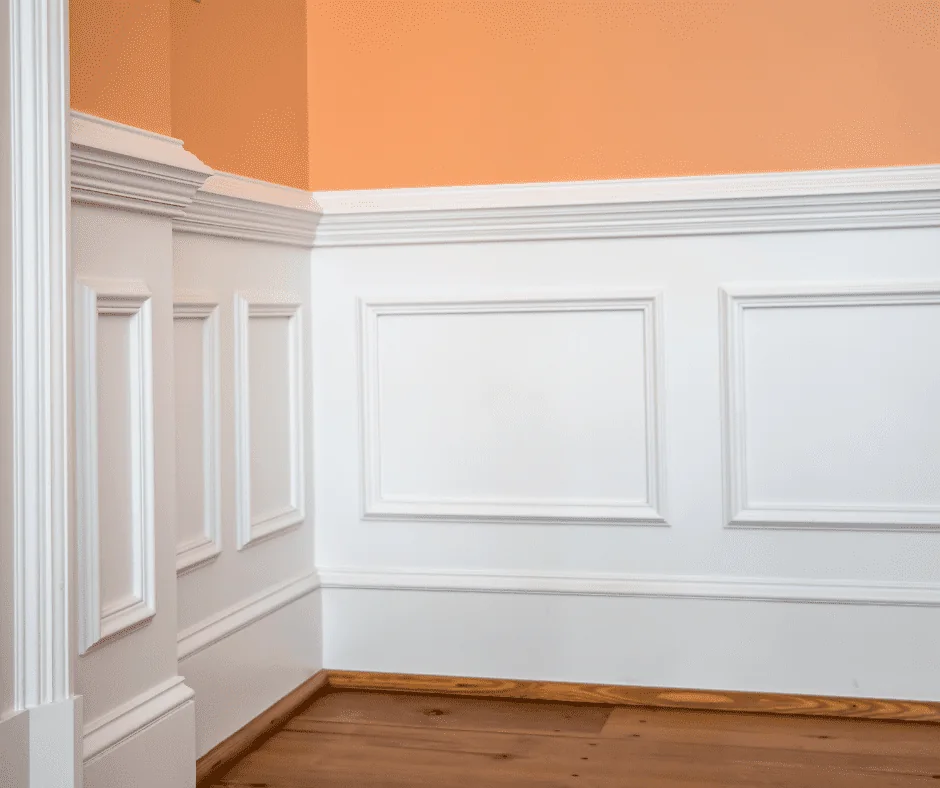
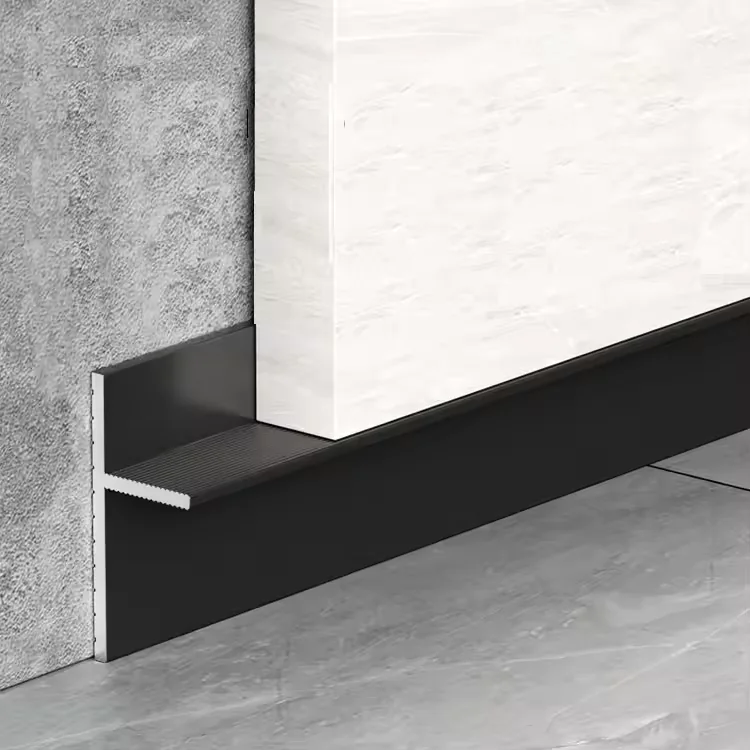
A shadow line baseboard creates a recessed gap between the wall and floor. This makes the wall appear to float above the finished flooring.
The profile is usually installed before plastering or wall panel installation. It forms a controlled reveal at the bottom of drywall, plasterboard, or decorative wall panels.
Dark finishes create a stronger shadow effect, while silver or matching colors produce a softer result.
Shadow line trim requires accurate coordination between the wall structure, finished floor level, board thickness, and profile position.
Manufacturer's Tip: Confirm the shadow gap width and final floor height before installation. Adjustments become difficult after plastering and flooring are completed.
Installation difficulty: Difficult
Best for: Luxury homes, hotels, galleries, offices, and architectural interiors.
5. Flush Modern Baseboard
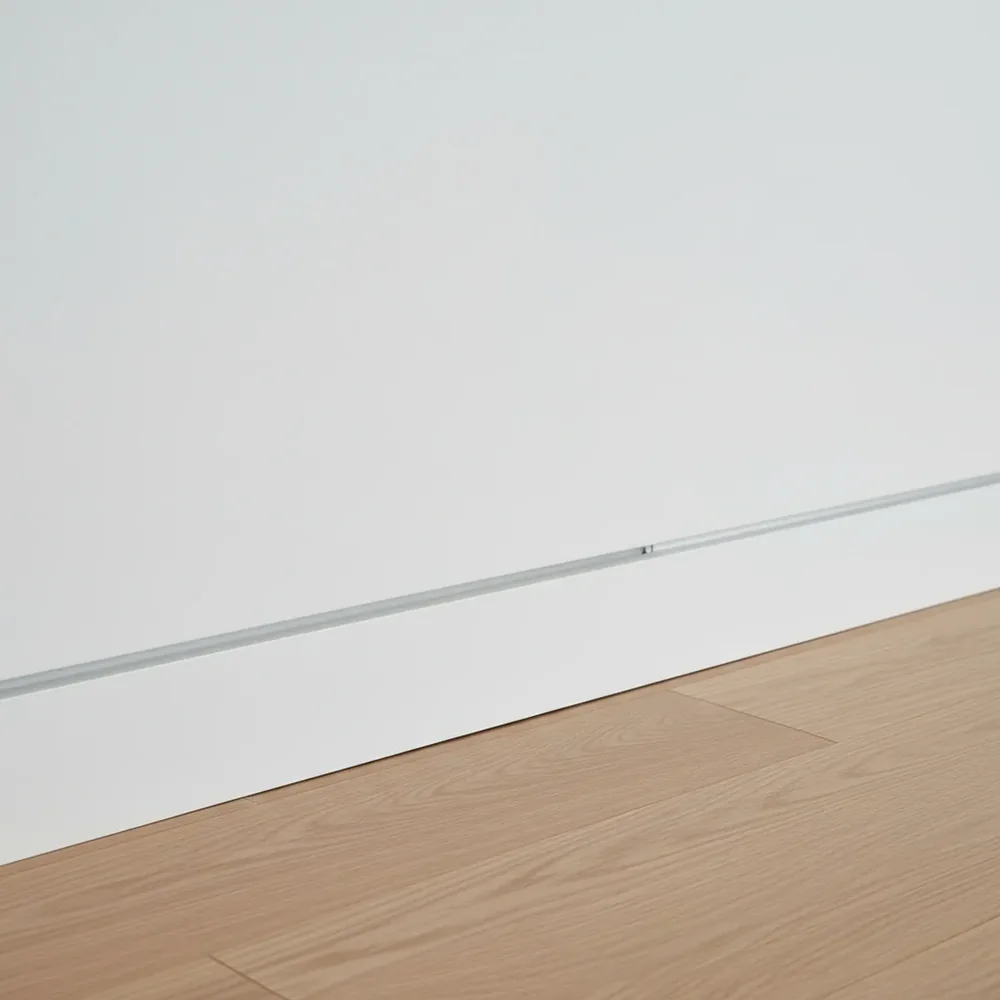
A flush baseboard aligns with the finished wall surface instead of projecting outward. It creates a smooth and continuous wall plane.
The system normally includes a concealed support profile inside the wall and a visible insert or metal cover near the floor.
Flush designs reduce visual clutter and work well with concealed doors, wall panels, and built-in furniture. They also avoid the wide top ledge found on some traditional skirting boards.
Installation must be coordinated with the wall contractor and flooring installer. Wall thickness, floor height, adhesive layers, and finishing materials should all be confirmed in advance.
Installation difficulty: Difficult
Best for: Contemporary apartments, showrooms, offices, luxury homes, and interiors with flush doors.
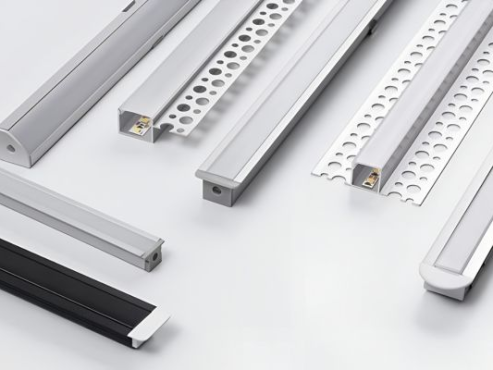
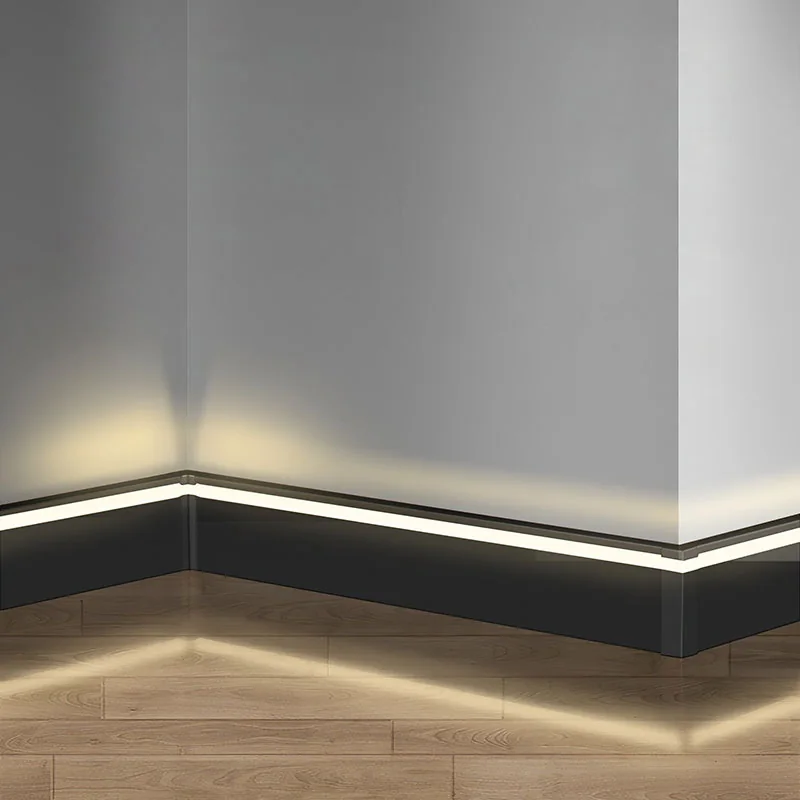
6. LED Baseboard
LED baseboards combine a wall finishing profile with indirect lighting. The profile usually includes a channel for an LED strip and a diffuser.
The light may face downward toward the floor, upward toward the wall, or outward into the room.
Common uses include:
- Night lighting in bedrooms and corridors
- Ambient lighting in hotels and reception areas
- Wayfinding in commercial interiors
- Highlighting flooring or wall textures
The LED strip width, voltage, cable route, driver location, heat dissipation, and maintenance access must be considered during profile selection.
Manufacturer's Tip: Select the LED strip and profile as one system. Internal channel dimensions are just as important as the external design.
Installation difficulty: Moderate to difficult
Best for: Hotels, corridors, cinemas, bedrooms, entertainment spaces, and premium interiors.
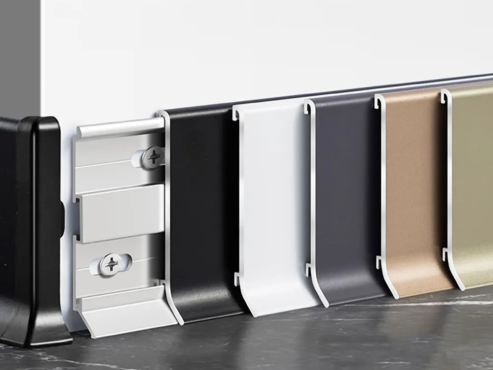
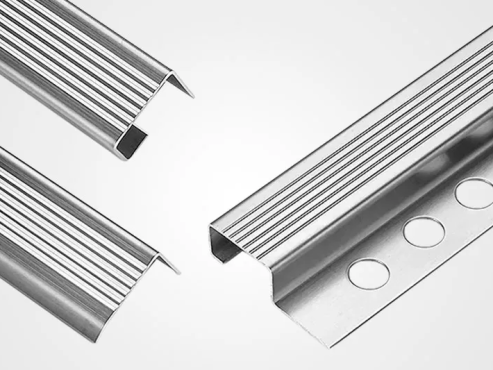
7. Metal and Aluminum Baseboards
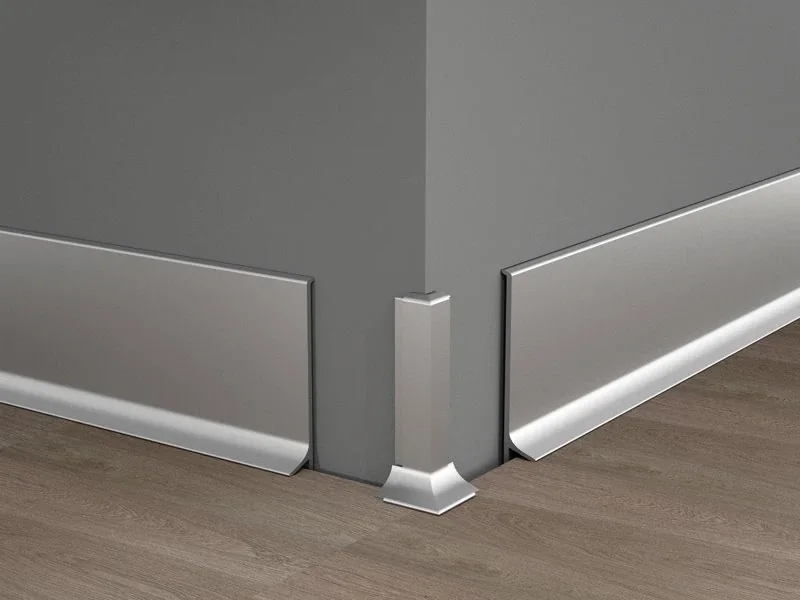
Metal baseboards provide a clean appearance and good durability. Aluminum and stainless steel are the most common options.
Stainless steel has a strong metallic appearance, while aluminum provides more flexibility in profile shape, weight, finish, and customization.
Common aluminum finishes include:
- Natural anodized
- Black anodized
- Brushed silver
- Brushed gold
- Powder-coated colors
- Wood-effect finishes
- Custom project colors
Aluminum baseboards are moisture-resistant, easy to clean, and suitable for large production quantities. They can also include concealed fixings, cable channels, removable covers, or LED spaces.
As a direct manufacturer, Chenhao Aluminum can customize the profile height, width, wall thickness, fixing structure, alloy, and surface treatment.
Installation difficulty: Moderate
Best for: Hotels, offices, kitchens, bathrooms, hospitals, shopping centers, and high-traffic areas.
8. Minimal Profile Baseboard
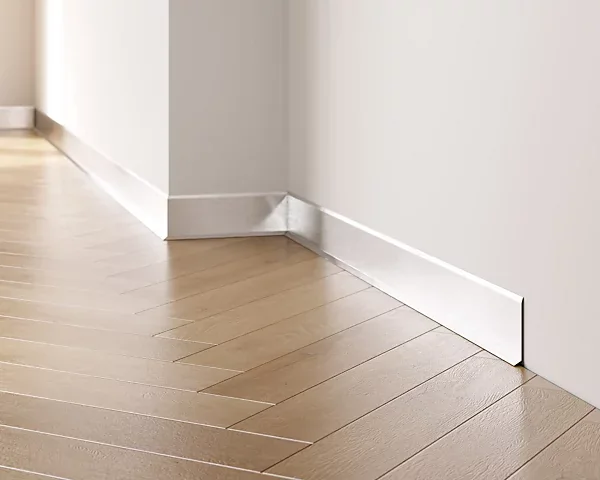
Minimal profile baseboards have a narrow visible face and limited projection from the wall. They finish the wall-to-floor joint without becoming a major design feature.
These low-profile designs are suitable for compact rooms and interiors where the furniture, flooring, or architecture should remain the main focus.
They are often used in Scandinavian, Japanese-inspired, and other minimalist interiors.
Although the profile is simple, accurate alignment is still necessary. Long, slim profiles can make an uneven floor line more visible.
Installation difficulty: Easy to moderate
Best for: Apartments, bedrooms, offices, open-plan rooms, and minimalist interiors.
9. Beveled Edge Baseboard
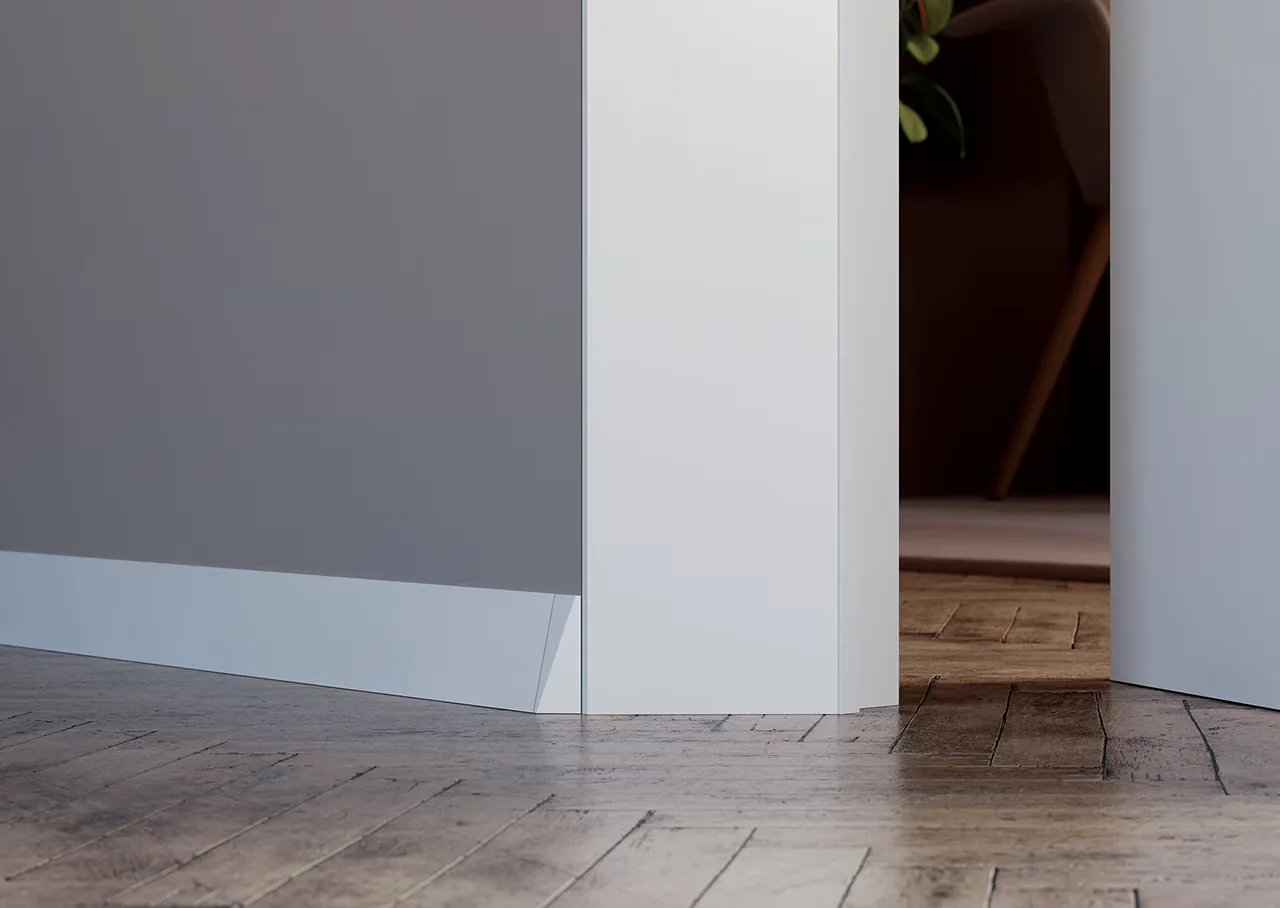
Beveled edge baseboards have a slightly angled upper edge. This small detail softens the transition between the wall and profile without creating an ornate appearance.
The sloped edge can also reduce visible dust compared with a wide, flat top surface.
This style offers a balance between plain modern profiles and more decorative traditional skirting. It works with many residential and commercial design styles.
For aluminum profiles, matching internal corners, external corners, connectors, and end caps can improve the final finish.
Installation difficulty: Easy to moderate
Best for: Bedrooms, family rooms, offices, apartments, and transitional interiors.
How to Choose the Right Modern Baseboard
The best profile is not always the most decorative or expensive option. It should match the wall structure, flooring material, room conditions, and installation sequence.
Consider the Interior Style
Flat, square edge, and minimal profiles are suitable for simple contemporary interiors.
Shadow line and flush baseboards create a more architectural appearance but require earlier planning and more precise installation.
Tall profiles create a stronger visual feature, while LED baseboards are suitable when lighting is part of the original design concept.
Select the Right Material
Different materials perform differently.
MDF is economical and easy to paint but is mainly suitable for dry interiors.
Wood provides a natural appearance but may expand or contract when humidity changes.
PVC is lightweight and moisture-resistant, although it may not suit every premium project.
Stainless steel is strong and durable but is heavier and less flexible for custom profile production.
Aluminum is lightweight, stable, moisture-resistant, and suitable for customized extrusion and surface finishing.
For bulk commercial projects, consistency between production batches should also be considered.
Confirm the Installation Sequence
Surface-mounted baseboards can usually be installed near the end of the project.
Flush, recessed, and shadow line systems must be planned earlier. They may need to be installed before plastering, wall panel installation, or flooring completion.
Technical drawings should confirm:
- Finished floor level
- Wall thickness
- Baseboard height
- Visible gap width
- Fixing position
- Corner treatment
- Joint locations
Early coordination helps reduce modification work on site.
Frequently Asked Questions
What is the best modern baseboard style?
Flat, square edge, flush, shadow line, and minimal profiles are all suitable for contemporary interiors. The best choice depends on the required appearance, wall system, budget, and installation schedule.
Are aluminum baseboards suitable for bathrooms?
Yes. Properly finished aluminum baseboards are suitable for bathrooms and other humid areas. The joints and fixing system should also prevent water from entering behind the profile.
What is the difference between flush and shadow line baseboards?
A flush baseboard has a visible face aligned with the finished wall. A shadow line baseboard creates an open recessed gap between the wall and floor.
Can LED lighting be added to a standard baseboard?
A standard profile may not provide enough space for the LED strip, diffuser, cables, and heat dissipation. A purpose-designed LED baseboard is usually a safer and more reliable option.
Can aluminum baseboards be customized?
Yes. Aluminum profiles can be customized in shape, dimensions, wall thickness, fixing structure, color, finish, and packaging. Technical drawings are normally required for tooling and quotation.
Conclusion
A modern baseboard should provide a clean appearance while protecting the wall and completing the wall-to-floor transition.
For projects requiring moisture resistance, dimensional stability, custom profiles, and consistent bulk production, aluminum baseboards are a practical option.
Before confirming a modern baseboard, review the wall structure, finished floor level, installation sequence, traffic conditions, and required finish. Technical drawing confirmation and physical sample approval can help reduce installation problems and ensure consistent project results.