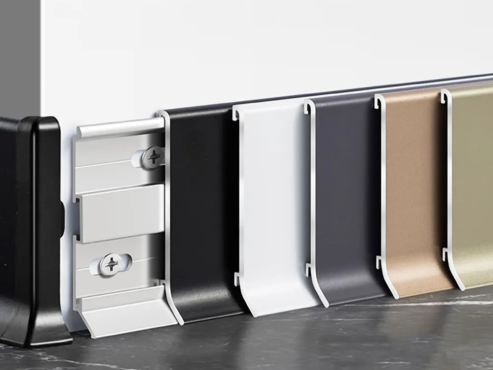
Skirting boards are often treated as a minor decorative detail. In practice, they perform an important technical role at the junction between the wall and the floor. They cover finishing gaps, protect the lower wall from impact, and create a cleaner transition between different surfaces.
For modern interiors, traditional timber baseboards are no longer the only option. Contemporary skirting boards are available in slim, square-edge, flush, recessed, and shadow-gap designs. They can be made from aluminum, stainless steel, MDF, PVC, wood, or composite materials.
The right profile can improve durability, simplify cleaning, and support a more consistent interior design. However, the choice should be based on the installation environment, floor material, wall construction, traffic level, and required finish—not appearance alone.
What Makes a Skirting Board Contemporary?
A contemporary skirting board usually has a simple profile with straight lines and limited ornamentation. It is designed to work with minimalist interiors, large-format tiles, engineered flooring, wall panels, and modern door frames.
Common contemporary designs include:
- Square-edge skirting boards
- Slim metal skirting profiles
- Flush recessed skirting boards
- Shadow-gap skirting
- Stepped geometric profiles
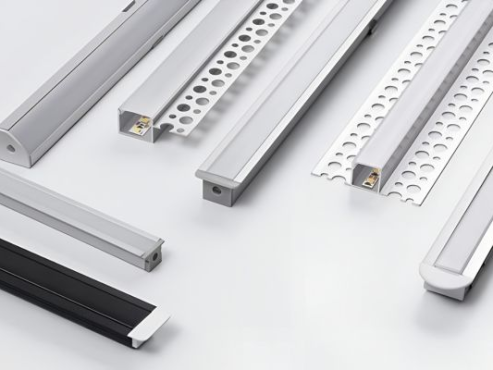
- Skirting with integrated LED channels
- Concealed skirting systems
Traditional profiles such as ogee, torus, and Victorian skirting use curves and decorative details. These remain suitable for classic interiors, but they can look visually heavy in modern rooms. Contemporary profiles are generally flatter and easier to coordinate with other architectural trims.
Why Contemporary Skirting Boards Are More Than a Design Upgrade
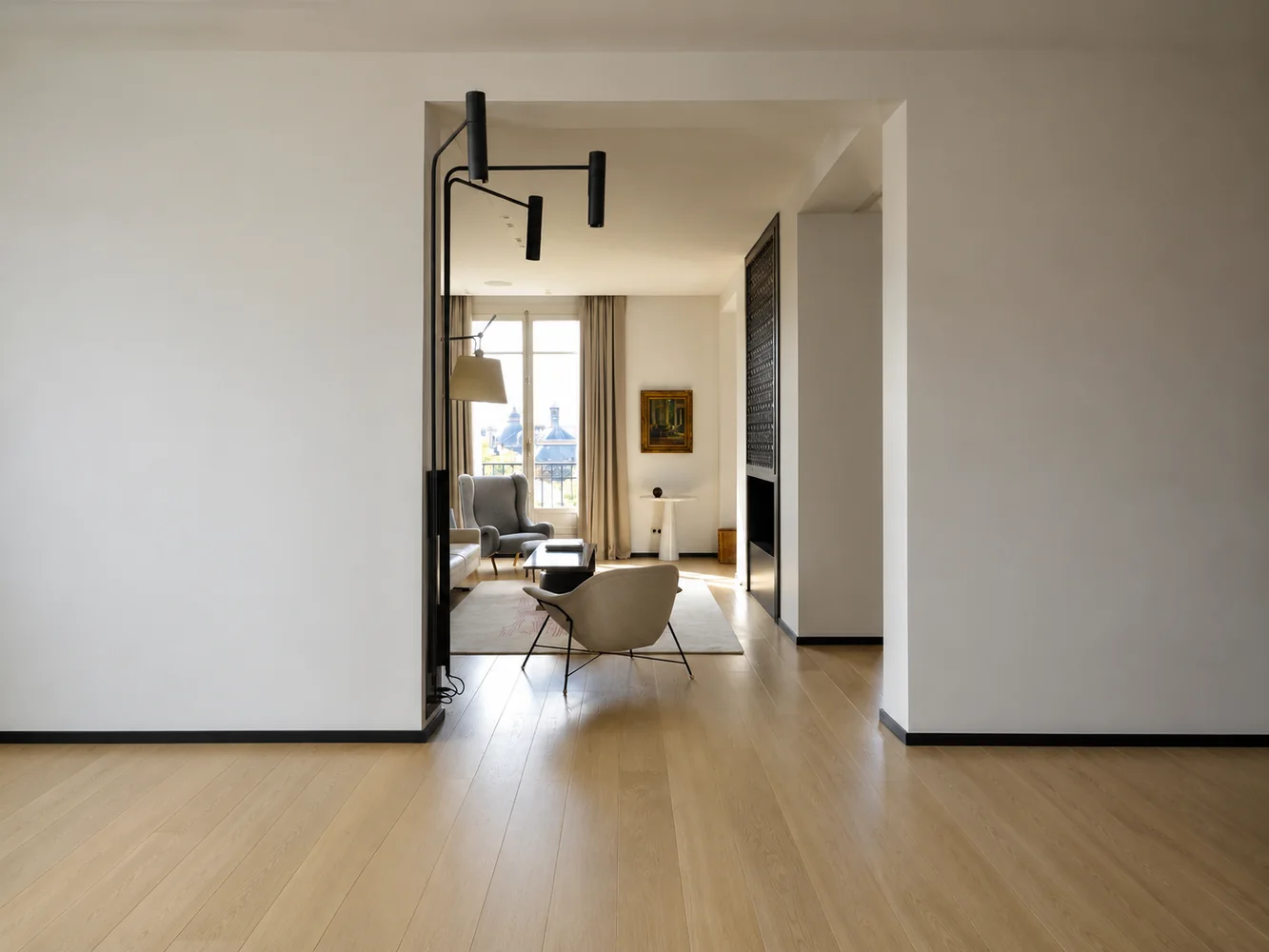
1. They Protect the Most Vulnerable Part of the Wall
The bottom section of a wall receives frequent contact from vacuum cleaners, mops, shoes, furniture, luggage, and cleaning equipment. Paint and plaster alone provide limited resistance to repeated impact.
A properly selected skirting board works as a protective barrier. It reduces scratches, dents, staining, and chipped wall edges. This is especially useful in corridors, kitchens, living areas, apartment entrances, and other high-use spaces.
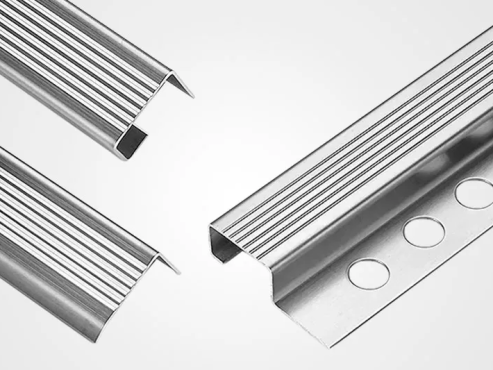
The same engineering principle applies to tile trims and stair nosings. Exposed edges are vulnerable, while a correctly fitted profile distributes impact and protects the finished surface. Tile trims, for example, conceal exposed tile cuts and reduce the risk of chipping and accidental contact with sharp edges.
A skirting profile performs a similar protective function along the wall-floor junction.
2. They Cover Necessary Construction Gaps
Many flooring systems require a perimeter expansion gap. Laminate, engineered wood, and some floating floors need space to expand and contract when temperature or humidity changes.
Contemporary skirting boards can conceal this gap without making the wall base look bulky. The profile height and projection must be large enough to cover the joint while leaving the floor free to move.
This is an important specification point. A profile that is too narrow may expose the gap after installation. A profile that projects too far may interfere with furniture or reduce the clean appearance of the room.
3. They Improve Moisture Resistance
Cleaning water often reaches the wall base. Kitchens, bathrooms, entrance areas, and utility rooms are particularly exposed to moisture.
Wood and standard MDF can swell, crack, or lose their coating when they remain wet. Aluminum, stainless steel, PVC, and moisture-resistant composite profiles generally perform better in these conditions.
Aluminum skirting is a practical option for many modern homes because it is lightweight, corrosion-resistant, easy to cut, and available with anodized or powder-coated finishes. Stainless steel offers higher impact and chemical resistance, but it is heavier, more difficult to cut, and usually more expensive. Similar material differences also apply when specifying tile trims and stair profiles.
Material choice should match actual exposure. Premium material is not always necessary, but moisture risk should not be ignored.
4. They Make Cleaning Easier
Detailed decorative profiles can collect dust on grooves and curved surfaces. Simple square, flat, or flush profiles have fewer areas where dirt can settle.
Flush recessed skirting boards can also reduce the ledge between the wall and baseboard. When installed correctly, they create a smooth vertical plane that is easier to wipe. Concealed and flush designs are commonly selected where a streamlined appearance and reduced dust accumulation are priorities.
For homes with frequent cleaning requirements, we recommend avoiding unnecessarily complex shapes. The finish should also resist common household cleaners and should not have sharp corners or open joints that trap dirt.
Popular Materials for Contemporary Skirting Boards
Aluminum
Aluminum is widely used for modern architectural profiles. It offers a strong balance between weight, durability, corrosion resistance, machinability, and cost.
Aluminum is suitable for tiled floors, engineered wood, laminate, vinyl, stone, and many wall-panel systems. It is also easier to coordinate with aluminum tile trim, floor transition strips, door profiles, and stair nosing.
Stainless Steel
Stainless steel provides a clean metallic appearance and strong resistance to impact, moisture, and cleaning chemicals. It is often specified for premium interiors or areas with demanding hygiene requirements.
However, stainless steel has a higher material cost and requires suitable cutting tools. For many residential applications, aluminum provides sufficient performance with easier installation.
MDF and Wood
MDF and timber remain practical where the skirting needs to match painted walls, doors, cabinets, or wood flooring. They are easy to paint and available in many traditional and modern shapes.
Their main limitation is moisture sensitivity. Moisture-resistant grades, sealed cut ends, and proper coatings are important in kitchens and other damp areas.
PVC and Composite Materials
PVC skirting is economical, water-resistant, lightweight, and easy to install. It can be useful for budget-sensitive projects or locations where flexibility is required.
The buyer should still evaluate color stability, impact resistance, surface hardness, and long-term aging. Low-grade plastic profiles may become brittle or discolored over time.
Contemporary Skirting Boards for Flush and Recessed Interiors
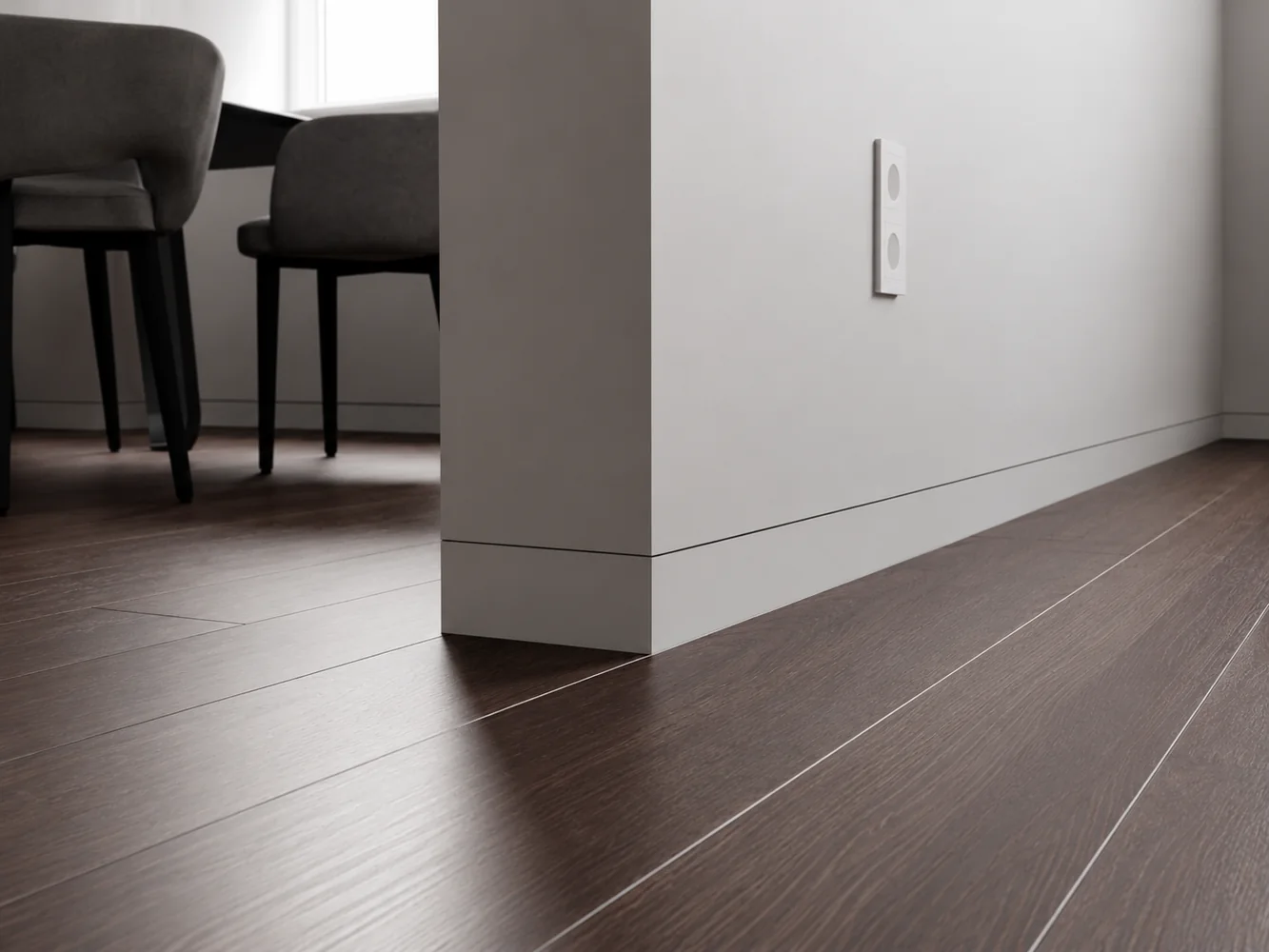
Flush and recessed systems are among the most distinctive contemporary skirting boards. Instead of sitting on top of the finished wall, the profile is integrated into the wall build-up.
This creates a flat or shadow-line effect. It can also allow furniture to sit closer to the wall and reduce visible projections.
However, flush installation needs early coordination. The profile should normally be selected before plastering, drywall finishing, wall-panel installation, or tiling.
Installers must control:
- Finished floor level
- Wall thickness
- Plaster or board thickness
- Profile depth
- Internal and external corners
- Door-frame alignment
- Joint positions
A retrofit surface-mounted profile is more forgiving. A recessed profile gives a cleaner result, but installation tolerances are tighter.
Manufacturer’s Tip: For flush skirting, request a full-size profile sample before site installation. A drawing alone may not show how the profile aligns with plaster, tile adhesive, wall panels, and the finished floor.
How Contemporary Skirting Boards Coordinate with Other Trims
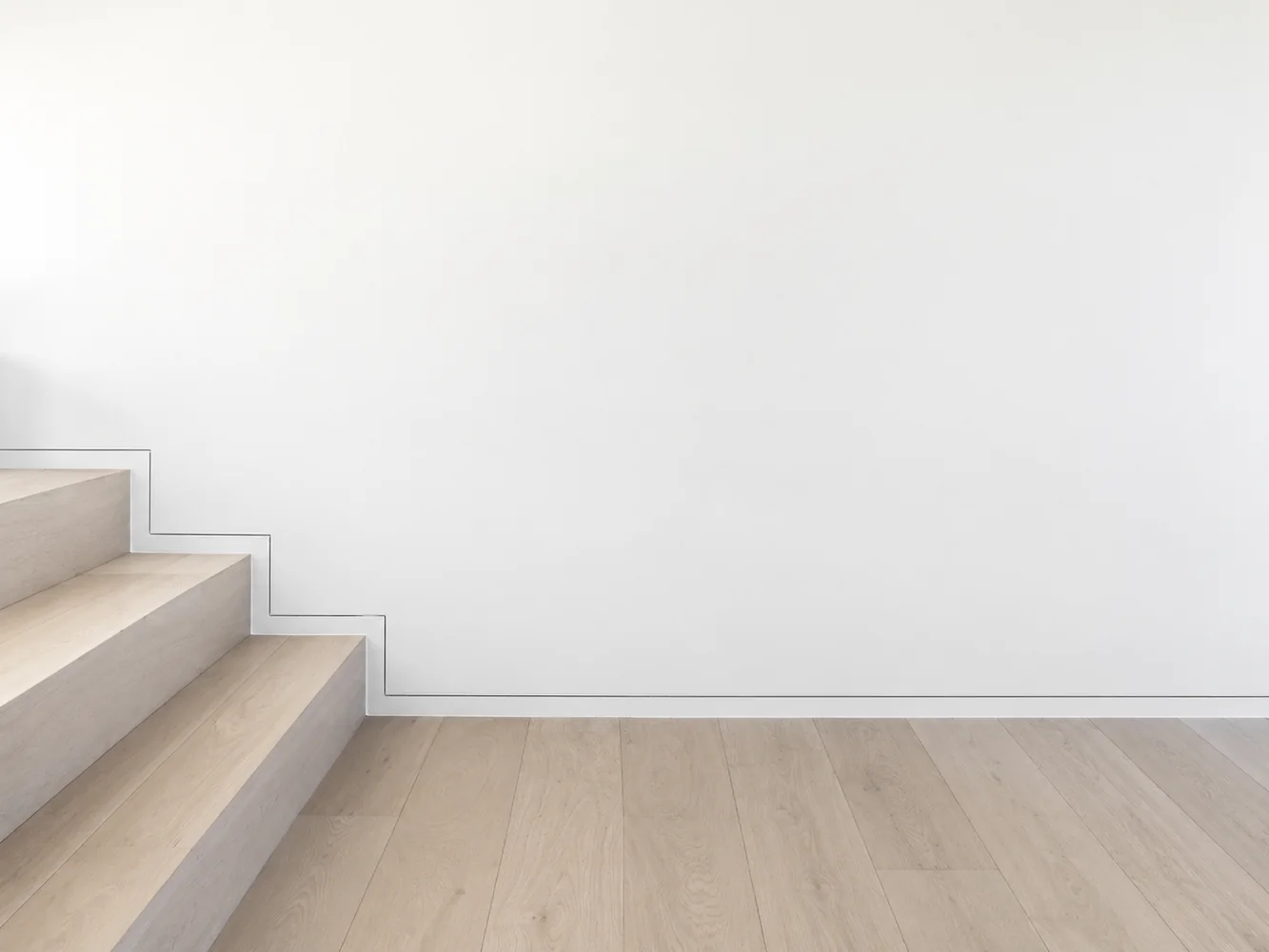
Modern interiors look more consistent when skirting boards, tile trims, stair nosings, and floor transition strips follow the same finish language.
For example, matte black aluminum skirting can be matched with black tile edge trim and black stair nosing. Brushed silver profiles can connect stainless steel appliances, aluminum door frames, and neutral flooring details.
This does not mean every profile must be identical. The important factors are:
- Similar surface texture
- Compatible color tone
- Consistent edge geometry
- Suitable material for each application
- Correct profile size for each surface
Floor transition strips also need careful coordination. Where tile meets carpet, wood, or vinyl, the transition profile must account for material thickness and height difference. T-shaped profiles are generally used for surfaces at similar heights, while reducers and other sloped profiles can manage larger level differences.
A matching color improves continuity, but safety and dimensional fit should come first.
How to Specify the Right Contemporary Skirting Boards
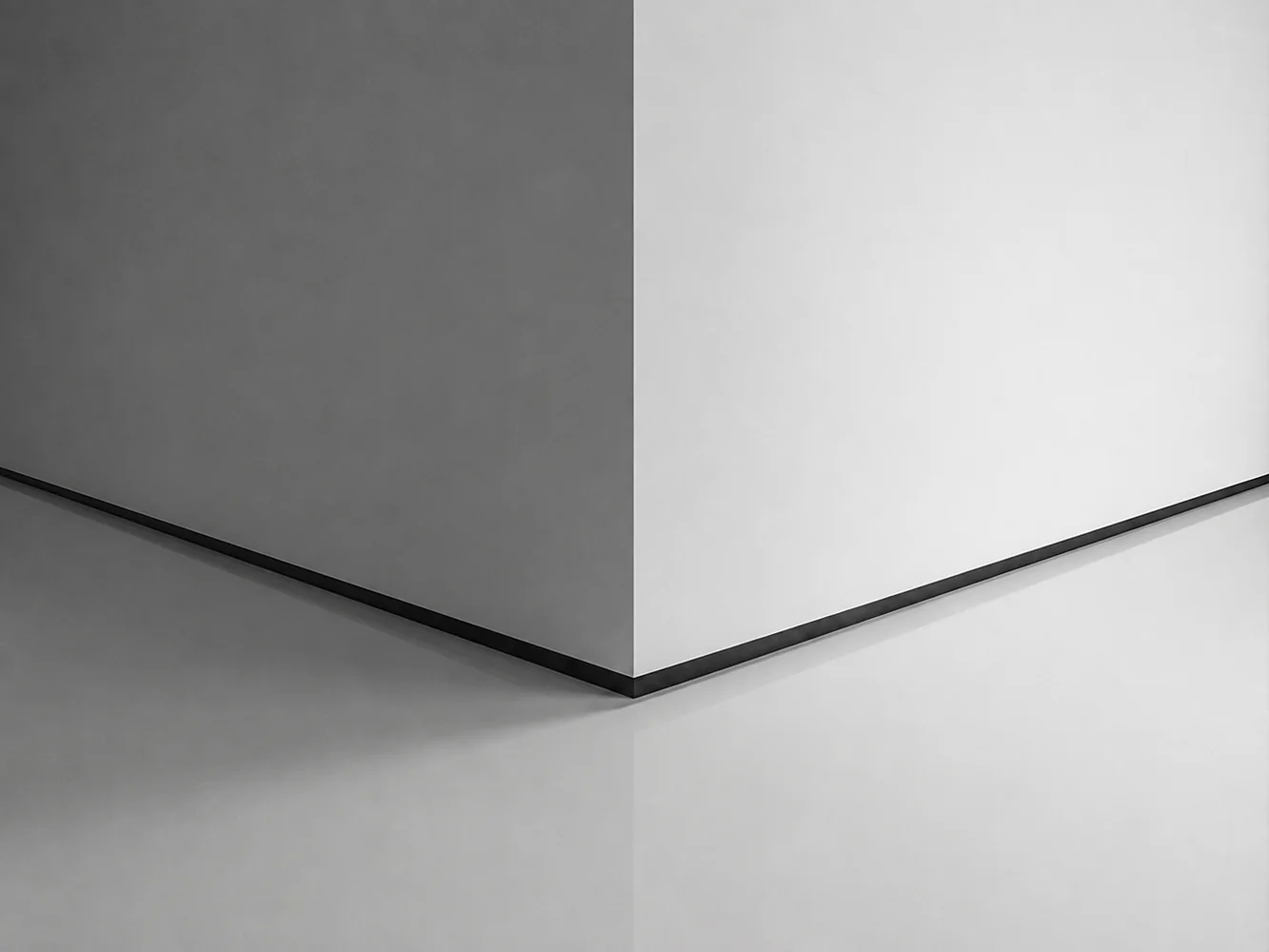
Before ordering, prepare a clear technical specification. At minimum, confirm the following points.
Profile Type
Choose between surface-mounted, clip-on, adhesive-fixed, screw-fixed, recessed, flush, or shadow-gap construction.
The installation method should be selected according to the project stage. Profiles installed during wall or floor construction normally provide a more integrated appearance. Surface-mounted profiles are usually easier to use for renovation work.
Material and Grade
Specify the aluminum alloy, stainless steel grade, MDF type, PVC formulation, or other required material.
For aluminum profiles, confirm whether the product should be:
- Anodized
- Powder-coated
- Polished
- Brushed
- Laminated
- Finished with a wood-grain effect
The finish specification should include both the color and the surface texture.
Dimensions
Check:
- Overall height
- Visible face height
- Projection from the wall
- Material thickness
- Cover width
- Internal cavity size
- Length per piece
The profile must cover the wall-floor joint and suit the scale of the room. Very low skirting can look clean, but it may not cover uneven wall edges or flooring gaps.
Accessories
Ask whether the system includes:
- Internal corners
- External corners
- End caps
- Straight connectors
- Installation clips
- Fixing channels
Accessories can reduce on-site cutting and improve consistency. They are particularly useful where installers need to complete many corners within a limited schedule.
Color Tolerance
Metal finishes may vary slightly between production batches. For large projects, order the required quantity in one batch whenever possible.
A physical color sample should be approved before bulk production, especially when the skirting must match door frames, tile trims, stair nosings, or floor transition profiles.
Installation Conditions
Confirm whether the project is new construction or renovation. Recessed profiles are easier to coordinate before wall finishing. Surface-mounted systems are generally more suitable for replacement work.
The substrate should also be checked. Concrete, plasterboard, tile, wood panels, and prefabricated wall systems may require different fixing methods.
Quantity and Cutting Allowance
Calculate the room perimeter, subtract door openings where appropriate, and add an allowance for cutting and damage.
Complex layouts with many corners require more waste than straight corridors. Custom-length profiles can sometimes reduce joints and material waste in large projects.
Are Contemporary Skirting Boards Worth the Cost?
The answer depends on the material and installation method. A simple aluminum surface-mounted skirting profile may only create a moderate cost increase compared with painted MDF. A custom recessed system will require more coordination and labor.
The value comes from several areas:
- Better wall protection
- Reduced repainting and repair
- Improved moisture resistance
- Cleaner junctions
- Easier maintenance
- Better coordination with modern trims
- Longer service life in demanding areas
For projects with tiled floors, wall panels, high traffic, or frequent cleaning, the practical benefits can justify the higher initial cost.
The comparison should consider total installed cost rather than material price alone. Cutting time, corner accessories, fixing systems, maintenance, replacement frequency, and site damage can all affect the final project cost.
Working with a Direct Profile Manufacturer
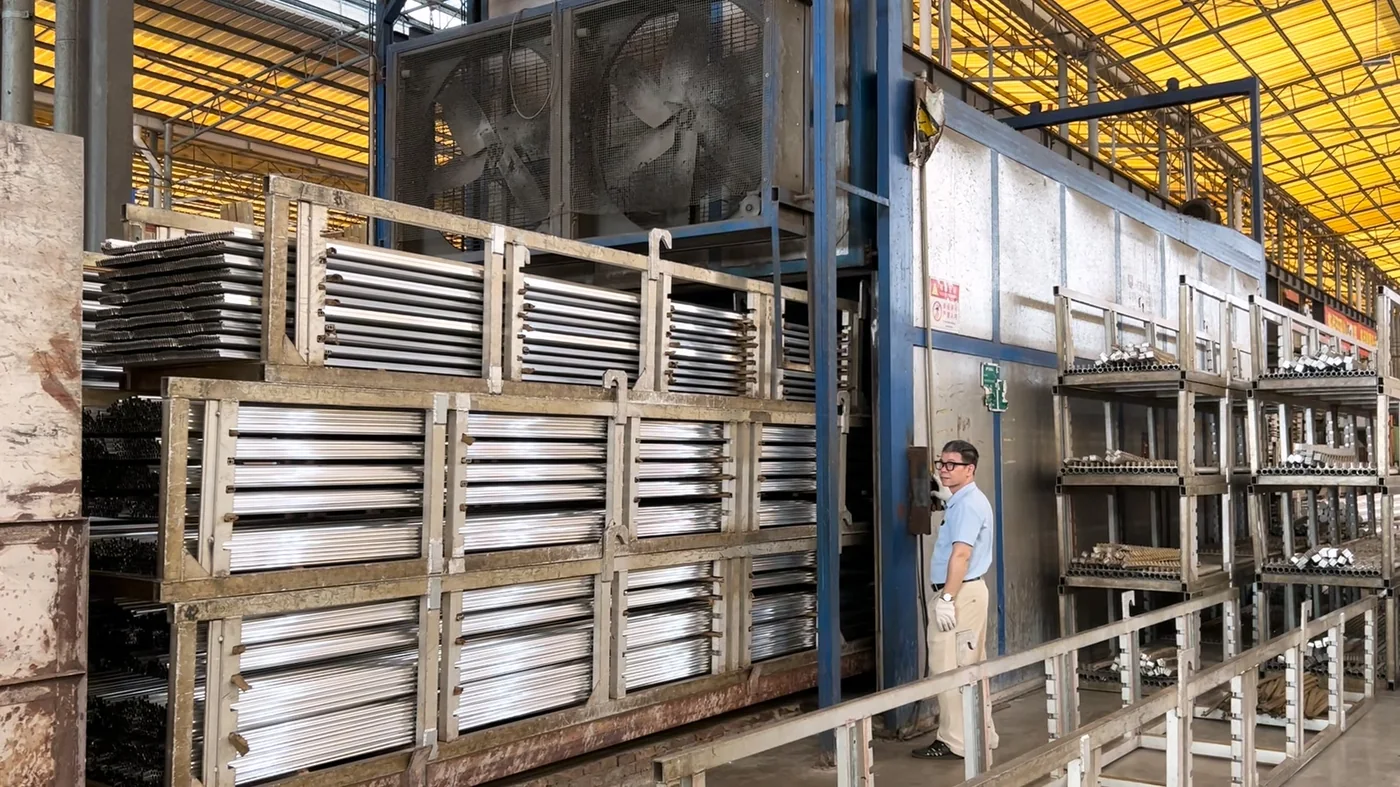
Custom manufacturing can be useful when standard profiles do not match the wall system, floor build-up, color schedule, or project requirements.
Chenhao Aluminum supplies contemporary aluminum skirting profiles for bulk and project applications. As a direct manufacturer, we can support custom profile development, OEM production, surface finish selection, stable batch supply, and global shipping.
For a custom extrusion project, buyers should provide:
- A profile drawing or reference sample
- Target dimensions
- Material and temper requirements
- Surface finish
- Required color
- Estimated order quantity
- Application details
- Packaging requirements
The manufacturer can then review tooling feasibility, wall thickness, extrusion tolerance, corner solutions, fixing methods, and production requirements.
We recommend confirming samples before mass production, especially when the skirting must match tile trims, stair profiles, floor transitions, or other decorative metalwork.
Conclusion
Contemporary skirting boards provide a practical upgrade because they solve several problems at the same time.
The best option is not always the thinnest or most decorative profile. It is the profile that fits the floor system, wall construction, traffic level, installation sequence, and maintenance requirements.
When contemporary skirting boards are selected as part of the complete trim system—not as an afterthought—they contribute to a cleaner finish and a more durable interior.