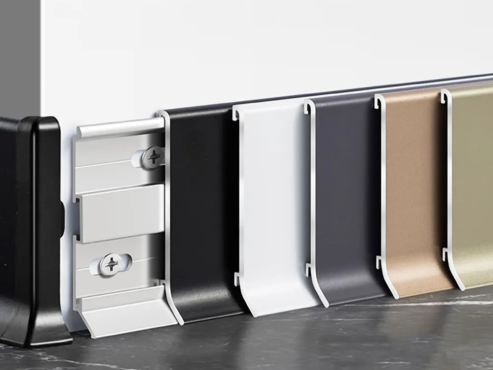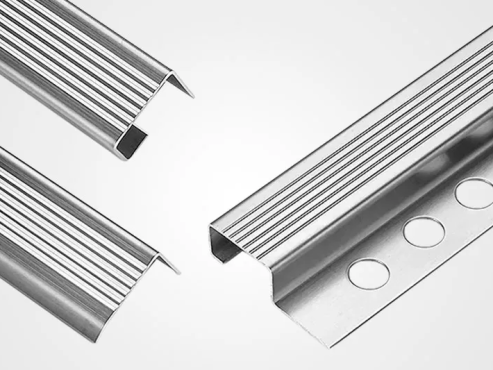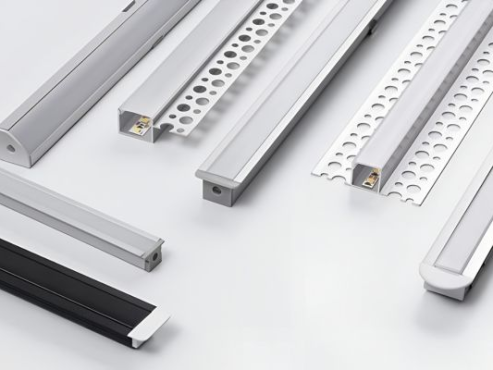
Small finishing details often determine whether tile work looks precise or unfinished. Exposed tile edges, external corners, wall niches, countertop edges, and decorative transitions all require careful treatment. Even when the main tile installation is accurate, an unprotected or poorly finished edge can weaken the overall result.
This is where aluminum tile trim becomes useful. It is a metal finishing profile designed to cover exposed tile edges, protect vulnerable corners, and create controlled lines between tiled surfaces or between tile and another material. Tile trim is commonly used to conceal cut edges and reduce the risk of edge damage while producing a cleaner transition.
Aluminum is particularly practical for detailed tile work because it combines relatively low weight, good dimensional stability, easy cutting, corrosion resistance, and a wide range of profiles and surface finishes.
However, choosing a trim should not be based on appearance alone. Profile shape, size, finish, installation method, and the location of the tile all affect performance.
This guide explains why aluminum tile trim works well for detailed installations and what should be considered when selecting it.
What Is Aluminum Tile Trim?
Aluminum tile trim is an extruded aluminum profile installed along exposed tile edges, corners, borders, or transitions.
Depending on its cross-section, it may perform several functions:
- Cover an unfinished tile edge
- Protect corners from impact and chipping
- Create a straight finishing line
- Separate different tile sections
- Form decorative borders
- Finish niches and recessed areas
- Connect tile with another surface
- Reduce the need to expose difficult tile cuts
Most profiles include a visible finishing section and an anchoring leg. During installation, the anchoring section is embedded in tile adhesive or thinset before the tile is placed over it. This helps hold the profile securely within the tiled assembly.
Unlike a purely decorative accessory, tile trim becomes part of the edge construction. Its dimensions therefore need to match the tile and installation method.
Why Aluminum Tile Trim Is Practical for Detailed Tile Work
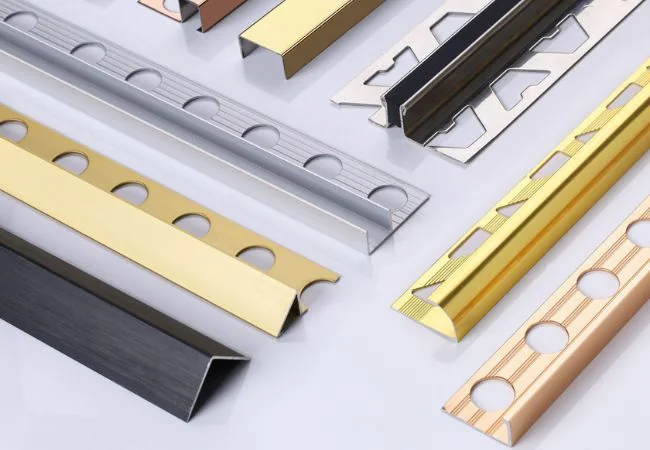
There are many tile trim materials, including stainless steel, brass, PVC, ceramic, and natural stone. Each has suitable applications.
For projects that require a combination of precision, manageable fabrication, appearance, and cost control, aluminum offers several practical advantages.
1. Aluminum Tile Trim Provides Reliable Edge Protection
Tile itself is hard, but exposed cut edges can chip when they receive direct impact.
Installing aluminum tile trim moves much of this contact away from the raw tile edge. The visible profile becomes the first point of contact around the corner or termination.
This is particularly useful around:
- Wall corners
- Door openings
- Window reveals
- Shower niches
- Kitchen backsplashes
- Countertop edges
- Columns
- Tiled partitions
- Commercial wall finishes
The purpose is not to make the tile indestructible. Instead, the trim reduces direct exposure of one of the more vulnerable parts of the installation.
For areas exposed to unusually heavy mechanical impact, stainless steel or a heavier-duty profile may still be more appropriate.
2. It Helps Produce Straight and Controlled Lines
Detailed tile work depends heavily on alignment.
Around a niche, for example, four separate edges may need to meet precisely. On an external wall corner, even a small variation can make the finished line appear irregular.
An extruded aluminum tile trim provides a consistent profile along the length of the edge. This creates a clear line that installers can use while positioning adjacent tiles.
This characteristic is especially useful in contemporary interiors, where narrow joints, straight corners, and simple geometric forms are highly visible.
The trim cannot correct poor substrate preparation or inaccurate tile setting. However, it can make edge geometry easier to control when the installation is planned correctly.
3. Aluminum Is Relatively Easy to Cut and Fabricate
One practical advantage of aluminum is its workability.
Compared with heavier metals, aluminum profiles are relatively easy to transport, measure, cut, and handle on site. This matters when a project contains many short sections, miters, niches, columns, or other detailed areas.
Profiles can be cut to create:
- Straight terminations
- 45-degree corner joints
- Short niche sections
- Window surrounds
- Decorative intersections
- Custom edge layouts
Appropriate cutting equipment should still be used. A clean cut is important because deformation, burrs, or inaccurate angles will remain visible after installation.
For precise metal trim work, using cutting equipment suitable for non-ferrous metals helps create cleaner joints.
Manufacturer’s Tip: Complete several trial cuts before preparing a large quantity of profiles. Confirm the cutting angle, blade condition, and finished joint before repeating the process throughout the project.
4. Different Profiles Solve Different Tile Details
There is no single aluminum tile trim profile that works for every edge.
One of aluminum’s main advantages is that extrusion allows many cross-sectional shapes to be manufactured for different installation requirements.
L-Shaped or Straight Edge Trim
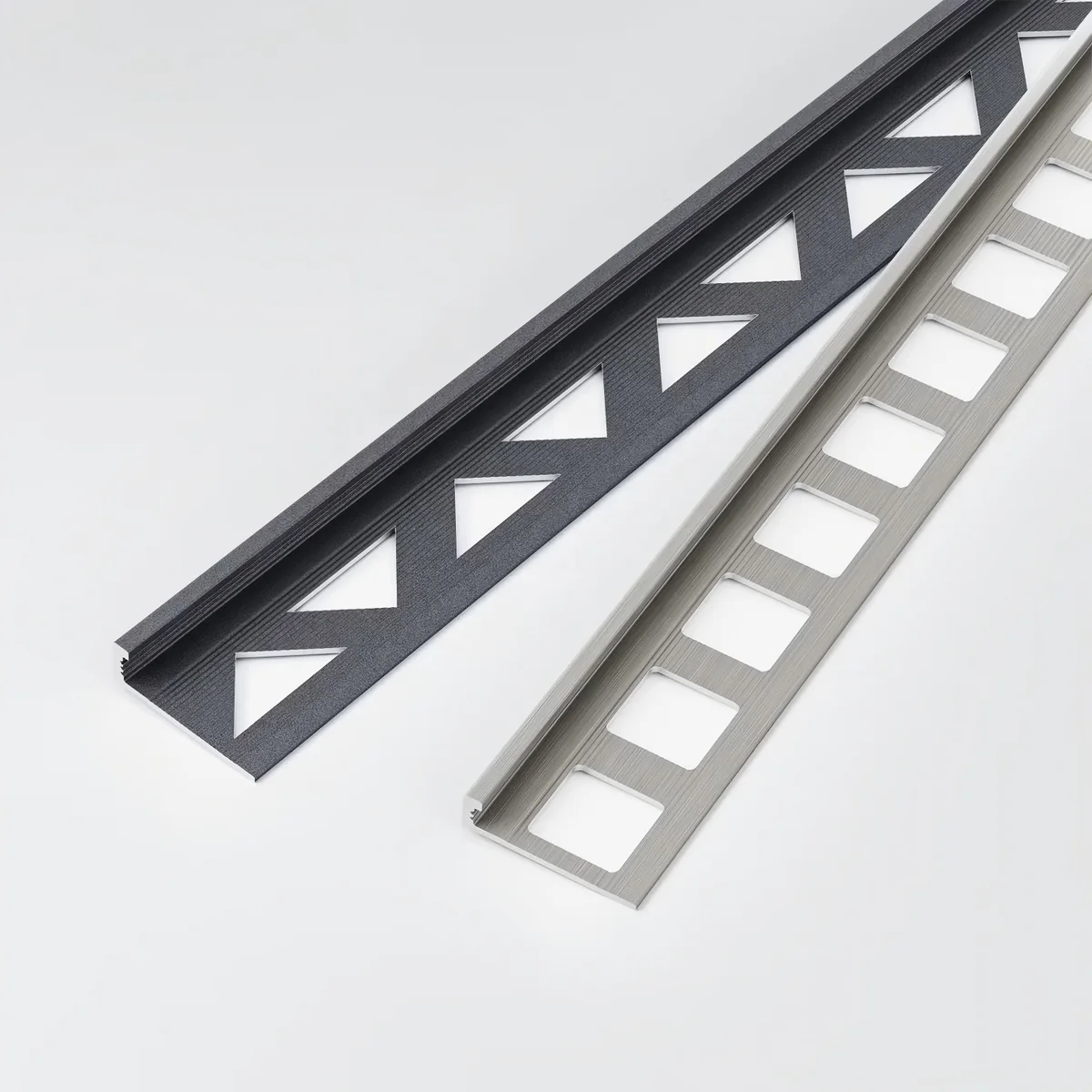
L-shaped trim is one of the simplest options.
It creates a narrow visible line and is commonly used for:
- Wall tile terminations
- Backsplash edges
- External edges
- Floor edges
- Simple transitions
Its relatively discreet appearance makes it useful when the trim should not dominate the tile design.
Round Edge Trim
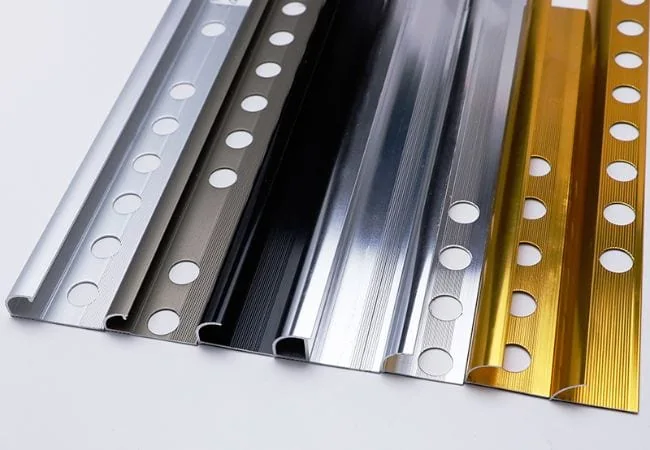
Round or quadrant profiles create a softer corner.
They are useful where a sharp architectural edge is not required or where a smoother exposed surface is preferred.
Common applications include bathrooms, countertops, wall corners, and window edges.
Square Edge Trim
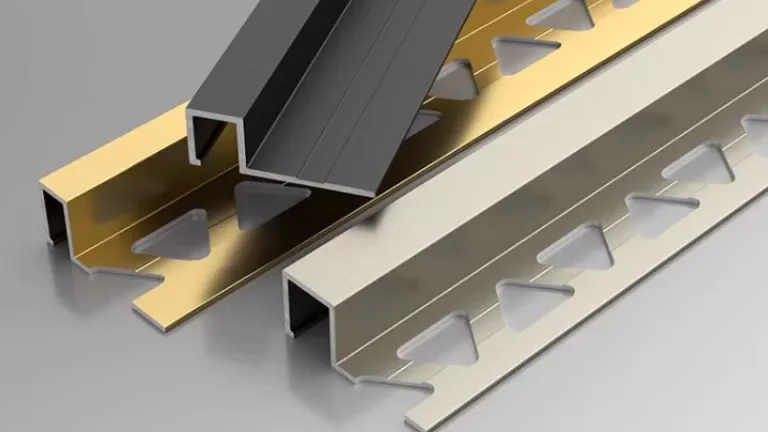
Square profiles create a more pronounced geometric edge.
They work particularly well around:
- Shower niches
- Feature walls
- Columns
- Modern bathrooms
- Commercial wall installations
Square profiles can also be used horizontally as decorative separators within tiled surfaces. Several common straight, round, square, and right-angle profiles are specifically designed around these different finishing requirements.
Right-Angle Profiles
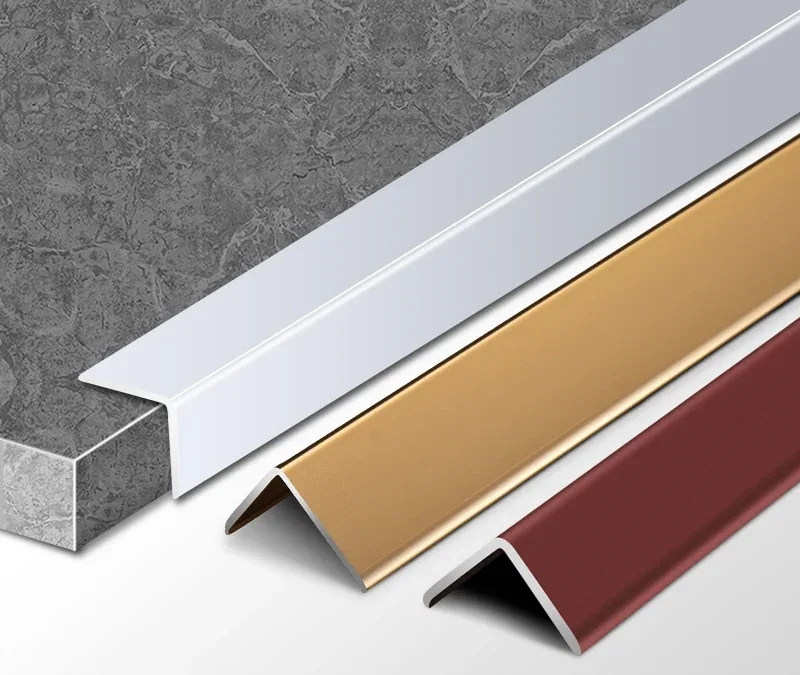
Right-angle trims are designed to reinforce and finish defined external corners.
They can be useful where the corner itself is an important part of the architectural detail.
Decorative and Divider Profiles
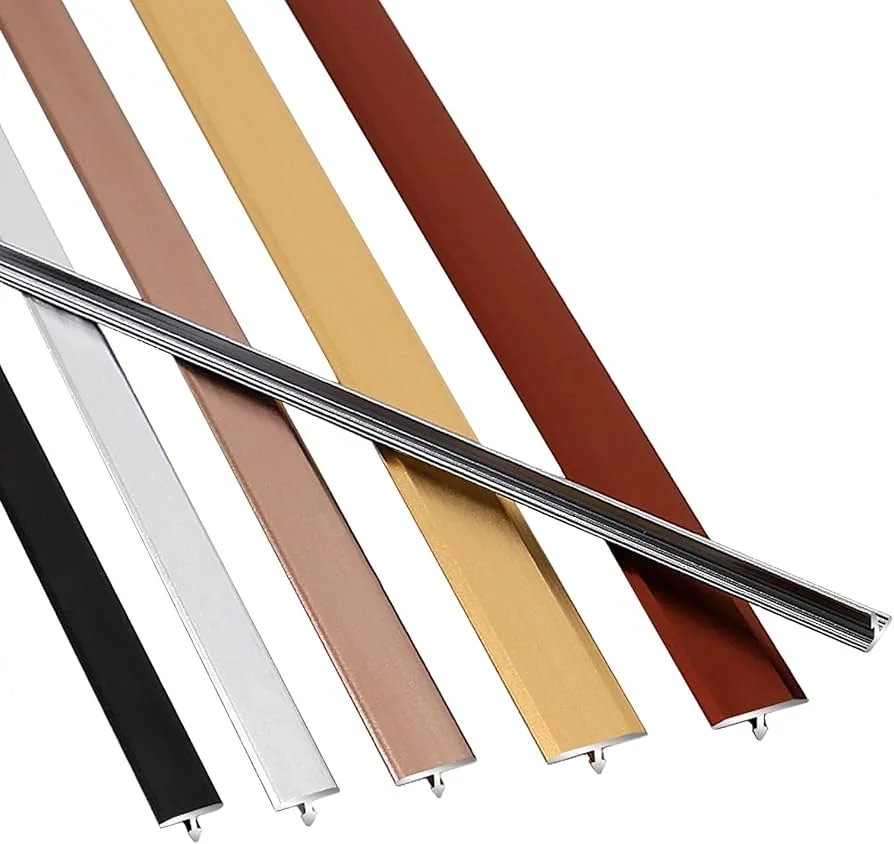
Some aluminum profiles are intended primarily to create lines between tile sections rather than simply covering an edge.
These can be used to separate tile colors, divide large surfaces, or coordinate tiled areas with other metal details.
The important point is to select the profile according to the actual construction detail rather than selecting a shape only because it looks attractive in a catalog.
5. Aluminum Tile Trim Offers Flexible Surface Finishes
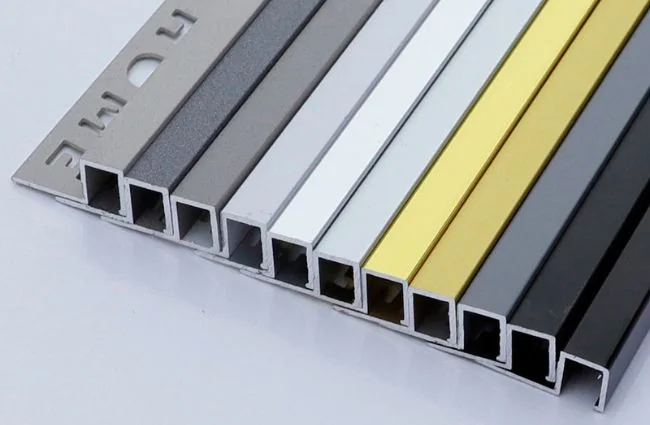
Tile projects vary greatly in color and style. A trim that works with white marble-look porcelain may not suit dark concrete-look tile.
Aluminum can receive different surface treatments, which makes it easier to coordinate the profile with surrounding materials.
Common options include:
- Natural anodized aluminum
- Silver finishes
- Black finishes
- Champagne tones
- Gold tones
- Brushed finishes
- Polished effects
- Powder-coated colors
- Wood-effect or decorative finishes
Anodizing modifies and strengthens the natural oxide layer at the aluminum surface, while powder coating adds a separate protective and decorative coating.
The correct finish depends on the environment as well as the design.
For projects with many rooms or large quantities of trim, finish consistency should also be considered. Ordering profiles from the same approved finish specification or production batch can help reduce noticeable variation.
6. It Works Well With Modern Tile Formats
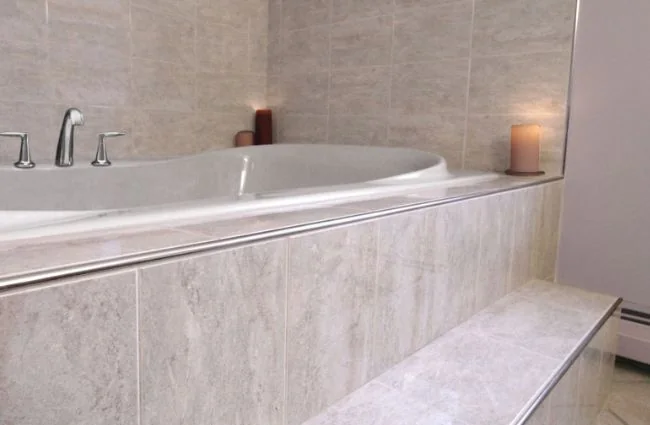
Large-format porcelain, stone-look tiles, rectified tiles, and narrow grout joints all emphasize precision.
When the tile pattern is clean and minimal, an irregular exposed edge becomes more noticeable.
Aluminum tile trim complements these installations because profiles can create narrow, consistent boundaries without requiring a bulky finishing element.
It is particularly useful with:
- Large-format wall tile
- Rectified porcelain
- Marble-effect tile
- Concrete-look tile
- Slim-format tile
- Mosaic combinations
- Decorative feature walls
The trim can either match the tile closely or intentionally contrast with it.
For example, black trim can define the geometry of light tiles, while a silver or neutral finish can remain visually quieter.
7. Aluminum Tile Trim Can Simplify Corner Detailing
Corners are one of the most demanding parts of tile installation.
There are generally several ways to finish them. Tiles may be mitered, special corner pieces may be used, or a metal profile can form the edge.
With aluminum tile trim, installers can use matching corner accessories or carefully cut the profiles to form joints.
Round, square, straight, and other corner configurations are available depending on the desired appearance. Correct measurement and cutting remain important because poorly aligned trim will make the corner joint visible.
For projects containing many identical niches or corners, matching prefabricated corner pieces may reduce repeated cutting and help improve visual consistency.
8. It Provides a Good Balance Between Weight and Durability
Material selection often involves compromise.
Stainless steel provides excellent strength and is useful in demanding commercial and industrial conditions, but it is heavier and generally more difficult to fabricate.
PVC is lightweight and economical, but it may not provide the same rigidity or metal appearance.
Brass provides a distinctive premium finish, but its appearance and cost make it more suitable for selected applications.
Aluminum sits between these options.
| Material | Main Strength | Typical Consideration |
|---|---|---|
| Aluminum | Lightweight, versatile, easy to fabricate | Finish and environment should be specified correctly |
| Stainless steel | High strength and impact resistance | Heavier and normally more expensive |
| Brass | Distinctive decorative appearance | Higher material cost and finish changes may occur |
| PVC | Lightweight and economical | Lower rigidity and different visual quality |
| Ceramic trim | Can coordinate closely with tile | More fragile during handling and cutting |
For many general interior projects, aluminum tile trim provides a practical balance between performance, appearance, installation efficiency, and material cost.
Where Is Aluminum Tile Trim Commonly Used?
Because the profiles are available in many shapes and finishes, aluminum tile trim can be used in both small details and large commercial installations.
Shower Niches
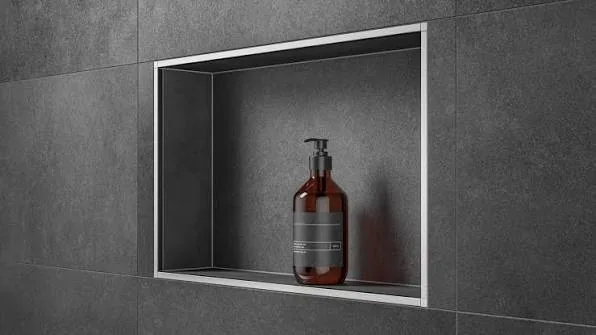
A niche contains several exposed edges within a small area. Straight and square profiles help form consistent lines around the opening while protecting the tile edges.
External Wall Corners
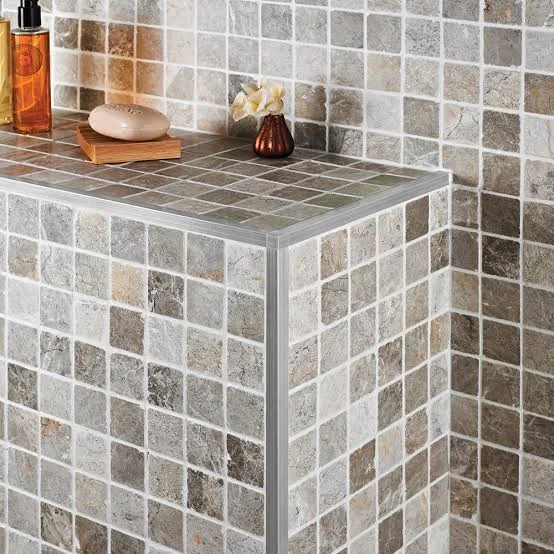
Corners in corridors, bathrooms, kitchens, and tiled partitions are exposed to regular contact.
Metal trim provides both protection and a defined architectural line.
Kitchen Backsplashes
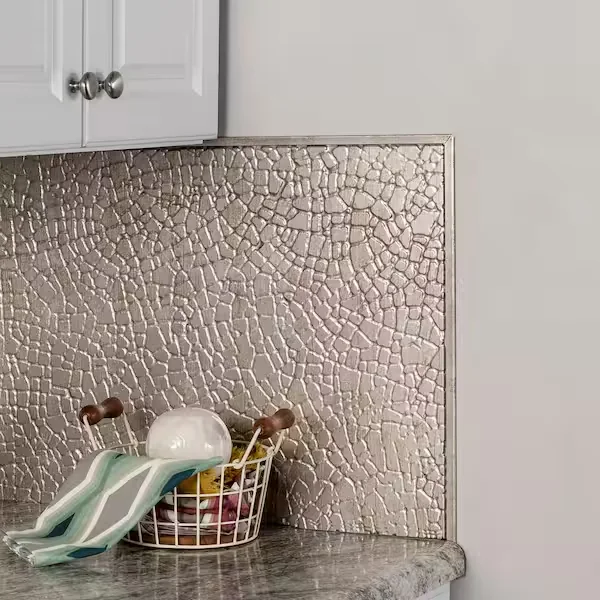
Where backsplash tile stops before reaching another wall or cabinet, aluminum tile trim can create a cleaner termination than leaving the tile edge exposed.
Window and Door Reveals
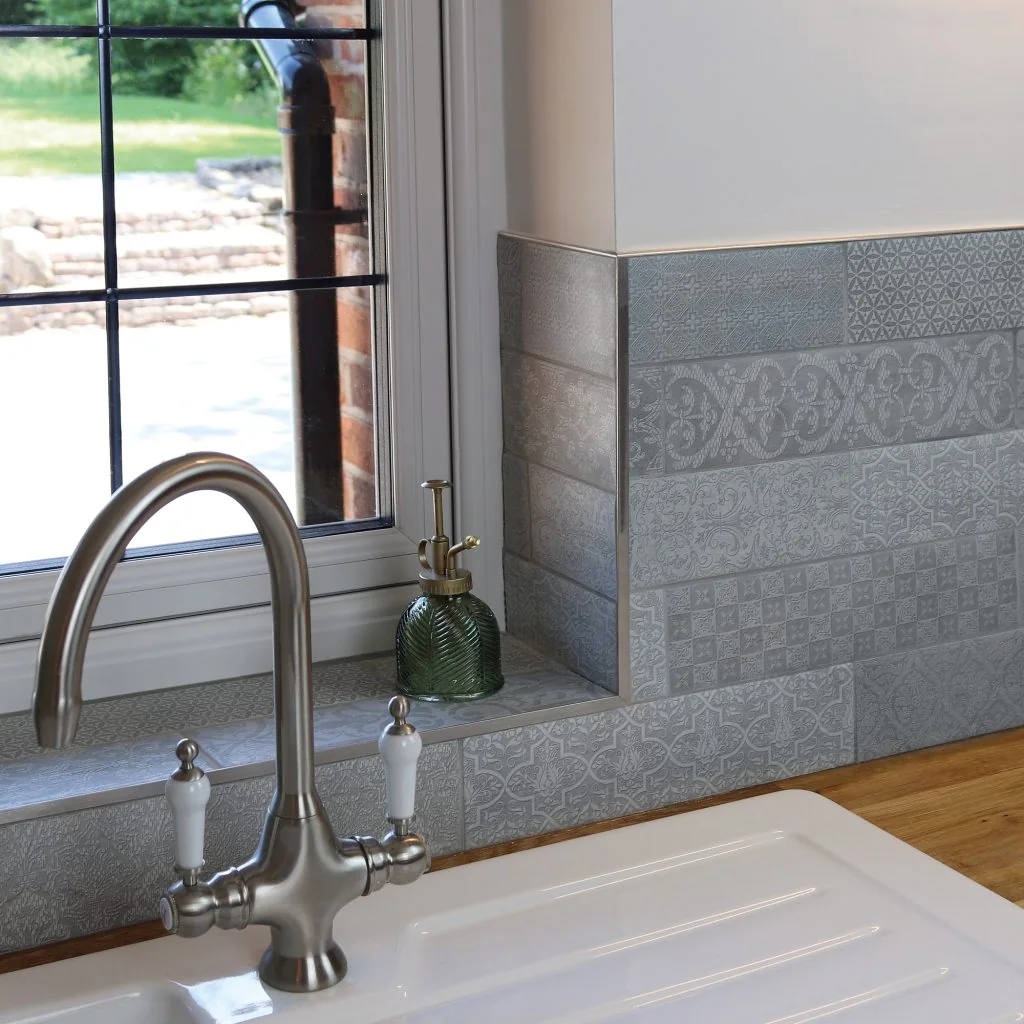
Multiple corners must often align around the opening. A consistent profile can simplify these intersections.
Decorative Tile Borders
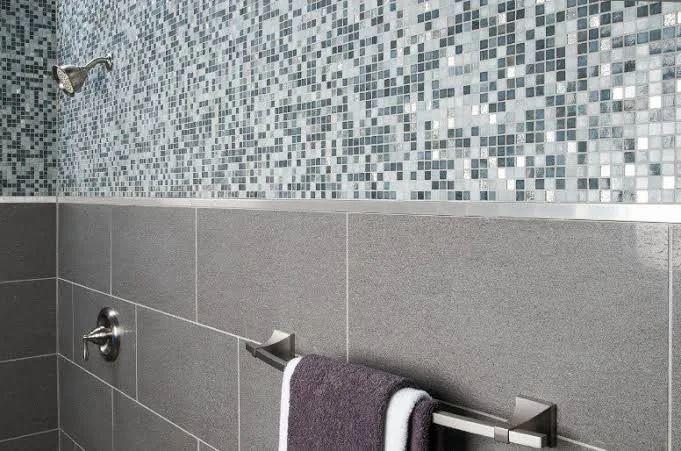
Metal trim can separate different tile patterns or colors, creating a controlled visual break.
Floor and Wall Transitions
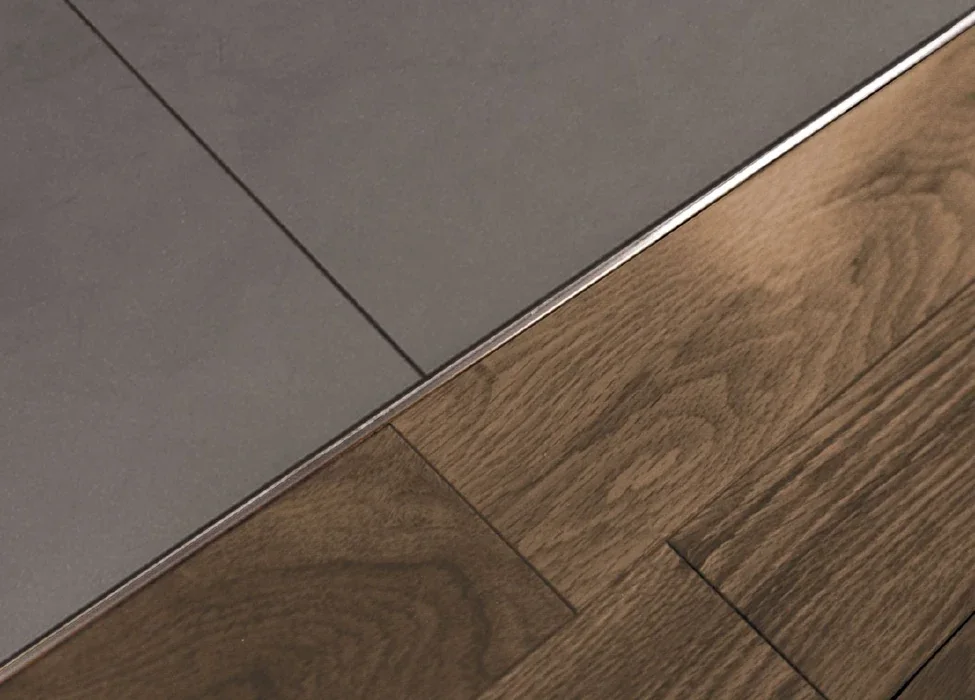
Certain profiles can finish the edge where tile meets another material, although the correct transition profile must be selected according to the height and movement requirements of the adjoining surfaces.
How to Choose the Right Aluminum Tile Trim
Choosing aluminum tile trim should start with the construction detail rather than the finish color.
Consider the following points before ordering.
Match the Profile Height to the Tile
Trim dimensions must be compatible with tile thickness and the intended installation build-up.
A profile that is too shallow may leave the tile edge exposed. A profile that is unnecessarily high can project beyond the finished tile surface.
Always check the profile drawing rather than relying only on a product photograph.
Select the Profile Shape for the Edge
Ask what the trim actually needs to do.
- For a discreet termination, consider a straight profile.
- For a softer corner, consider a rounded profile.
- For a strong geometric line, use a square profile.
- For decorative separation, choose a divider or border profile.
- For curved surfaces, use a profile specifically designed to be formed rather than forcing a standard rigid extrusion.
Consider the Installation Environment
Interior dry areas, bathrooms, commercial corridors, exterior locations, pools, and chemically cleaned environments do not create the same conditions.
Specify the alloy, surface finish, and coating according to the application.
We recommend confirming the intended environment with the trim supplier when the profile will be exposed to continuous moisture, aggressive cleaning chemicals, salt, or unusual environmental conditions.
Coordinate the Finish With Other Metalwork
Do not consider the tile in isolation.
Door frames, faucets, shower frames, cabinet handles, lighting profiles, floor transitions, and other metal elements may already establish a finish direction.
Matching or intentionally contrasting these finishes usually produces a more coordinated result.
Check Lengths and Quantities Before Ordering
Measure the total linear requirement and allow for cuts, corners, and reasonable installation waste.
Complex layouts with many niches or mitered joints generally create more offcuts than long straight walls.
For larger projects, customized extrusion lengths may also help reduce joints and unnecessary cutting.
Installation Details That Affect the Finished Result
Even high-quality aluminum tile trim can look poor when installation is inaccurate.
For profiles with anchoring legs, trim is normally installed together with the tile. The anchoring section is embedded into the adhesive before the adjacent tile is positioned.
Several details deserve attention.
Plan the Trim Before Tiling
Confirm trim positions, profile types, tile thicknesses, and corner arrangements before adhesive is applied.
Trying to solve edge details after most of the tile is already installed can limit the available options.
Keep the Profile Straight
Check alignment before the adhesive cures.
Long metal profiles make deviations easy to see, particularly under lighting that runs parallel to the wall.
Make Clean Cuts
Use suitable equipment and remove burrs from cut ends.
Test miter joints before permanently setting the profiles.
Maintain Consistent Tile Position
The tile face and visible trim edge should form the intended relationship throughout the installation.
Do not assume the trim itself will compensate for uneven adhesive thickness or an irregular substrate.
Clean the Surface During Installation
Remove adhesive, grout, and cement residue from the visible aluminum surface before it hardens.
This is particularly important with decorative finishes. Cement-based materials left on metal surfaces can stain or affect the finish, so excess material should be cleaned promptly.
Common Mistakes to Avoid
Most problems with aluminum tile trim come from incorrect specification or installation rather than from the profile itself.
Common mistakes include:
- Choosing trim before confirming tile thickness
- Selecting a profile based only on appearance
- Mixing visibly different metal finishes
- Cutting profiles with unsuitable tools
- Leaving burrs on exposed ends
- Installing damaged or bent profiles
- Misaligning corner joints
- Allowing grout or adhesive to dry on the finished surface
- Using an interior-grade finish in an unsuitable environment
- Ordering exact quantities without allowing for cutting waste
A small amount of planning before installation usually prevents much more difficult corrections later.
Manufacturer’s Recommendations for Project Specifications
For small installations, selecting tile trim may be relatively straightforward. Larger projects require more control because the same detail may be repeated across hundreds of rooms or several buildings.
When preparing an aluminum tile trim specification, we recommend confirming:
- Profile cross-section
- Overall dimensions
- Tile thickness compatibility
- Aluminum alloy where relevant
- Surface treatment
- Color reference
- Profile length
- Corner accessories
- Installation method
- Packaging requirements
- Quantity tolerances
- Approved physical sample
For custom projects, a technical drawing is often more useful than a product image.
A drawing allows the architect, contractor, supplier, and installer to confirm that everyone is working with the same dimensions before production or installation begins.
FAQs About Aluminum Tile Trim
Is aluminum tile trim suitable for bathrooms?
Yes. Properly specified aluminum tile trim is commonly used in bathrooms, shower areas, niches, and tiled walls.
The correct surface treatment should still be selected for the exposure conditions, and harsh cleaning products that could attack the finish should be avoided.
Is aluminum tile trim better than stainless steel?
Neither material is universally better.
Aluminum is lighter, easier to fabricate, and often more economical. Stainless steel provides greater strength and can be preferable in heavy-duty or demanding environments.
Material selection should depend on the project rather than a simple material ranking.
Can aluminum tile trim be cut on site?
Yes. Aluminum profiles are commonly cut on site to suit actual installation dimensions.
Use suitable equipment for non-ferrous metals and make test cuts when precise visible joints are required.
Can tile trim be installed after the tiles are finished?
Most traditional profiles with anchoring legs are designed to be installed together with the tile.
Some retrofit or surface-mounted profiles exist for finished installations, but they use a different installation principle.
Does aluminum tile trim replace waterproofing?
No.
Tile trim is an edge-finishing and protection component. It should not be treated as a substitute for the waterproofing system required behind tiles in wet areas.
Should the trim match the tile color?
Not necessarily.
A matching finish creates a quieter edge, while a contrasting finish can emphasize tile geometry. Both approaches can work if they are coordinated with the overall design.
Which profile works best around a tile niche?
Straight and square profiles are common choices because they create clear, controlled lines.
However, the final selection depends on the tile thickness, desired corner appearance, and whether mitered joints or matching corner accessories will be used.
Conclusion
Detailed tile work depends on much more than selecting attractive tiles. Corners, terminations, niches, transitions, and exposed edges must also be planned carefully if the installation is expected to remain neat and durable.
Aluminum tile trim is a practical solution because it combines edge protection, precise geometry, relatively easy fabrication, multiple profile shapes, and a broad choice of surface finishes. It can simplify difficult details while creating a controlled boundary around tiled surfaces.
The key is correct specification. Profile shape should suit the edge, profile size should match the tile, and the finish should be appropriate for the installation environment.
For projects with repeated details or customized requirements, selecting aluminum tile trim from technical drawings and approved samples is generally more reliable than choosing profiles by appearance alone. A small finishing profile may represent only a limited part of the total tile package, but when it is specified correctly, it can make a significant difference to the quality and consistency of the finished tile work.