Old skirting boards can quickly make an otherwise well-finished interior look worn. Paint may peel, corners may become chipped, joints may open, and older profiles may no longer match a renovated floor or wall. Removing them completely is possible, but it can create additional work and may damage the surrounding wall finish.
A skirting board cover provides another option. Instead of removing the existing baseboard, a new profile is installed over it. The cover hides the old surface and creates a cleaner, more uniform finish with less demolition.
In this guide, we explain what a skirting board cover is, how it works, when it should be used, what materials are available, and what should be checked before installation.
What Is a Skirting Board Cover?
A skirting board cover is a finishing profile designed to fit over an existing skirting board or the lower section of a wall.
It is also sometimes called:
- Skirting cover
- Baseboard cover
- Over-skirting
- Skirting renovation profile
- Retrofit skirting
- Cover skirting board
Traditional skirting boards are installed directly against the wall. A covering profile is different because its internal dimensions are designed to accommodate an existing baseboard.
Once installed, the old skirting is concealed behind the new profile.
The main purposes are to:
- Hide damaged or outdated skirting
- Create a cleaner wall-to-floor transition
- Reduce the need to remove old baseboards
- Protect the lower wall from impact
- Cover minor gaps and irregularities
- Update the interior finish
- Simplify some renovation projects
Skirting boards already perform both protective and decorative functions at the wall-to-floor junction. Different skirting materials provide different levels of moisture, impact, and wear resistance, so the material selected for a covering system is just as important as its appearance.
A cover should therefore be treated as a functional architectural profile rather than simply decorative cladding.
How Does a Skirting Board Cover Work?
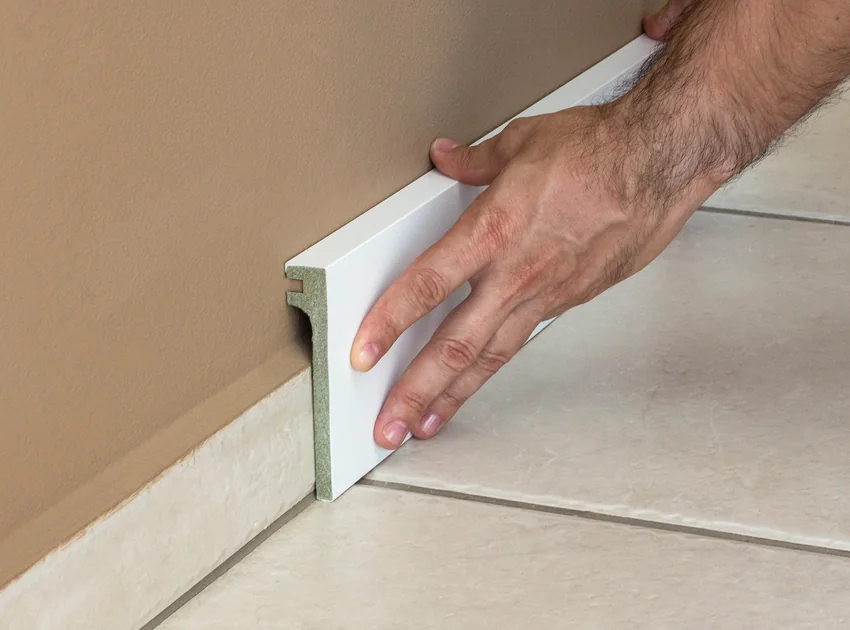
The concept is relatively simple.
The existing skirting remains fixed to the wall. A larger skirting board cover is measured, cut, and positioned over it. Depending on the profile design, it may be secured with construction adhesive, clips, mechanical fixings, or a combination of methods.
The new profile must have enough internal clearance for the existing skirting.
For example, if the old baseboard is 15 mm thick and 80 mm high, the covering profile needs an internal cavity slightly larger than these dimensions. Additional clearance may also be necessary for adhesive and minor unevenness.
This makes accurate measurement one of the most important parts of the project.
The cover should not be forced over an oversized baseboard. Doing so can distort the profile, create visible gaps, or weaken the installation.
Typical Structure of a Cover Profile
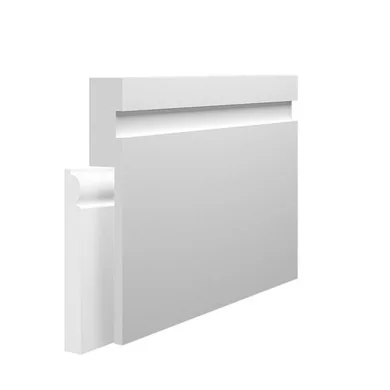
Although designs vary between manufacturers, many covering systems include:
- A visible front face
- A top return or finishing edge
- An internal cavity for the existing skirting
- A lower edge positioned close to the flooring
- Optional fixing or adhesive surfaces
Metal versions can be extruded or formed into relatively thin but strong profiles. This makes it possible to create a modern appearance without making the base of the wall unnecessarily bulky.
When Is a Skirting Board Cover a Good Choice?
A skirting board cover is most useful when the original skirting does not need complete replacement.
1. The Existing Skirting Looks Old
Older wood or MDF skirting may remain firmly attached but have an outdated shape, color, or finish.
Painting is one solution, but it does not change the original profile.
Installing a cover can provide a more significant visual update without removing the existing material.
2. The Surface Is Scratched or Chipped
Vacuum cleaners, furniture, carts, cleaning equipment, and everyday foot traffic can damage the lower edge of a wall.
Small chips and scratches may be difficult to repair consistently across a large project.
A covering profile hides these defects while adding another protective layer.
3. Removing the Existing Skirting Could Damage the Wall
Traditional skirting boards may be fixed with nails, screws, adhesives, or a combination of methods.
Removing them can sometimes damage paint, plaster, drywall, or wall panels.
A skirting board cover can reduce this demolition work when the original baseboard remains stable.
4. Flooring Has Been Replaced
Floor renovations can change the visual relationship between the floor and existing skirting.
New flooring may leave small perimeter gaps or may simply make the old skirting look unsuitable.
A properly sized cover can help conceal minor finishing gaps while creating a new transition between the wall and floor.
5. A Faster Renovation Method Is Required
In occupied buildings, minimizing disruption can be important.
Removing old skirting, repairing walls, repainting, and then installing new profiles involves several operations. Covering the existing baseboard can reduce some of these steps.
However, faster installation should not replace proper surface inspection and preparation.
When Should You Not Cover Existing Skirting?
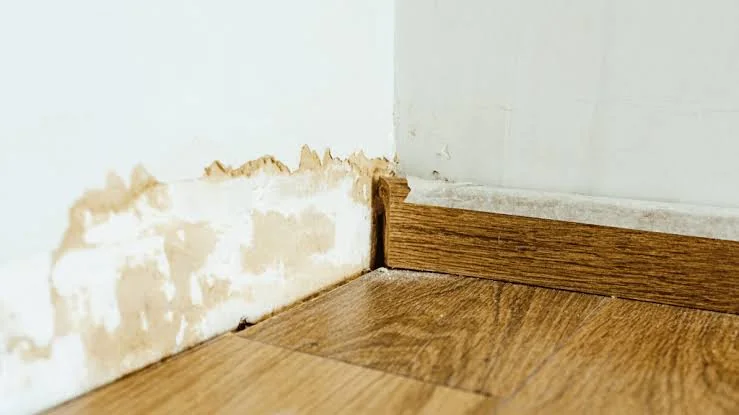
A skirting board cover is useful, but it cannot solve every problem.
We generally recommend removing and replacing the original skirting when there is significant underlying damage.
Avoid simply covering the existing profile if you find:
- Severe moisture damage
- Mold or persistent dampness
- Rotten timber
- Loose sections
- Major wall damage
- Pest damage
- Large structural movement
- Swollen or badly distorted MDF
The cover should be installed over a stable substrate.
If the original skirting is separating from the wall, installing another profile over it only hides the problem rather than correcting it.
Manufacturer’s Tip: Before specifying a covering system for a renovation project, inspect several areas rather than checking only one visible section. Conditions can vary considerably around doors, wet areas, corners, and high-traffic zones.
Common Materials for Skirting Board Cover Profiles
Material selection affects appearance, durability, installation, and maintenance.
Traditional skirting boards are produced from wood, MDF, laminate, vinyl, metal, PVC, and other materials. Metal skirting, particularly aluminum and stainless steel, is commonly selected where durability and a contemporary appearance are priorities, while PVC and MDF provide economical alternatives for many interior applications.
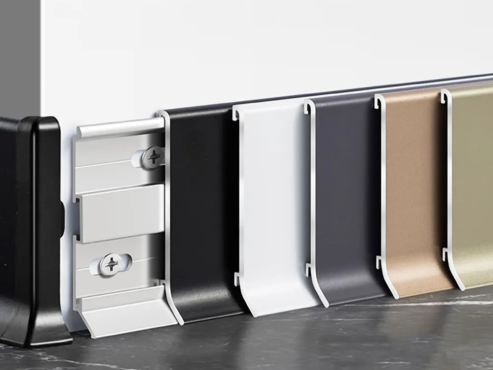
Aluminum Skirting Board Cover
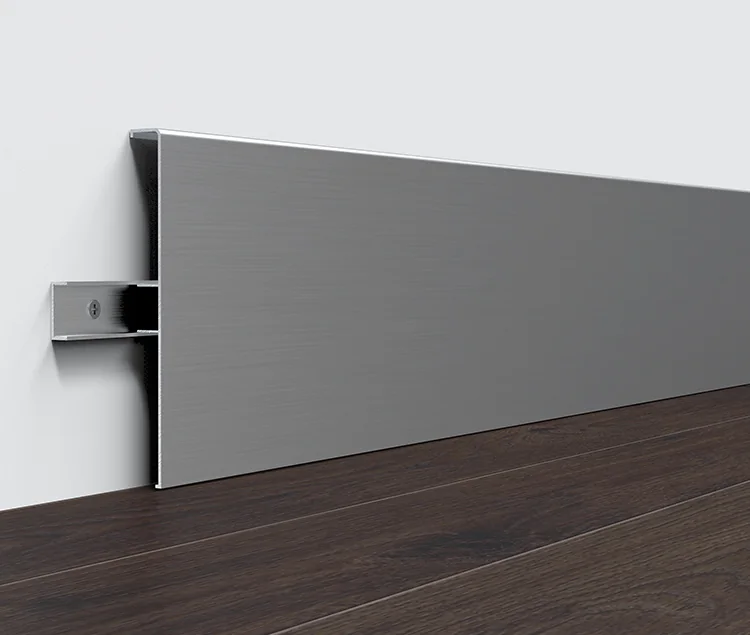
An aluminum skirting board cover is a practical option for contemporary renovation projects.
Aluminum can be manufactured into precise profiles with relatively thin walls. It is also easy to produce in different heights, widths, shapes, and surface finishes.
Common finishes include:
- Anodized silver
- Brushed finish
- Matte black
- Champagne
- Powder-coated colors
- Wood-effect finishes
- Customized colors
Aluminum is particularly suitable where clean lines and low maintenance are required.
It also performs well in environments where traditional timber-based materials may be less desirable because of moisture or frequent cleaning.
For larger projects, aluminum profiles can also be customized according to the dimensions of the original skirting.
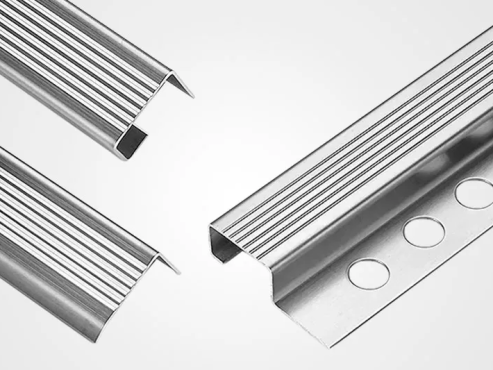
Stainless Steel Covers
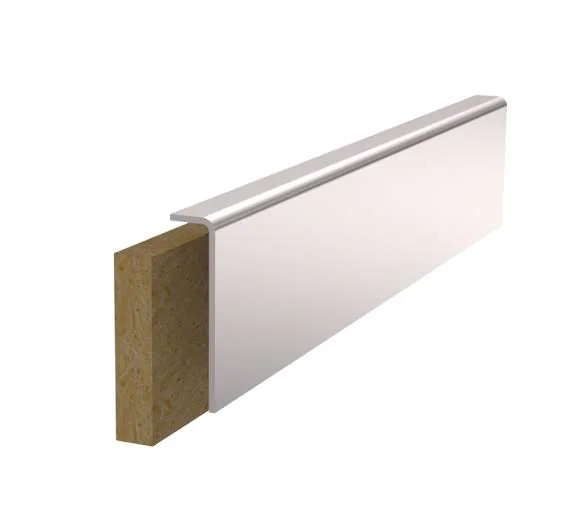
Stainless steel provides higher surface hardness and strong resistance to impact and frequent cleaning.
It is commonly considered for:
- Public buildings
- Healthcare interiors
- Transport areas
- Commercial corridors
- Food-related facilities
- Other demanding environments
The disadvantage is that stainless steel is generally heavier and more difficult to cut on site than aluminum.
For many standard interior applications, aluminum offers an easier balance between strength, weight, appearance, and processing.
MDF Skirting Covers
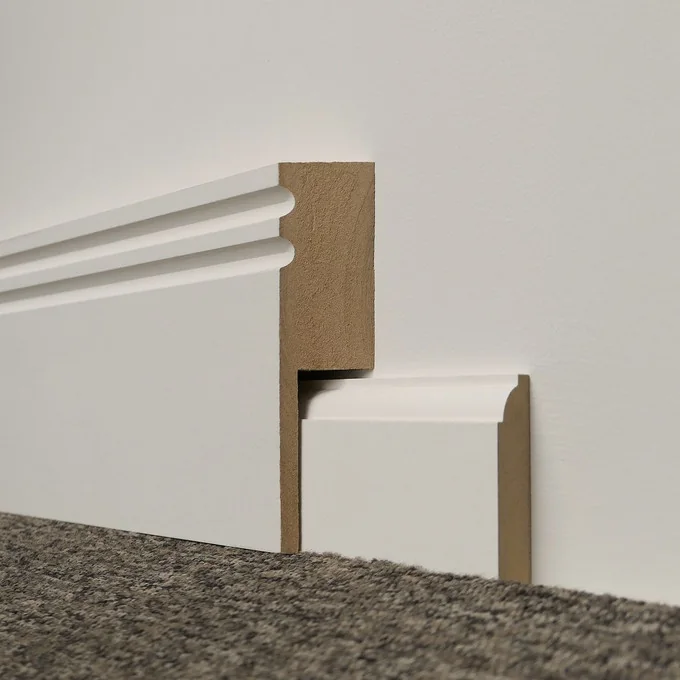
MDF covering profiles are commonly used for interior renovation because they are economical and easy to paint.
They are suitable when:
- A traditional painted appearance is required
- Moisture exposure is low
- Moderate durability is sufficient
- Cost is a major consideration
However, moisture management needs more attention than with metal or PVC materials.
PVC Skirting Covers
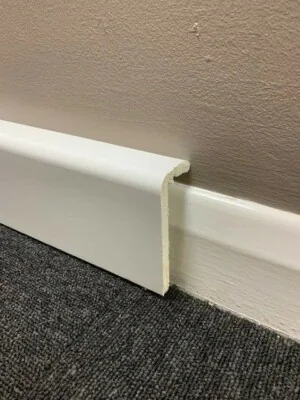
PVC profiles are lightweight, economical, and resistant to water.
They may be suitable for projects where easy installation and low cost are priorities.
PVC can work well in many light-duty environments, although it generally does not provide the same rigidity or premium surface appearance as a well-finished metal profile.
Aluminum vs. MDF vs. PVC Skirting Board Cover
The following comparison provides a simple starting point for material selection.
| Feature | Aluminum | MDF | PVC |
|---|---|---|---|
| Durability | High | Medium | Medium |
| Moisture Resistance | High | Low to Medium | High |
| Impact Resistance | High | Medium | Medium |
| Maintenance | Low | Medium | Low |
| Modern Appearance | Excellent | Good when painted | Good |
| Custom Profile Options | Excellent | Good | Good |
| On-Site Cutting | Easy with proper tools | Easy | Easy |
| Suitable for Heavy Traffic | Yes | Limited | Limited to moderate |
| Typical Cost | Medium | Low | Low to medium |
There is no single material that is correct for every project.
For a painted residential refurbishment, MDF may be sufficient. For a commercial renovation requiring better resistance to moisture and impact, an aluminum skirting board cover may provide better long-term performance.
What Problems Can a Skirting Board Cover Hide?
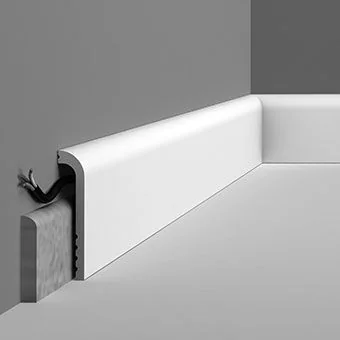
A covering profile can correct many visual defects.
Scratched Surfaces
Surface wear is common in corridors, offices, retail interiors, hotels, and residential spaces.
Instead of repairing every damaged area separately, a continuous cover provides a consistent new finish.
Old Paint
Multiple paint layers can make traditional skirting profiles look uneven.
A skirting board cover conceals the surface completely, so extensive sanding may not be required unless it affects adhesion or fit.
Minor Chips and Dents
Small defects can usually remain behind the cover as long as the baseboard is structurally stable.
Large projecting areas should still be repaired or leveled.
Small Flooring Gaps
A properly selected profile can conceal some perimeter finishing gaps between flooring and the wall.
However, expansion requirements for the flooring must still be respected. The cover should conceal the gap without preventing necessary floor movement.
Inconsistent Appearance
Renovation projects often contain sections of skirting that have been repaired at different times.
Installing one continuous covering system can create a more uniform result across the project.
How to Choose the Right Skirting Board Cover
Choosing the correct profile requires more than selecting a color.
Measure the Existing Skirting First
Measure:
- Overall height
- Maximum thickness
- Top projection
- Decorative projections
- Wall irregularities
- Required length
- Internal and external corners
Do not measure only one section.
Older buildings can have significant variation between different walls.
Check Internal Clearance
The internal cavity of the skirting board cover must be large enough to fit over the widest part of the existing profile.
Allow a small installation tolerance.
Forcing a profile into position can cause deformation or poor alignment.
Consider the New Overall Size
A larger cover projects farther into the room.
This may affect:
- Door frames
- Built-in cabinets
- Furniture
- Floor outlets
- Radiators
- Wall panels
Always check these interfaces before confirming the profile size.
Match the Material to the Environment
For dry, low-traffic interiors, MDF or PVC may be adequate.
For commercial spaces, frequently cleaned areas, or locations where impact is expected, metal profiles are often the more durable option.
How to Install a Skirting Board Cover
Watch the skirting board cover installation video on YouTube
Installation varies according to the profile and manufacturer, but the general process is straightforward.
Similar architectural trim installations normally depend on accurate measurement, clean surfaces, correct cutting, compatible adhesive, careful positioning, and sufficient curing time.
Step 1: Inspect the Existing Baseboard
Check whether the skirting is firmly attached.
Repair loose sections first.
Also investigate signs of moisture, swelling, mold, or deterioration before covering the area.
Step 2: Measure the Wall
Measure each wall section separately.
Mark the cutting dimensions clearly on the profile.
Corners, door frames, and columns should be measured carefully because small errors are much more noticeable at these junctions.
Step 3: Cut the Cover
Use cutting equipment suitable for the material.
For aluminum, a fine-tooth saw or appropriate metal-cutting saw can provide clean results.
Remove burrs after cutting.
Accurate cutting is particularly important at external corners and visible junctions. Trim installation guides commonly use carefully measured miters or compatible corner accessories to create a clean connection.
Step 4: Prepare the Surface
Remove:
- Dust
- Grease
- Loose paint
- Adhesive residue
- Projecting debris
The substrate should be clean, dry, and stable.
Surface preparation is important because contaminants and uneven areas can reduce adhesive contact.
Step 5: Apply the Fixing System
Apply a compatible construction adhesive according to the adhesive manufacturer’s instructions, or use the clips or mechanical fasteners specified for the profile.
Do not apply excessive adhesive near visible edges because it may squeeze out during installation.
Step 6: Position and Secure the Profile
Place the profile over the old skirting and press it evenly into position.
Check alignment along the full wall rather than focusing only on one end.
Temporary painter’s tape can sometimes help prevent movement while compatible adhesive cures, a method also used with other adhered architectural trim profiles.
Step 7: Complete the Corners and Joints
Depending on the system, corners can be finished with:
- Miter cuts
- Prefabricated internal corners
- Prefabricated external corners
- End caps
- Joining pieces
Accessories can simplify installation on larger projects and help maintain consistent appearance.
Step 8: Clean the Finished Surface
Remove excess adhesive before it fully hardens.
Finally, inspect joints, corners, and alignment.
A clean installation should appear continuous without obvious movement, excessive gaps, or distorted sections.
Skirting Board Cover vs. Complete Skirting Replacement
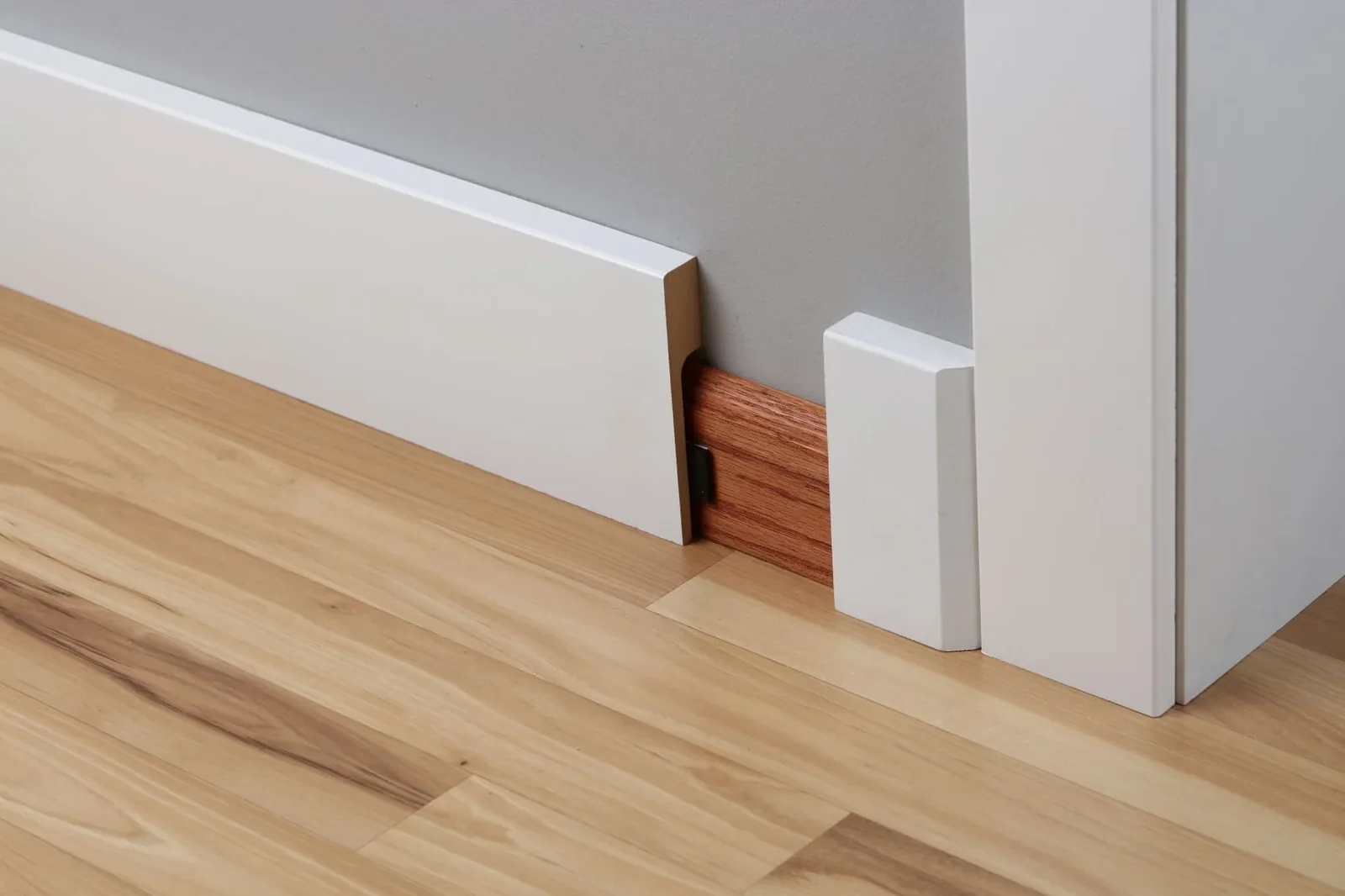
Both methods are useful, but they solve different problems.
| Factor | Skirting Board Cover | Complete Replacement |
|---|---|---|
| Existing Skirting Removal | Usually unnecessary | Required |
| Wall Repair After Removal | Usually limited | Often required |
| Installation Speed | Generally faster | Generally slower |
| Suitable for Damaged Surface | Yes, if structurally sound | Yes |
| Suitable for Rotten or Loose Skirting | No | Yes |
| Changes Profile Appearance | Yes | Yes |
| Construction Waste | Lower | Higher |
| Access to Wall Behind Skirting | No | Yes |
A skirting board cover is therefore best understood as a retrofit solution.
It is not automatically better than replacement. Its main advantage appears when the existing installation remains structurally acceptable and only the visible finish needs improvement.
Important Details for Commercial and Bulk Projects
For individual rooms, standard profiles may be sufficient.
Larger projects require more detailed specification.
Profile Dimensions
Confirm:
- Cover height
- Internal depth
- Face thickness
- Length per piece
- Corner details
- Allowable installation tolerance
Providing a drawing or a sample of the existing baseboard can make profile selection more accurate.
Material Thickness
A profile that is too thin may deform during transport or installation.
A profile that is unnecessarily heavy can increase material and shipping costs.
The correct thickness depends on the profile geometry, alloy, installation method, and expected impact level.
Surface Finish
For aluminum skirting board cover products, anodizing and powder coating are common options.
Specify the required color, gloss level, texture, and acceptable color tolerance before mass production.
For projects using several metal trims, producing the profiles with coordinated finishes can create a more consistent result.
Length and Packaging
Long profiles require suitable export packaging to reduce:
- Bending
- Scratching
- Corner damage
- Surface abrasion
For bulk procurement, packaging design should be confirmed together with profile length and shipping method.
FAQ
Can You Put a Skirting Board Cover Over Existing Skirting?
Yes. That is the main purpose of many covering systems.
The original skirting must be firmly attached, dry, and small enough to fit inside the new profile. The dimensions should always be checked before ordering.
Is It Better to Cover or Remove Old Skirting Boards?
It depends on their condition.
Use a skirting board cover when the old baseboard is stable but unattractive or lightly damaged. Remove it if there is severe moisture damage, movement, rot, mold, or major structural deterioration.
Can You Cover MDF Skirting Boards?
Yes.
MDF is one of the common existing materials that can be covered, provided it has not swollen because of moisture and remains securely attached to the wall.
Can Aluminum Be Used to Cover Existing Skirting?
Yes. Aluminum is particularly suitable for producing thin, durable cover profiles.
It is commonly selected where a modern appearance, corrosion resistance, low maintenance, and dimensional consistency are required.
How Do I Measure for a Skirting Board Cover?
Measure the maximum height and maximum projection of the existing skirting.
Do not measure only its flat face. Decorative curves, top edges, screws, or uneven sections may increase the required internal dimensions.
Then choose a profile with sufficient clearance for installation.
Can a Skirting Cover Hide Cables?
Some specially designed profiles can provide internal space for low-voltage cables, but this should not be assumed for every product.
Electrical requirements, cable capacity, heat, accessibility, and applicable regulations should be considered separately. Use a profile specifically designed for cable management where this function is required.
Is a Skirting Board Cover Suitable for Commercial Interiors?
Yes, particularly when a durable material such as aluminum or stainless steel is used.
The correct specification should consider expected traffic, cleaning methods, impact exposure, moisture, surface finish, and fixing method.
Can Skirting Covers Be Customized?
Yes. Metal profiles are especially suitable for customization.
Height, depth, shape, thickness, length, surface treatment, and color can be adjusted according to production capability and project quantity.
Conclusion
A skirting board cover offers a practical way to improve old or damaged skirting without automatically removing the original baseboard.
It can hide scratches, chipped finishes, outdated designs, and minor imperfections while creating a cleaner wall-to-floor transition. More importantly, the right profile adds another layer of protection to an area that regularly experiences impact and cleaning.
For light-duty renovations, MDF or PVC may provide an economical solution. Where greater durability, moisture resistance, precise dimensions, and a contemporary finish are required, an aluminum skirting board cover is often worth considering.
For bulk or project-specific requirements, custom profiles can also be produced around the dimensions of the existing skirting. This approach can provide a more accurate fit and a more consistent finished appearance across the entire project.