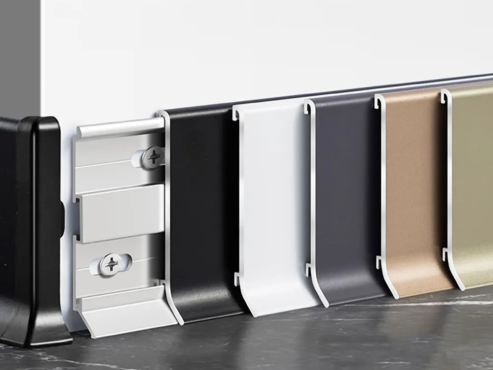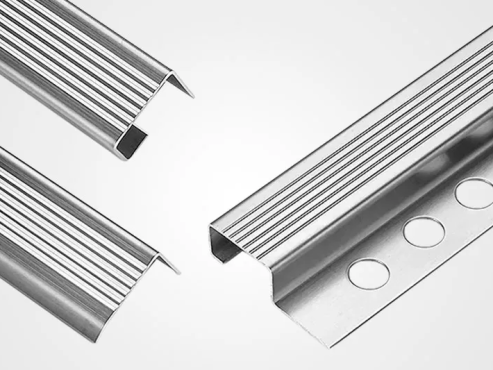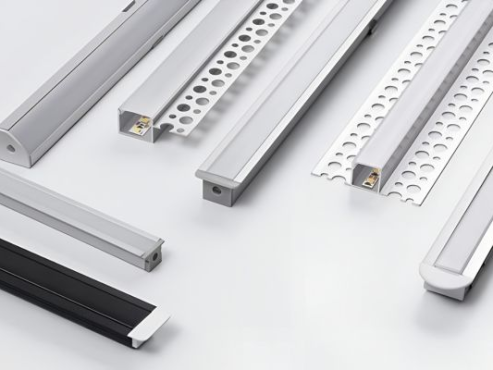
Anodized aluminum colors combine the metallic appearance of aluminum with a protective oxide finish. The color is not applied in the same way as ordinary liquid paint. During anodizing, an electrochemical process forms a controlled oxide layer on the aluminum surface. This porous layer can then receive dyes, metallic salts, or other coloring treatments before it is sealed.
The result is a finish that keeps the natural character of the metal while improving corrosion resistance and surface durability. This is why anodized aluminum colors are widely used on architectural profiles, tile trims, skirting boards, stair nosings, wall panel trims, lighting profiles, furniture components, and many other aluminum products.
However, selecting a color from a chart is only part of the process. Alloy grade, surface preparation, oxide thickness, coloring method, sealing quality, and production control can all change the final appearance. This guide explains the main color options, how they are produced, and what should be confirmed before placing a project order.
Common Anodized Aluminum Colors
Anodizing changes the outer surface of aluminum into a thicker and more controlled aluminum oxide layer. Unlike a separate film that sits completely on top of the metal, the anodic layer grows from the aluminum surface and becomes part of the finished component.
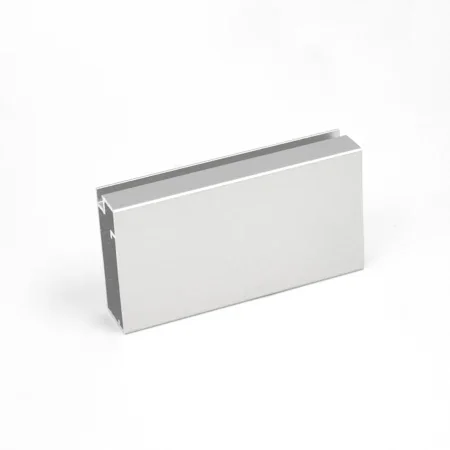
Natural or Clear Anodizing
Natural anodizing creates a silver or light metallic finish. It protects the aluminum while keeping the original metal appearance visible.
Clear finishes are often used for:
- Aluminum tile trim
- LED profiles
- Door and window components
- Industrial covers
- Minimalist interior details
- Brushed or satin architectural profiles
Although it is called “clear,” the final shade is not completely colorless. The alloy, oxide thickness, and surface texture can create slight gray, silver, or warm tones.
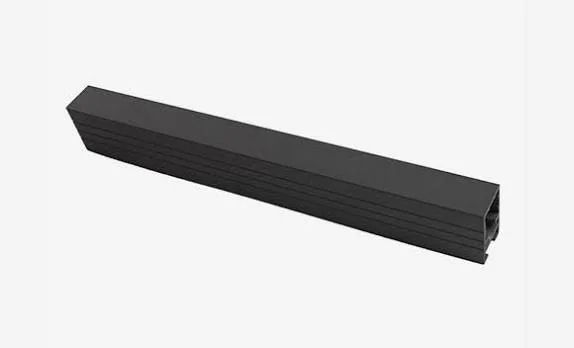
Black Anodizing
Black is one of the most requested anodized aluminum colors. It gives profiles a clean, modern appearance and works well with dark tiles, glass, stone, wood, and contemporary interior finishes.
Black anodizing may be produced with dyes or electrolytic coloring. The correct method depends on the application. Indoor decorative parts may use dyed black, while exterior architectural components often require a coloring system with stronger ultraviolet stability.
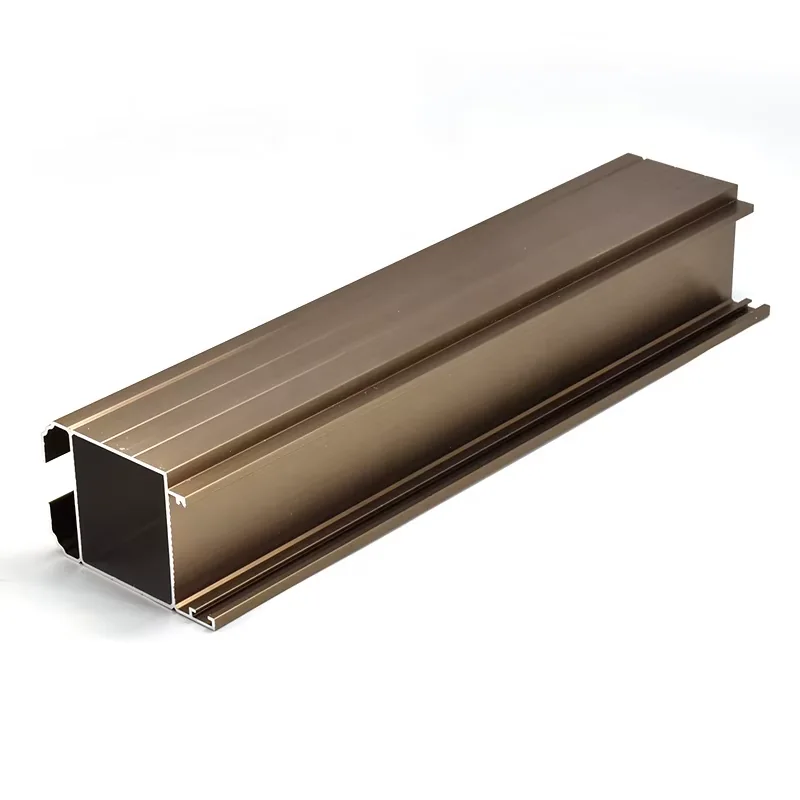
Bronze and Champagne
Bronze shades range from light champagne to medium bronze, dark bronze, and almost black. These finishes are common in architectural profiles because they coordinate well with glass, warm stone, timber, and neutral wall finishes.
Electrolytic coloring is frequently selected for bronze anodized aluminum colors, especially when outdoor durability is important. The deposited metallic compounds help provide stable earth-tone finishes.
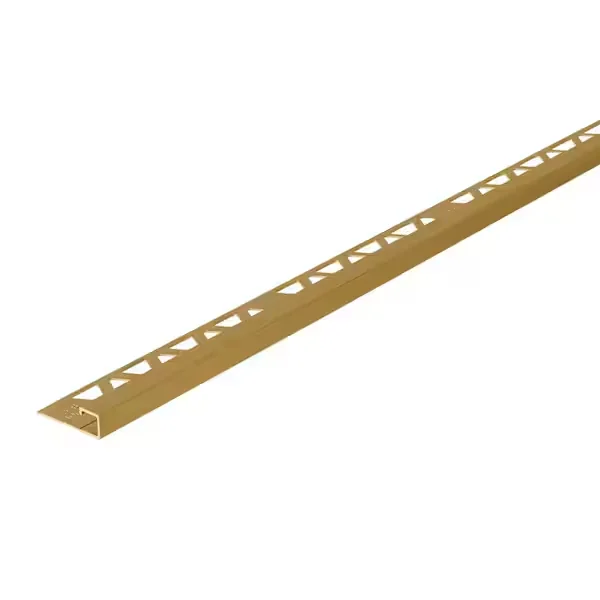
Gold
Gold anodized aluminum can range from pale champagne gold to stronger yellow or warm brass-like tones. It is often used for decorative trims, furniture details, display systems, and hospitality interiors.
Gold color approval should be based on physical samples rather than screen images. A bright polished gold and a brushed satin gold can appear very different even when the same color process is used.
Gray and Gunmetal
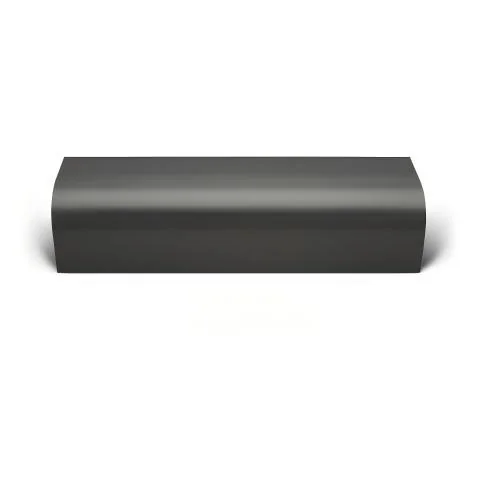
Gray, charcoal, and gunmetal finishes provide a softer alternative to black. They are suitable for modern wall trims, skirting boards, stair profiles, and commercial interior details.
These shades can be created through dyeing, electrolytic coloring, integral coloring, or interference methods, depending on the target appearance and performance requirements.
Red, Blue, Green, and Other Decorative Colors
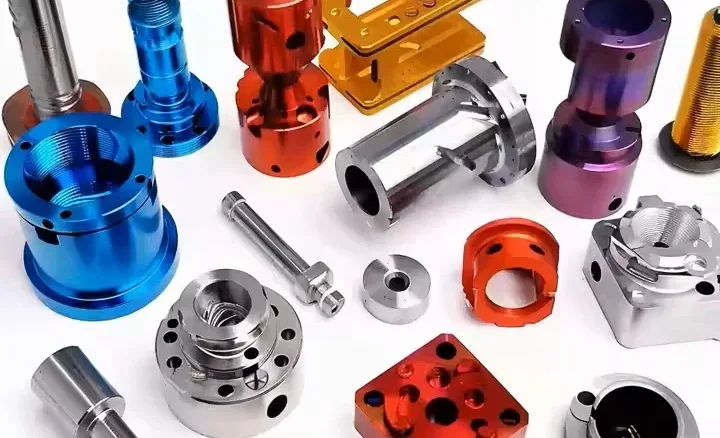
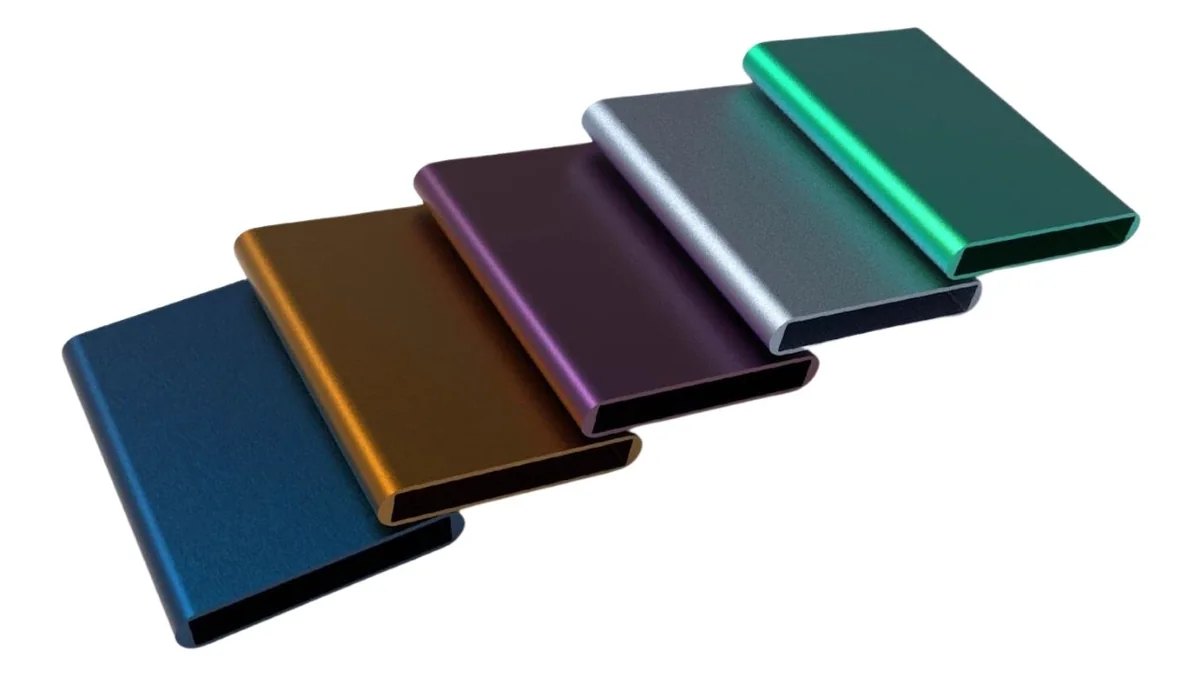
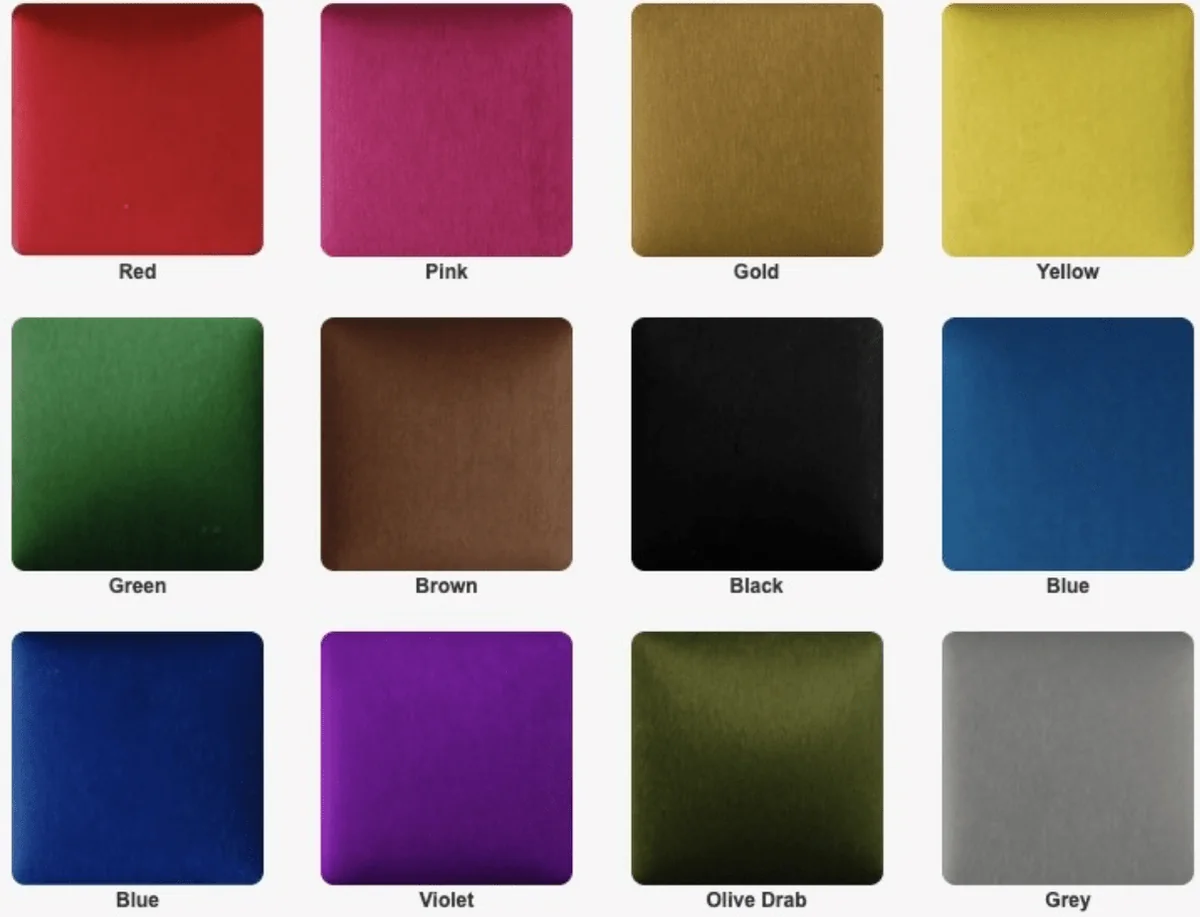
Organic dyes make a wide range of decorative anodized aluminum colors possible. Red, blue, green, violet, and other bright finishes are often used for product identification, branding, electronics, sports equipment, and indoor decorative components.
These colors can be visually strong, but their lightfastness varies. For projects exposed to intense sunlight, the color method and test requirements should be confirmed before production.
How the Anodized Aluminum Coloring Process Works
Producing consistent anodized aluminum colors depends on a controlled sequence. Each stage affects the next one.
Step 1: Cleaning and Degreasing
The aluminum is cleaned to remove oil, dust, polishing compound, and other contamination. Poor cleaning can cause uneven anodizing, stains, or areas that do not absorb color correctly.
Step 2: Etching or Surface Refinishing
The components may be chemically etched, brushed, polished, or sandblasted. This stage determines much of the final visual texture.
- Polishing creates a brighter, more reflective result.
- Brushing produces directional lines and a satin appearance.
- Sandblasting creates a soft, matte surface.
- Chemical etching reduces minor surface variations and gives a more uniform finish.
The finishing route should be confirmed before color sampling because texture changes how the eye sees the color.
Step 3: Desmutting
Some alloys leave alloying residues on the surface after etching. Desmutting removes these residues and prepares the aluminum for uniform oxide formation.
Step 4: Anodizing
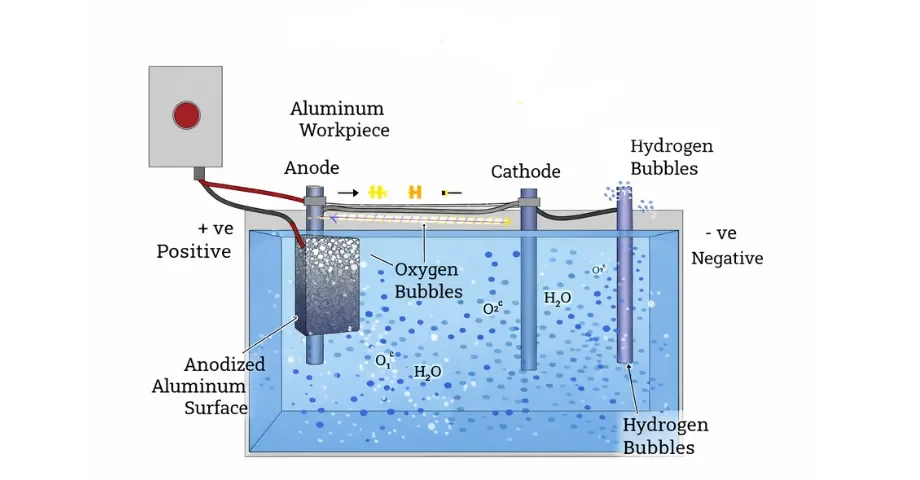
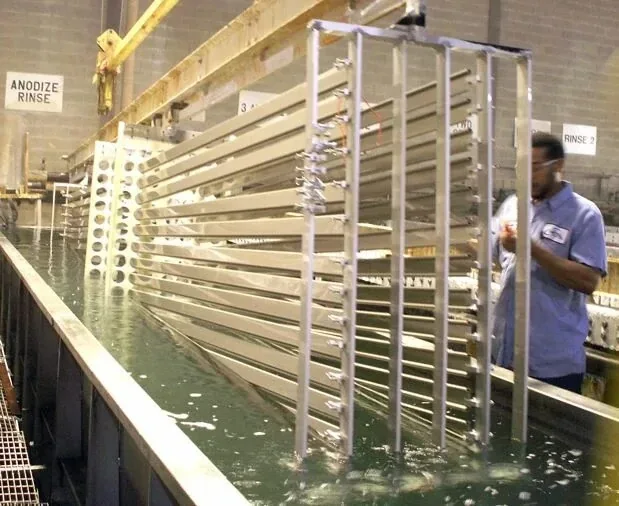
The aluminum is placed in an electrolyte bath and connected to an electrical current. A porous aluminum oxide layer forms on the surface. Process conditions determine the layer thickness, pore structure, and final finishing performance.
Step 5: Coloring
The open pores receive dye, metallic deposits, or another coloring treatment. This stage creates the required shade.
Step 6: Sealing
The anodized layer is sealed with hot water, steam, or a chemical sealing system. Sealing closes the pores and helps protect the finish from staining, moisture, and premature color loss.
Five Methods Used to Create Anodized Aluminum Colors
Different coloring methods offer different color ranges, costs, and durability levels.
1. Dye Coloring
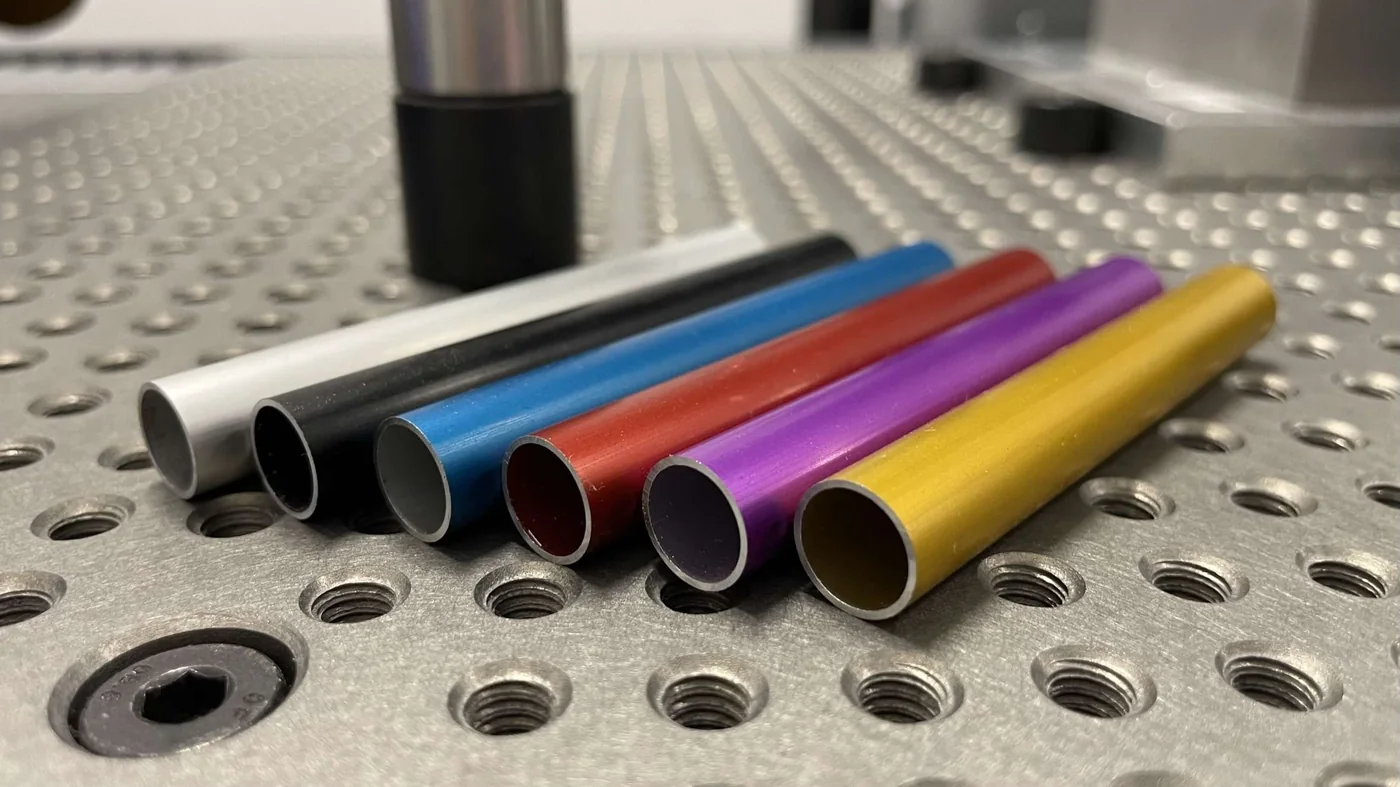
In dye coloring, the anodized aluminum is immersed in an organic or inorganic dye bath. The porous oxide layer absorbs the color before sealing.
Main advantages:
- Wide color range
- Bright and decorative shades
- Good flexibility for custom projects
- Suitable for many indoor products
Main limitation:
Some dyes have lower resistance to long-term ultraviolet exposure. A color that performs well indoors may not be the best option for exterior façades or other continuously exposed applications.
2. Electrolytic Coloring
Electrolytic coloring is often called two-step anodizing. After the oxide layer is formed, the aluminum is placed in a second bath containing metallic salts. Electrical current deposits metallic compounds near the base of the pores.
This method commonly produces:
- Champagne
- Light bronze
- Medium bronze
- Dark bronze
- Gray
- Black
Electrolytic anodized aluminum colors are widely used for exterior architectural applications because bronze and dark neutral shades can provide strong lightfastness and weather resistance.
3. Integral Coloring
Integral coloring develops the color during the anodizing stage rather than in a separate dye bath. The result depends on the alloy, electrolyte chemistry, current, temperature, and other process conditions.
Integral finishes are commonly associated with bronze, brown, charcoal, and dark metallic tones. They can provide excellent durability, but the process is more specialized and the available color range is narrower than conventional dyeing.
4. Interference Coloring
Interference coloring changes the pore structure so that light creates an optical color effect. Instead of relying only on an absorbed dye, the finish uses controlled light interference to produce colors such as blue, green, gray, or metallic yellow.
This method can create distinctive architectural finishes. However, it requires precise process control. Color appearance may also change with lighting conditions and viewing angle.
5. Controlled Dip Coloring
Dip coloring uses carefully controlled immersion time, bath concentration, temperature, and movement to achieve the target shade. It is especially useful when the manufacturer must maintain uniform saturation across batches or complex component shapes.
For high-volume anodized aluminum colors, repeatable loading, drainage, immersion, and timing are important. Even a stable dye formula can produce variation if the production method changes.
What Affects the Consistency of Anodized Aluminum Colors?
Matching anodized aluminum colors is one of the most technical parts of anodized finishing. Several factors can create visible differences.
Aluminum Alloy Grade
Different aluminum alloys contain different levels of magnesium, silicon, copper, zinc, and other elements. These elements affect etching, oxide formation, brightness, and color response.
For best consistency, the same alloy and material source should be used throughout the project. Mixing different extrusion lots can increase the risk of visible shade variation.
Surface Texture
A polished surface reflects more light and usually makes a color appear brighter or deeper. A brushed or sandblasted surface scatters light and gives the same shade a softer, more matte appearance.
Surface finish should therefore be treated as part of the color specification, not as a separate detail.
Oxide Layer Thickness
The thickness of the anodic layer affects both protection and color absorption. A thicker porous layer may hold more dye and produce a deeper color. However, the relationship is not always linear, and very thick layers may change clarity or appearance.
The required thickness should match the service environment and the coloring system.
Bath Chemistry and Temperature
Dye concentration, acidity, contamination, temperature, voltage, current density, and processing time can all influence the final shade. Small process changes may become visible when profiles are installed side by side.
Racking and Contact Position
Aluminum parts must be electrically connected to the anodizing rack. Contact points can leave marks or small untreated areas. Their position should be planned in advance, especially for decorative trims with visible ends.
Sealing Conditions
Insufficient or inconsistent sealing can change color appearance and reduce stain resistance. Over-sealing or incorrect sealing conditions may also affect the surface.
Batch Size and Production Timing
Large projects may require several production runs. The longer the time between batches, the harder it can be to reproduce the exact same shade.
How to Select the Right Anodized Aluminum Colors
Selecting anodized aluminum colors should involve more than appearance.
1. Confirm the Installation Environment
Ask whether the component will be used:
- Indoors or outdoors
- In direct sunlight or shade
- In a dry or humid area
- Near cleaning chemicals or salt exposure
- In a low-contact or high-contact location
Bright dyed colors may be suitable for indoor decorative products. Exterior building profiles usually require more weather-resistant anodized aluminum colors and a clearly defined anodic thickness.
2. Select the Surface Texture First
Choose polished, brushed, satin, matte, etched, or sandblasted before approving the color. A color sample on a different texture is not a reliable reference.
3. Match the Alloy and Temper
The sample and production material should use the same aluminum alloy whenever possible. For extruded building profiles, the alloy should be confirmed early because changing it later may change the finish.
4. Use Physical Samples
Digital screens, printed brochures, Pantone charts, and RAL charts can help communicate the general direction, but they cannot fully reproduce the metallic and translucent character of anodized aluminum colors.
The most reliable approval method is a physical sample made with:
- The correct alloy
- The correct surface texture
- The target oxide thickness
- The intended coloring process
- The intended sealing method
5. Define an Acceptable Color Range
Exact visual identity between every profile is difficult because anodizing reacts with the metal itself. A project specification should define an approved sample and an acceptable upper and lower shade limit.
For large architectural orders, limit samples are often more useful than a single reference piece.
6. Consider Adjacent Materials
The same anodized finish may look different next to warm wood, cool gray tile, tinted glass, stainless steel, or painted wall panels. Review the aluminum sample with the actual surrounding materials and under the expected lighting.
Quick Selection Table for Anodized Aluminum Colors
| Color or Method | Typical Appearance | Common Applications | Key Consideration |
|---|---|---|---|
| Natural / Clear | Silver, metallic, clean | LED profiles, tile trim, industrial parts | Shows more of the base metal condition |
| Dyed Black | Deep black, decorative | Interior trims, electronics, furniture | Confirm UV performance for sunlight exposure |
| Electrolytic Bronze | Champagne to dark bronze | Façades, windows, architectural profiles | Strong option for exterior neutral colors |
| Gold Dye | Warm metallic gold | Decorative trims, hotels, retail displays | Texture strongly affects brightness |
| Gray / Gunmetal | Modern, subdued metallic | Skirting, wall trim, stair profiles | Approve physical samples under project lighting |
| Bright Dyed Colors | Red, blue, green, violet | Branding, equipment, indoor products | Lightfastness varies by dye |
| Integral Color | Bronze, brown, charcoal | Specialized architectural parts | Limited color range and process availability |
| Interference Color | Blue, green, metallic optical tones | Feature façades, premium decorative parts | Appearance may shift with angle and light |
Anodized Aluminum Colors vs. Powder-Coated Aluminum
Both systems can protect and decorate aluminum, but they create different visual and functional results.
Neither finish is automatically better for every project. We recommend anodizing when the metallic character of aluminum is part of the design and the profile requires a hard, integrated surface finish. Powder coating is often more practical when the project needs an opaque decorative color, stronger coverage of surface variation, or close alignment with a standard paint system.
| Feature | Anodized Aluminum | Powder-Coated Aluminum |
|---|---|---|
| Finish structure | Oxide layer formed from the aluminum surface | Separate polymer coating applied over the surface |
| Appearance | Metallic, translucent, shows substrate texture | More opaque and uniform |
| Color range | Strong in metallic, neutral, and selected bright colors | Very broad, including many RAL-style colors |
| Risk of peeling | Does not peel in the same way as an applied coating | Can chip or delaminate if damaged or poorly prepared |
| Surface marks | May remain visible | Better at hiding minor substrate variation |
| Repair | Local repair is difficult to match | Touch-up is possible but may still be visible |
| Best use | Metallic architectural finishes and wear-resistant profiles | Projects requiring opaque colors or broad color matching |
Frequently Asked Questions
Do Anodized Aluminum Colors Fade?
They can change over time, but the level of change depends on the coloring method, dye quality, sealing, ultraviolet exposure, environment, and maintenance. Electrolytic bronze and other inorganic systems are generally selected for demanding outdoor applications. Some bright organic dyes are better suited to indoor use.
Can Anodized Aluminum Match Pantone or RAL Colors Exactly?
A manufacturer can develop a close visual match, but exact reproduction should not be assumed. Pantone and RAL references are based on printed or coated color systems, while anodized aluminum has a translucent metallic appearance.
Use the color code as a starting point, then approve a physical anodized sample and a defined tolerance range.
Why Do Two Profiles With the Same Color Code Look Different?
Possible reasons include different alloys, extrusion lots, surface textures, oxide thicknesses, dye conditions, sealing conditions, or viewing angles. Even profiles from the same batch may appear slightly different if one surface reflects more light.
Can Anodized Aluminum Be Used Outdoors?
Yes, when the alloy, anodic thickness, coloring system, sealing process, and specification are suitable for the environment. Exterior projects should not rely only on a color name. They should also define performance requirements.
Can Scratches Be Repaired After Anodizing?
Minor marks may sometimes be reduced, but a repaired area is difficult to match perfectly. Deep scratches that break through the anodic layer usually require refinishing or replacement of the part.
Are Anodized Finishes Environmentally Responsible?
The anodic layer is an aluminum oxide finish and does not create the same type of solvent-emission issue as wet paint during normal use. Aluminum parts also remain recyclable.
However, the environmental performance of the full process depends on water treatment, chemical management, energy use, and the production controls of the finishing facility.
How Should Anodized Aluminum Be Cleaned?
Use clean water, a soft cloth, and a mild neutral detergent when required. Avoid strong alkaline or acidic cleaners, abrasive pads, and harsh chemicals unless the finish supplier confirms compatibility.
Conclusion
Anodized aluminum colors provide a durable metallic finish for architectural profiles, decorative trims, industrial components, and consumer products. Their final appearance depends on the complete finishing system, including alloy selection, surface preparation, oxide formation, coloring, sealing, and batch control.
The most important step is to connect the color choice with the actual application. Indoor decorative parts, exterior façades, stair nosings, wall trims, and high-contact profiles may require different coloring methods and anodic specifications.
For consistent anodized aluminum colors, approve a physical sample made from the correct alloy and surface finish. Define the acceptable shade range, keep visible profiles within the same production batch, and confirm the required durability before mass production.
When a project requires custom colors, lengths, profiles, or packaging, share the application details and reference samples early. A clear specification helps the manufacturer recommend a practical finishing route and reduce avoidable color variation.