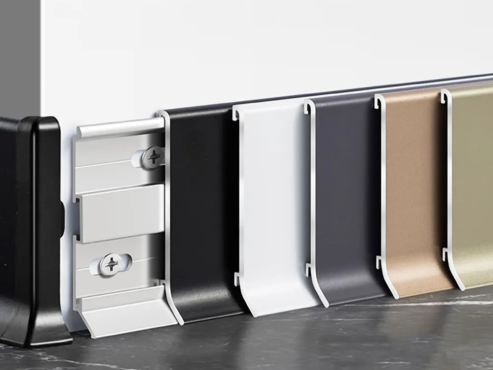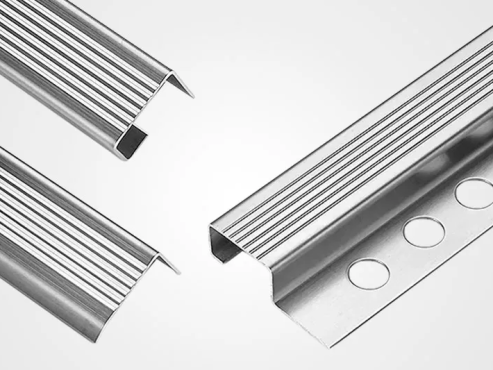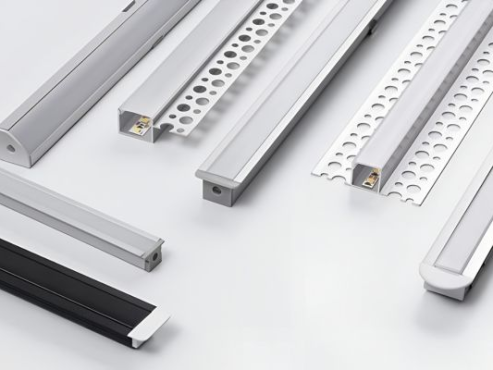
Aluminum is widely used in architectural profiles, transportation parts, industrial equipment, furniture, and decorative building products. It is lightweight, corrosion-resistant, easy to form, and suitable for many fabrication methods. However, bare aluminum does not always provide the color consistency, surface protection, or appearance required for demanding projects.
This is where powder coated aluminum becomes useful. The process applies a dry, electrically charged powder to a prepared aluminum surface. The coated part is then heated so the powder melts, flows, and cures into a continuous protective film.
This guide explains how the process works, why surface preparation matters, how it compares with anodizing and liquid paint, and what buyers should check before selecting a finish.
What Is Powder Coated Aluminum?
Powder coated aluminum is aluminum that has been finished with a dry thermosetting or thermoplastic coating. Unlike liquid paint, powder coating does not normally require a solvent to keep the coating material in liquid form.
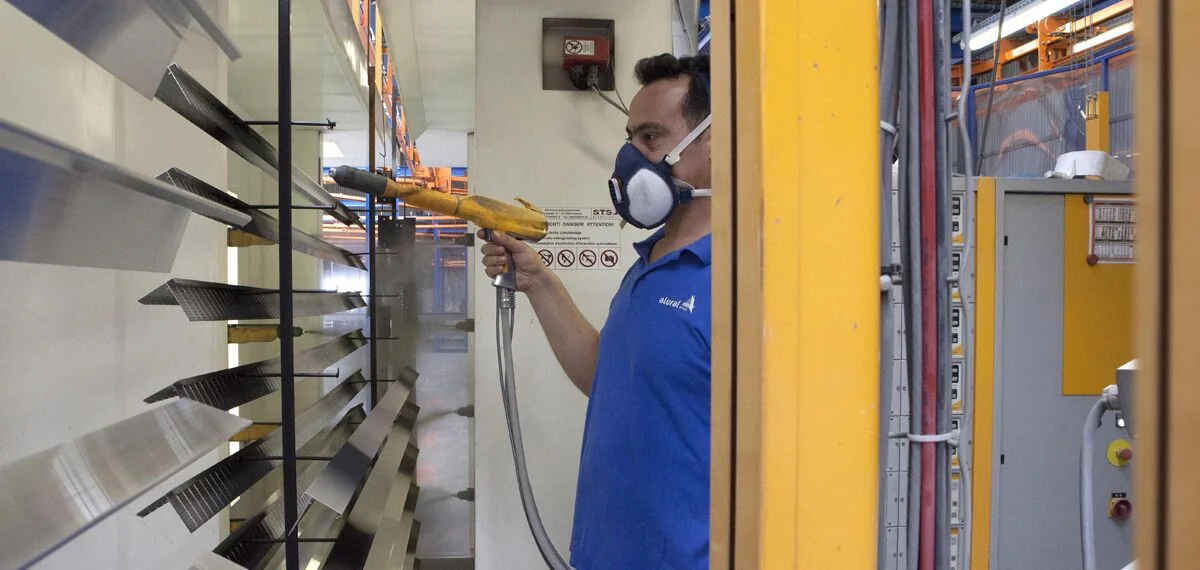
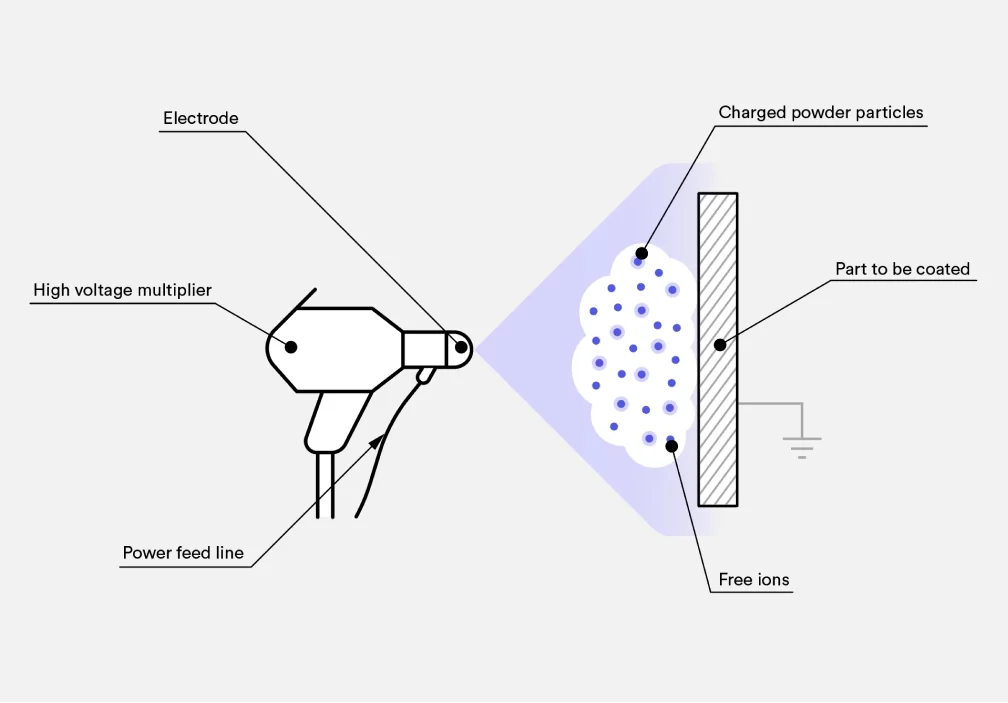
During application, fine powder particles receive an electrostatic charge from a spray gun. The aluminum component is grounded, so the charged particles are attracted to its surface. The part then enters a curing oven, where heat allows the powder to melt and form a uniform film.
The finish is an added protective layer over the aluminum substrate. This is different from anodizing, which changes the natural oxide layer of the aluminum.
Common applications include tile trims, skirting boards, stair nosings, floor transition strips, window and door frames, facade profiles, furniture, enclosures, and industrial components.
The suitability of powder coated aluminum depends on more than color. Product geometry, alloy grade, service environment, fabrication tolerances, and required coating performance must also be considered.
Key Benefits of Powder Coated Aluminum
1. Strong Surface Protection
A properly applied powder coating forms a relatively thick and continuous film. This helps protect aluminum from scratches, minor impacts, abrasion, moisture, and general handling damage.
The actual performance depends on the powder chemistry and the quality of the complete finishing system. Polyester powders are often selected for exterior architectural products, while epoxy or hybrid powders may be used for indoor components where chemical resistance or decorative performance is more important.
For products such as trims, profiles, frames, and panels, the coating also helps reduce direct contact between the aluminum and the surrounding environment.
2. Good Color and Texture Options
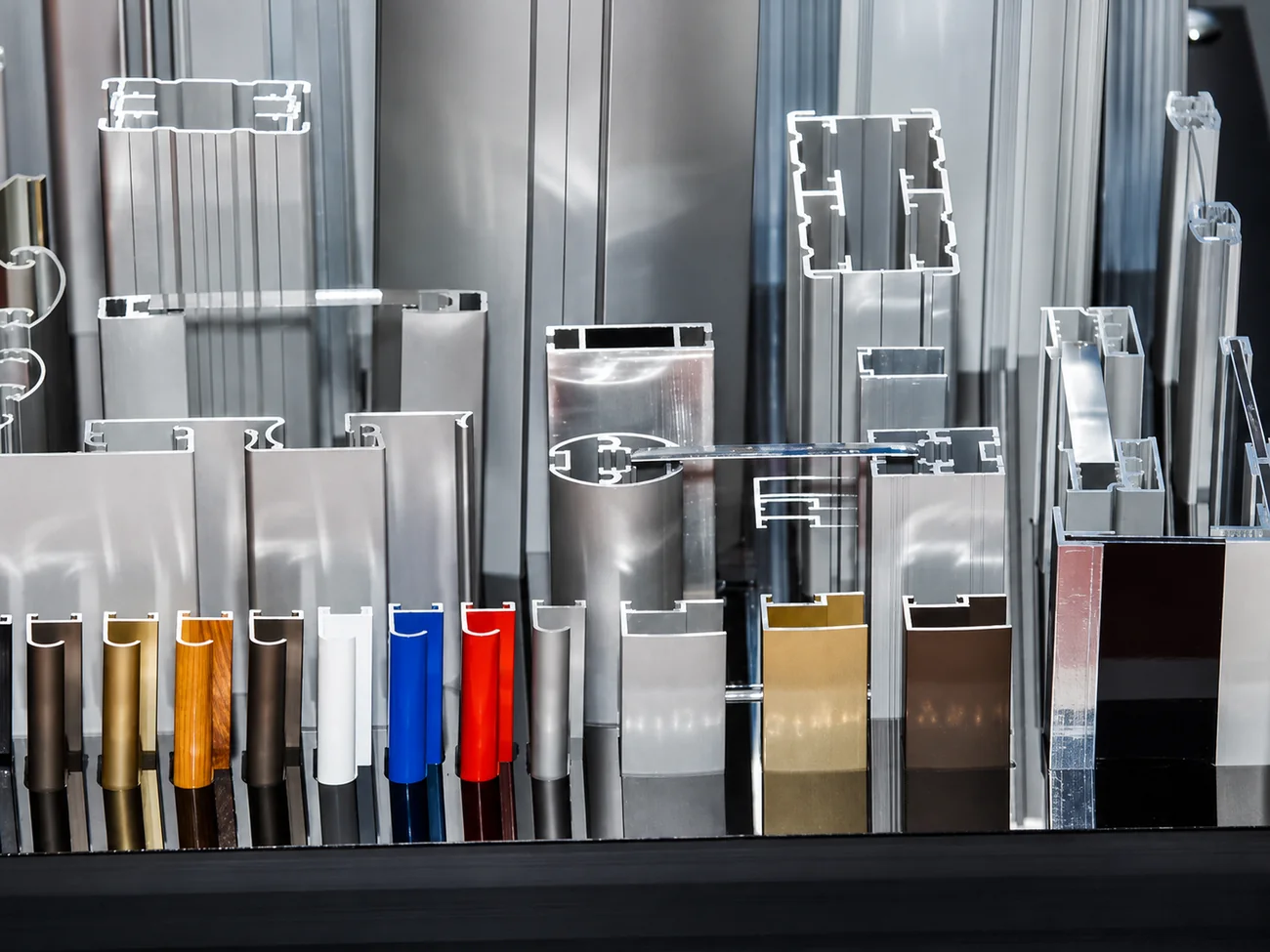
One major advantage of powder coated aluminum is design flexibility. The surface can be produced in a broad range of:
- Standard RAL colors
- Custom-matched colors
- Matte, satin, and gloss finishes
- Fine-texture and sand-texture surfaces
- Metallic and pearlescent effects
- Wood-look or special decorative patterns
This makes the finish suitable for coordinated building components. Textured surfaces can reduce the visibility of minor extrusion lines, but deep scratches, dents, and severe die lines may still remain visible.
3. Weather and UV Resistance
Exterior-grade powder coated aluminum can provide good resistance to sunlight, rain, humidity, and temperature changes. This makes it suitable for window frames, facade profiles, outdoor furniture, stair systems, and other exposed products.
The expected weathering performance depends on the powder formulation. Standard polyester, super-durable polyester, and fluoropolymer-based systems do not provide the same service life.
Dark colors, high-gloss finishes, coastal exposure, and intense sunlight may require a higher-performance coating specification.
4. Efficient Material Use
Suitable recovery systems can collect and reuse part of the overspray, improving material efficiency. Powder coating also uses little solvent compared with many liquid systems, although total environmental performance still depends on energy use, waste treatment, and production controls.
5. Consistent Appearance for Fabricated Products
Powder coated aluminum is suitable for both extrusions and fabricated parts. A controlled coating line can produce consistent color and gloss across profiles, brackets, panels, covers, and accessories.
Color consistency still requires control because powder batches, substrates, film thickness, and curing conditions can create variation.
How Powder Coated Aluminum Is Made
The quality of powder coated aluminum depends heavily on the preparation and application process. A good powder cannot compensate for oil, oxide, residue, or moisture left on the metal.
Step 1: Inspection and Cleaning
Before coating, parts should be checked for oil, metal chips, oxide, scratches, welding residue, silicone, and adhesive contamination. They are then cleaned with a suitable alkaline, acidic, or multi-stage chemical system. The cleaner must be compatible with aluminum. Chemicals designed primarily for steel may leave residues or attack the substrate if they are used incorrectly.
Cleaning removes fabrication oils, polishing compounds, dust, and other contaminants that can interfere with adhesion.
Step 2: Etching or Surface Conditioning
After cleaning, the surface may be chemically etched or mechanically prepared. This removes weak oxide layers and creates a more uniform surface for the next treatment stage.
The degree of etching should be controlled. Excessive chemical attack can change dimensions, increase surface roughness, or affect the appearance of thin decorative profiles.
Mechanical blasting may be suitable for some industrial parts, but it is not always appropriate for thin extrusions or products that require a smooth decorative finish.
Step 3: Conversion Coating
A conversion coating is applied after cleaning and etching. This treatment improves adhesion and adds corrosion protection beneath the powder film.
Many modern production lines use chrome-free conversion systems. The correct chemistry and process depend on the required standard, alloy, environment, and coating supplier.
Good rinsing is essential between chemical stages. Residual chemicals trapped in holes, joints, corners, or hollow sections can later cause blistering, staining, or delamination.
Step 4: Drying and Masking
The aluminum must be completely dry before powder application. Moisture left on the surface or inside cavities may vaporize during curing and create defects.
Areas such as threaded holes, electrical contacts, sliding surfaces, grounding points, and tight-fit joints are masked with heat-resistant materials. Masking should be planned before production because the coating adds thickness to the part.
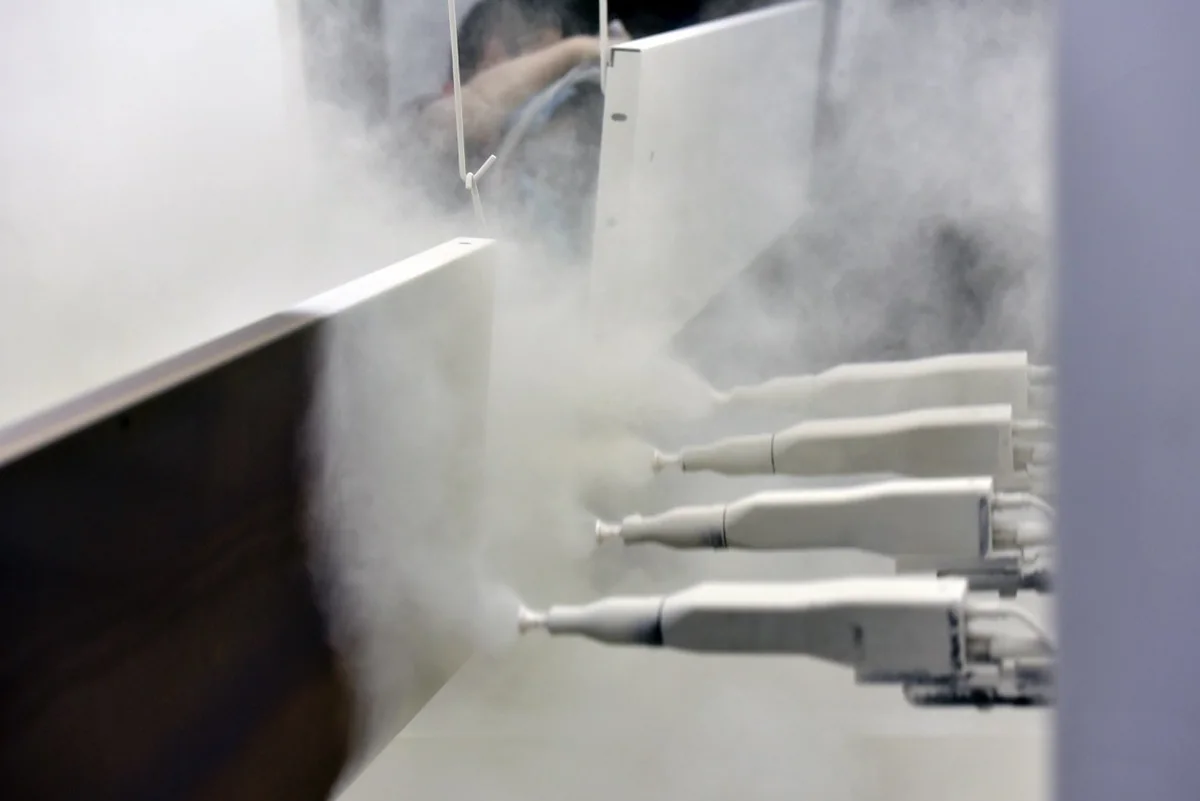
Step 5: Electrostatic Powder Application
The prepared aluminum is grounded, and powder is sprayed through an electrostatic gun. Charged particles are attracted to the metal and remain temporarily attached before curing.
The operator must control gun distance, voltage, airflow, powder output, and part positioning. Complex shapes may create Faraday cage areas, where powder has difficulty reaching deep corners or recesses.
Uniform coverage is especially important on profile edges, internal angles, cut ends, and welded zones.
Film thickness should follow the powder supplier’s technical data and the project specification. A film that is too thin may reduce coverage and corrosion resistance. A film that is too thick may cause orange peel, poor edge definition, curing problems, or dimensional issues.
Step 6: Curing
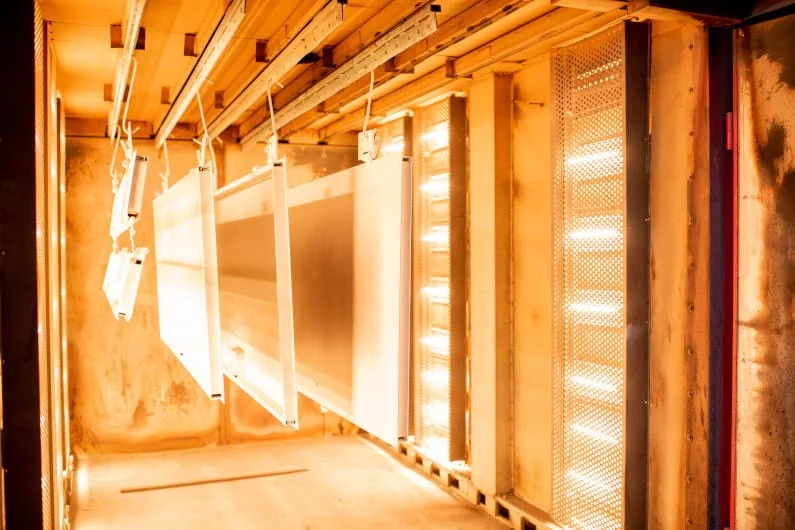
After spraying, the part enters an oven. The heat melts the powder and triggers chemical cross-linking.
Many powder systems cure within a metal-temperature range around 175°C to 204°C, but the exact schedule varies by powder formulation. Oven air temperature alone is not enough. The aluminum itself must reach the required substrate temperature for the specified time.
Under-curing can lead to poor adhesion, low hardness, weak chemical resistance, and early coating failure. Over-curing can change color, reduce gloss, or damage the appearance.
For thick or complex parts, manufacturers may use temperature probes to confirm the actual metal-temperature curve.
Step 7: Cooling and Quality Inspection
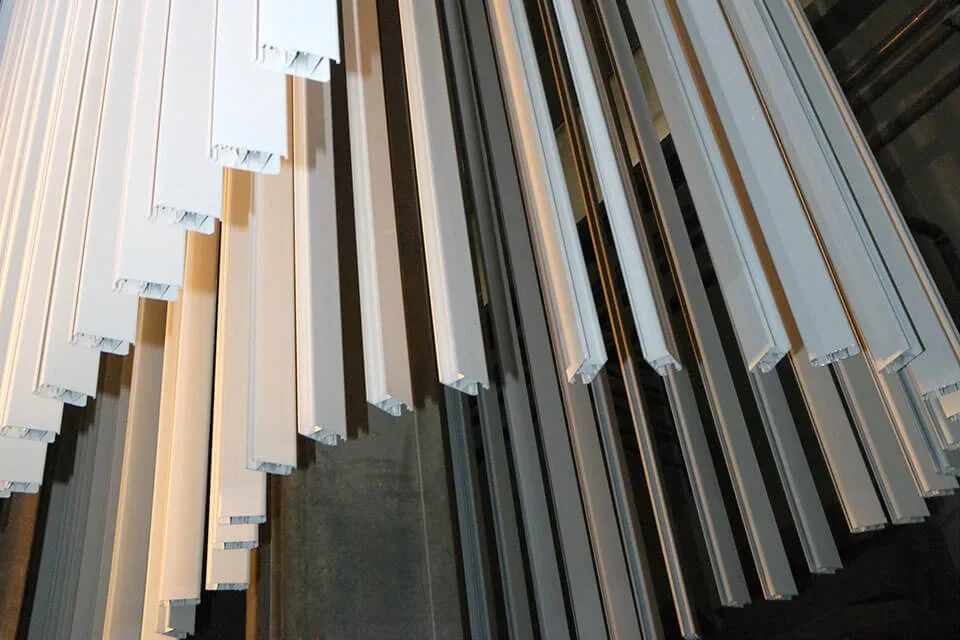
After curing, parts are checked for color, gloss, film thickness, adhesion, cure, edge coverage, defects, dimensions, and assembly fit. Architectural powder coated aluminum may also require corrosion, weathering, or chemical-resistance testing.
Why Pre-Treatment Is Critical for Powder Coated Aluminum
Pre-treatment is often the most important factor in long-term coating performance. Even a high-quality powder may fail if the aluminum surface is not clean and chemically prepared.
Incomplete Degreasing
Oil and fabrication lubricant can remain in extrusion grooves, holes, and folded joints. These contaminants prevent the coating from bonding correctly.
Poor Rinsing
Chemical residue can stay on the metal after cleaning or conversion treatment. During service, the trapped residue may absorb moisture and cause blistering or local delamination.
Inadequate Conversion Coating
Without a suitable conversion layer, corrosion can spread beneath damaged coating areas. This risk is higher in coastal, humid, or chemically aggressive environments.
Contamination After Cleaning
Workers may touch cleaned parts with bare hands, or the parts may collect dust before coating. Clean handling and controlled storage are therefore necessary.
Insufficient Drying
Water trapped inside cavities can turn into vapor during curing. The pressure may create pinholes, bubbles, or loss of adhesion.
Powder Coated Aluminum vs. Anodized Aluminum
Both finishes are widely used, but they have different structures and performance characteristics.
Choose powder coated aluminum when the project requires a specific color, texture, or visually uniform surface. Choose anodizing when a metallic appearance, high surface hardness, and tight dimensional control are more important.
In some cases, anodized aluminum can be powder coated. The anodized surface must still be cleaned and prepared to create reliable adhesion. A trial sample is recommended before full production.
| Feature | Powder Coated Aluminum | Anodized Aluminum |
|---|---|---|
| Finish structure | Adds a polymer film over the surface | Converts the natural oxide layer |
| Color range | Very broad, including textures and special effects | More limited, often metallic or transparent tones |
| Surface coverage | Can help conceal minor surface variation | Usually shows extrusion lines and substrate condition |
| Coating thickness | Adds measurable thickness | Generally maintains tighter dimensional control |
| Repair | Local touch-up is possible but may remain visible | Local repair is difficult to match |
| Exterior performance | Depends on powder grade and pre-treatment | Depends on anodizing class, thickness, sealing, and color |
| Appearance | Uniform, decorative, and highly customizable | Metallic, clean, and integrated with the substrate |
Powder Coated Aluminum vs. Liquid Paint
Liquid paint remains useful for field repair, very large structures, and applications where oven curing is not practical. However, powder coating offers several production advantages for factory-finished components.
For extruded profiles, trims, frames, and repeat-production parts, powder coated aluminum is often the more efficient factory finish. For site work or heat-sensitive assemblies, liquid paint may be more practical.
| Feature | Powder Coating | Liquid Paint |
|---|---|---|
| Application material | Dry powder | Liquid coating with resin, pigment, and often solvent |
| Curing | Usually requires controlled heating | May air-dry or use heat |
| Film build | Usually thicker in one application | Often requires several coats |
| Overspray | Can sometimes be recovered | Usually more difficult to reuse |
| Complex shapes | Good electrostatic coverage, but recesses need control | Can reach some recesses more easily with suitable spray methods |
| On-site use | Generally unsuitable | Often suitable |
| Finish consistency | High in a controlled coating line | Depends strongly on application conditions |
Selecting the Right Aluminum Alloy
Most common aluminum alloys can be powder coated, but they do not all behave in the same way during fabrication, pre-treatment, and curing.
6063 Aluminum
6063 is widely used for architectural extrusions, trims, window profiles, skirting boards, and decorative sections. It offers good extrudability and a smooth surface, making it a common choice for powder coated aluminum profiles.
6061 Aluminum
6061 provides higher structural strength than 6063 and is often used for frames, machine components, and fabricated parts. Welded or machined areas may require additional preparation before coating.
5052 Aluminum
5052 is commonly used for sheet-metal components and products that require good formability and corrosion resistance. It can be suitable for covers, panels, enclosures, and marine-related components.
7075 and Cast Aluminum
7075 is a high-strength alloy that may require closer review of pre-treatment and curing conditions. Cast aluminum can contain porosity that releases gas during curing, causing pinholes or bubbles. Preheating, outgassing-resistant powder, and sample testing can reduce this risk.
Common Powder Coating Defects and Their Causes
Poor Adhesion
Possible causes include oil contamination, weak oxide layers, inadequate conversion coating, poor rinsing, or incorrect curing.
Orange Peel
A slightly textured appearance can result from powder formulation, excessive film thickness, poor flow, incorrect curing, or unsuitable spray settings.
Pinholes and Bubbles
These defects may be caused by moisture, trapped gas, porous castings, contamination, or rapid heating.
Craters and Fish Eyes
Silicone, oil, lubricant, or airborne contamination can prevent the powder from flowing evenly.
Color Variation
Different coating thicknesses, substrate temperatures, curing times, powder batches, or metal surfaces may create visible shade differences.
Edge Coverage Problems
Sharp edges may receive a thinner film than flat surfaces. Edge design, spray technique, and powder selection can affect coverage.
Filiform Corrosion
Filiform corrosion can develop beneath an organic coating, especially in warm and humid coastal conditions. It often appears as fine, thread-like lines under the paint film. A suitable pre-treatment system, careful edge protection, correct drainage design, and an appropriate exterior powder specification help reduce this risk.
Design and Purchasing Considerations
Before ordering powder coated aluminum, confirm the following details. A clear specification helps the powder coated aluminum supplier control appearance and performance.
Service Environment
State whether the product will be used indoors, outdoors, near the coast, in a swimming pool area, in an industrial zone, or in a high-humidity space.
Color Standard
Provide a recognized color code or an approved physical sample. Digital screens are not reliable for final color approval.
Gloss and Texture
The same color can look different in matte, satin, gloss, fine-texture, or sand-texture finishes.
Visible Surface
Mark the main visible face on drawings. This helps the coater control hanging points, rack marks, contact areas, and appearance requirements.
Film Thickness
The required thickness should match the powder supplier’s recommendation and the relevant project standard.
Dimensional Tolerance
Powder coating adds thickness. Slots, holes, clips, telescoping joints, and assembly areas must allow for the coating build.
Cut Ends and Fabrication
Confirm whether profiles will be coated before or after cutting, drilling, punching, bending, or welding. Post-coating fabrication can damage the finish and expose bare aluminum.
Testing Standard
Architectural projects may require testing for adhesion, film thickness, impact, salt spray, humidity, color retention, or accelerated weathering.
Packaging
Finished surfaces need protective film, interleaving material, clean gloves, and suitable cartons or crates. Poor packaging can damage a good coating before installation.
Maintenance of Powder Coated Aluminum
Routine cleaning helps preserve the appearance of powder coated aluminum.
Use clean water and a mild, pH-neutral detergent. Apply it with a soft cloth, sponge, or non-abrasive brush. Rinse thoroughly and dry the surface when necessary.
Avoid:
- Steel wool
- Abrasive pads
- Strong alkaline cleaners
- Strong acidic cleaners
- Aggressive solvents
- Sharp scraping tools
- Unapproved graffiti removers
Cleaning frequency should increase in coastal, polluted, industrial, or sheltered areas where salt and dirt can accumulate.
Small scratches can sometimes be repaired with matching touch-up paint, but the repaired area may differ in color, gloss, and texture from the factory finish.
Frequently Asked Questions
Can aluminum be powder coated?
Yes. Aluminum can be powder coated when the surface is properly cleaned, pre-treated, dried, sprayed, and cured. The process is widely used for extrusions, sheet-metal parts, castings, and fabricated components.
Does powder coating prevent aluminum corrosion?
Powder coating provides a protective barrier, but it does not make the metal completely corrosion-proof. Damage, poor pre-treatment, exposed cut edges, trapped moisture, and aggressive environments can still lead to corrosion.
Can powder coated aluminum be used outdoors?
Yes, provided that an exterior-grade powder and suitable pre-treatment system are specified. The required coating grade should match the UV, moisture, salt, and temperature exposure of the project.
Can powder coating hide scratches?
It can reduce the visibility of small surface variations, especially when a textured finish is used. It will not reliably hide deep scratches, dents, heavy die lines, or poor fabrication.
Can anodized aluminum be powder coated?
Yes, but the anodized surface must be cleaned and prepared for adhesion. Sample testing is recommended because sealed or contaminated anodized surfaces may reduce coating bond strength.
Can powder coated aluminum be recoated?
Yes. Existing coating can be removed or mechanically prepared before recoating. The method depends on the original powder, geometry, surface condition, and required finish.
Will the curing oven weaken aluminum?
Normal powder curing temperatures are below the melting point of aluminum. However, thin parts may distort, and certain heat-treated alloys or precision components may require engineering review before exposure to the curing cycle.
Is powder coating suitable for tight-tolerance components?
It can be used, but the added film thickness must be included in the design. Threads, sliding fits, electrical contacts, and assembly zones may need masking.
Conclusion
Powder coated aluminum combines the light weight and formability of aluminum with a protective, decorative surface. It is available in many colors, gloss levels, and textures, making it suitable for architectural profiles, trims, frames, panels, furniture, and industrial components.
For project buyers, the most important step is to define the service environment and technical requirements before selecting a color. A well-specified powder coated aluminum finish can provide consistent appearance, practical durability, and efficient long-term performance without relying on excessive maintenance.