Baseboards may look like a small interior detail, but they have a strong influence on the final appearance of a room. Traditional baseboards often use thick wood or decorative molding. In modern interiors, however, designers usually prefer slimmer profiles, straight lines, hidden fixings, and simple finishes.
The right modern baseboards can create a smooth transition between the wall and floor while protecting the lower wall from impacts, dirt, and cleaning equipment. They can also cover construction gaps, hide cables, or provide indirect lighting.
This guide introduces four practical modern baseboard ideas: recessed, clip-on, adhesive-mounted, and LED baseboards. It also explains how to compare them based on appearance, installation, maintenance, and project requirements.
Why Choose Modern Baseboards for a Clean Interior?
A clean interior does not mean removing every visible detail. It means controlling how different surfaces meet.
A suitable baseboard creates a defined transition without adding unnecessary visual weight. This is especially important in offices, hotels, apartments, retail stores, villas, and other interiors that use simple architectural lines.
Cleaner Wall-to-Floor Transitions
Modern profiles cover uneven edges, expansion gaps, and small installation defects between walls and floors. Slim metal profiles can provide a more precise edge than thick decorative molding.
Less Visual Clutter
Simple baseboard profiles do not compete with wall panels, flooring, furniture, or doors. They support the overall design instead of becoming the main decorative feature.
Better Wall Protection
The bottom of a wall is often exposed to shoes, carts, vacuum cleaners, mops, and furniture. A durable skirting profile provides a protective barrier in these high-contact areas.
Easier Maintenance
Flat surfaces and simple edges are generally easier to clean than deeply carved molding. Some flush or recessed designs also reduce the horizontal ledges where dust can collect.
Four Best Modern Baseboards Ideas
The best profile depends on the wall system, floor material, installation stage, and desired visual effect. The following four designs cover many common modern interior applications.
1. Recessed Modern Baseboards
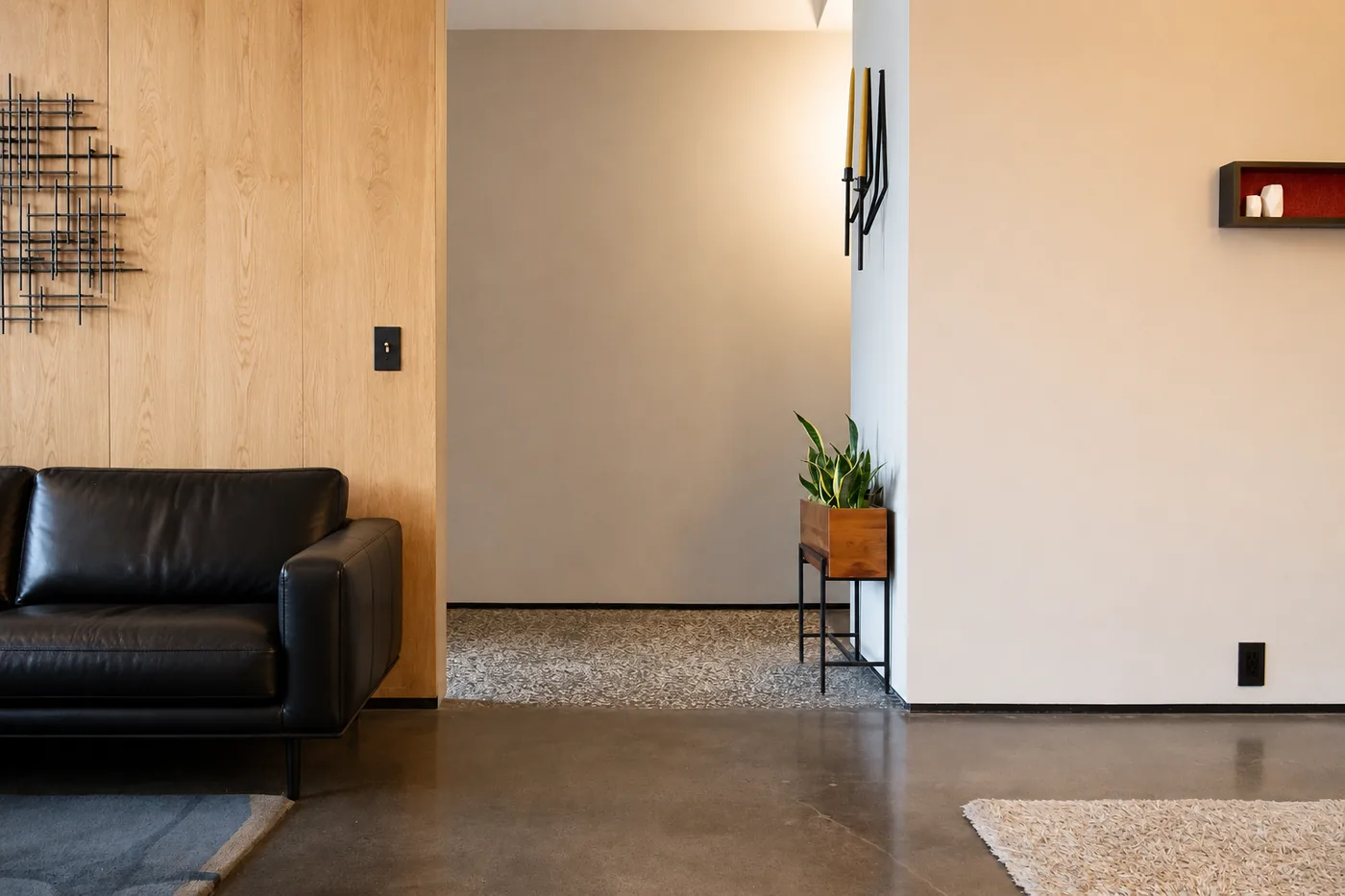
Recessed baseboards are installed partly or completely inside the wall. The visible surface may sit flush with the finished wall or create a narrow shadow gap above the floor.
This design is commonly used in minimalist interiors because it removes the projection of a traditional baseboard. The wall appears to continue downward in a clean and uninterrupted line.
Main Advantages
- Creates a flush or floating-wall appearance
- Reduces visible projections
- Allows furniture to sit closer to the wall
- Works well with shadow-gap details
- Provides a precise architectural finish
- Can be combined with drywall, plasterboard, or wall panels
Flush recessed skirting is especially suitable for projects where the baseboard detail is included during the early design stage. The profile normally needs to be installed before the final wall finish is completed.
Points to Consider
Installation requires accurate coordination between the profile, wall thickness, floor height, plaster, and drywall. It can be difficult to add a fully recessed system after the walls are already finished.
The installer should also confirm the final floor level before fixing the profile. Even a small height difference may affect the continuity of the shadow line.
Manufacturer’s Tip: Request a profile drawing or installation sample before ordering large quantities. This allows the contractor to confirm the wall build-up, fixing position, and finished floor level.
Recessed and shadow-gap aluminum skirting profiles are widely used to create clean, minimalist wall-to-floor junctions.
2. Clip-On Modern Baseboards
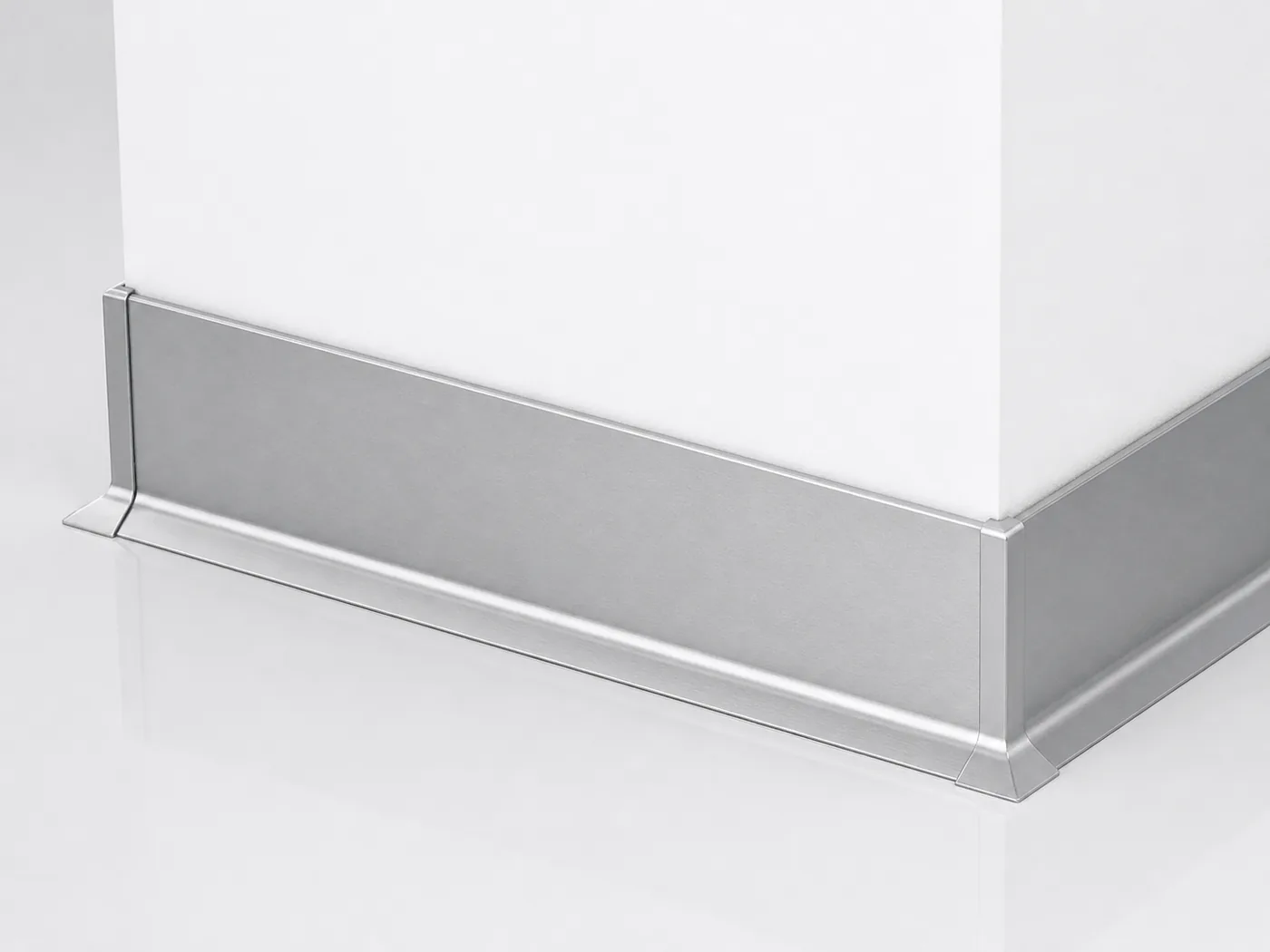
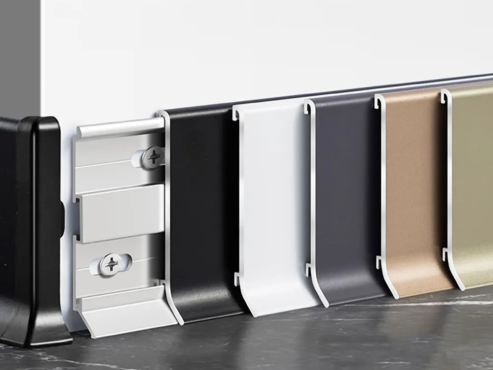
Clip-on baseboards use a separate mounting track or fixing clip. The base track is attached to the wall first, and the visible cover profile is then pressed or snapped into position.
This system creates a clean surface because screws and fixing points remain hidden behind the cover.
Main Advantages
- Hidden fixing system
- Fast installation after the base track is aligned
- The visible cover can be removed when necessary
- Suitable for renovation and new construction
- Can provide space for small cables
- Damaged sections may be easier to replace
Clip-on profiles are a practical choice for commercial projects where maintenance access is important. They can also simplify installation when the project uses long, continuous walls.
Points to Consider
The mounting track must be straight and securely fixed. If the wall surface is uneven, the visible profile may show waves or gaps.
The connection between the clip and cover should also be tested. A system that is too loose may move during cleaning, while a system that is too tight may be difficult to remove without damaging the finish.
We recommend checking the clip spacing, profile thickness, corner accessories, and removal method before approving the product for bulk installation.
3. Adhesive-Mounted Modern Baseboards
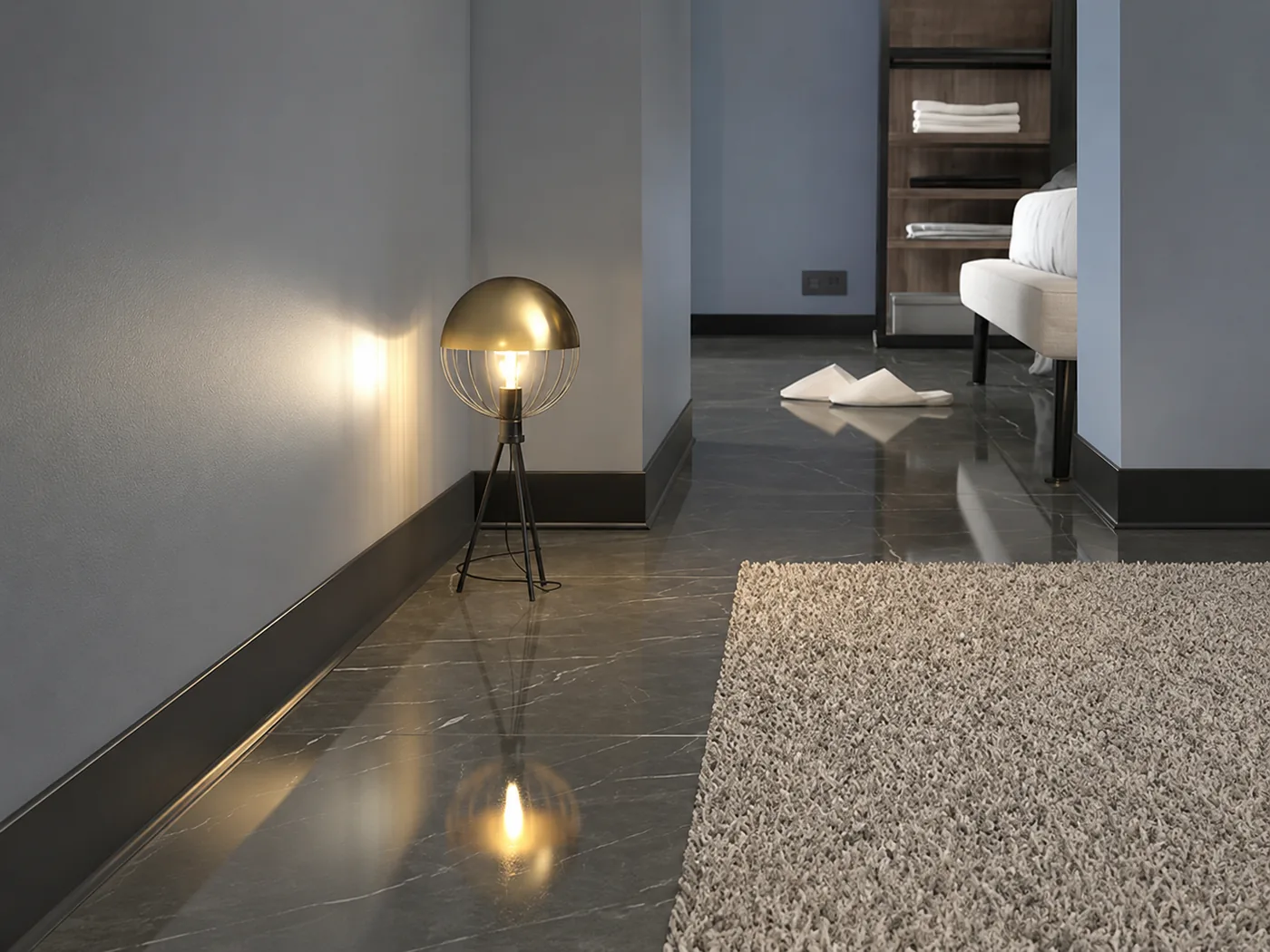
Adhesive-mounted baseboards are fixed directly to the wall with construction adhesive or mounting tape. This method avoids visible screws and does not require a separate clip system.
It is often selected for renovation projects, completed walls, or applications where drilling is not preferred.
Main Advantages
- Simple and clean installation
- No visible screws
- Suitable for finished wall surfaces
- Reduces drilling work
- Useful for small and medium-sized projects
- Works well with lightweight aluminum profiles
Adhesive installation can be efficient, but the result depends heavily on surface preparation.
The wall should be clean, dry, stable, and free from dust, oil, loose paint, or moisture. The adhesive must also be suitable for both the profile material and the wall surface.
Points to Consider
Adhesive-mounted profiles may be difficult to remove without damaging the wall finish. They are also less suitable for weak, dusty, or uneven substrates.
Installers should follow the adhesive supplier’s recommendations for curing time and application temperature. Temporary support may be required until the adhesive reaches sufficient strength.
We recommend: Test the adhesive on a short section before full installation. This is especially important when the wall uses decorative paint, laminate panels, stone, or other special finishes.
4. LED Modern Baseboards
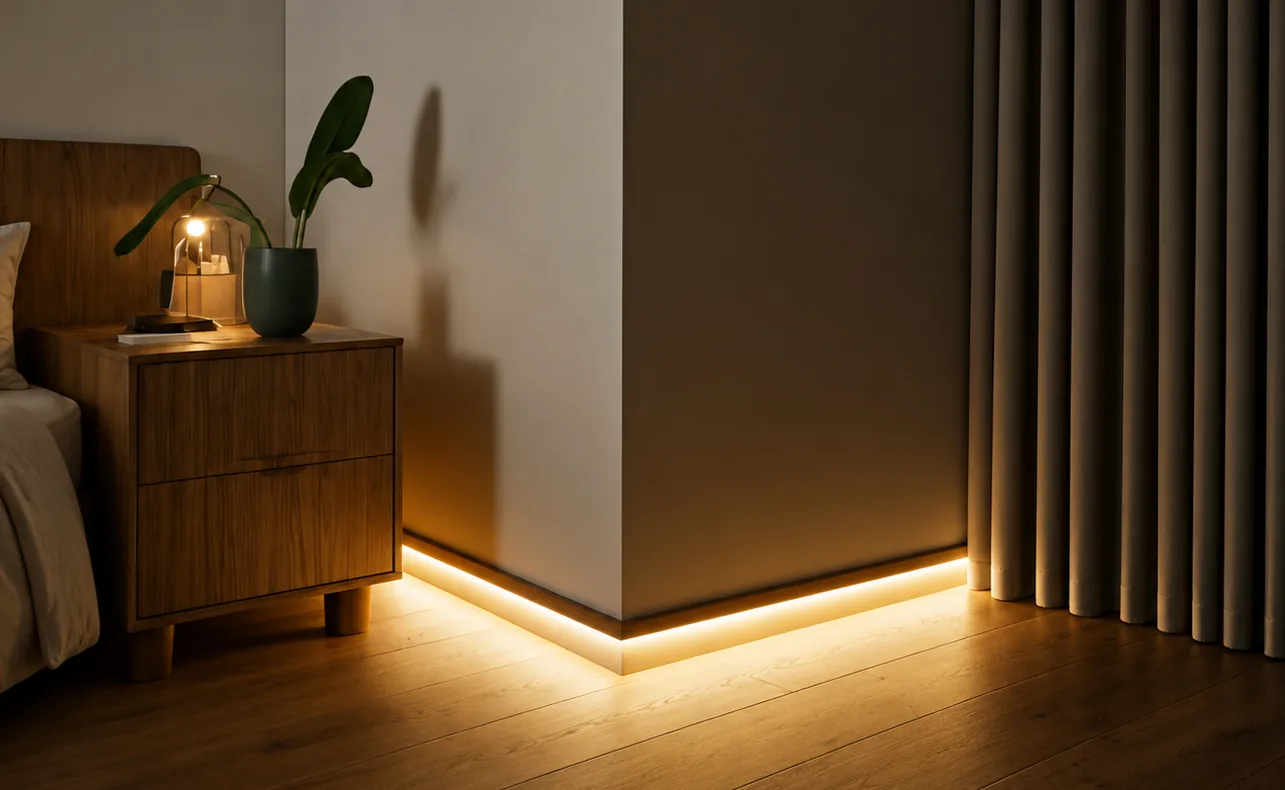
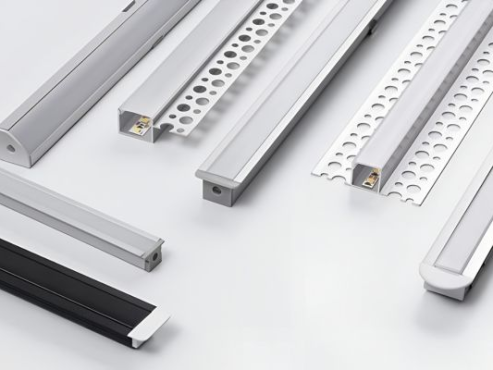
LED baseboards combine a skirting profile with a channel for an LED strip and diffuser. They provide wall protection while creating low-level indirect lighting.
The light may face downward toward the floor, upward toward the wall, or outward through a visible diffuser. Different profile designs create different lighting effects.
Main Advantages
- Adds ambient or navigation lighting
- Creates a modern floating-wall effect
- Helps define corridors and circulation areas
- Combines decorative and functional purposes
- Can be integrated with recessed or surface-mounted designs
- Available with different diffuser and lighting directions
LED skirting is often used in hotels, cinemas, restaurants, corridors, showrooms, stairs, luxury apartments, and entertainment spaces.
Low-level lighting can improve orientation at night without requiring strong ceiling lights. It can also highlight flooring materials and reinforce the horizontal lines of the interior.
Points to Consider
An LED baseboard requires more planning than a standard profile. The project team should confirm:
- LED strip width and power
- Driver position
- Cable routing
- Access for maintenance
- Diffuser type
- Lighting direction
- Heat dissipation requirements
- Control system and dimming method
The aluminum profile should provide enough internal space for the selected LED strip and wiring. Drivers and electrical connections should remain accessible for future inspection.
LED skirting boards are commonly used to combine baseboard protection with ambient or navigation lighting.
Modern Baseboards Comparison
| Baseboard Type | Visual Effect | Installation Stage | Main Benefit | Main Limitation |
|---|---|---|---|---|
| Recessed | Flush, minimal, architectural | Before final wall finishing | Cleanest integrated appearance | Requires early planning |
| Clip-on | Slim with hidden fixings | New construction or renovation | Removable and easy to maintain | Needs accurate track alignment |
| Adhesive-mounted | Simple surface-mounted finish | After wall finishing | Fast installation without drilling | Depends on substrate and adhesive |
| LED | Illuminated, floating effect | Requires electrical planning | Combines lighting and wall protection | Higher installation complexity |
How to Choose Modern Baseboards for a Project
The appearance of the profile is important, but it should not be the only selection factor. A suitable product must also work with the construction method and expected service conditions.
Consider the Installation Stage
For projects still in the drywall or plaster stage, recessed profiles offer more design freedom.
For completed walls, clip-on or adhesive-mounted baseboards are usually more practical because they require less modification to the wall structure.
Select a Suitable Height
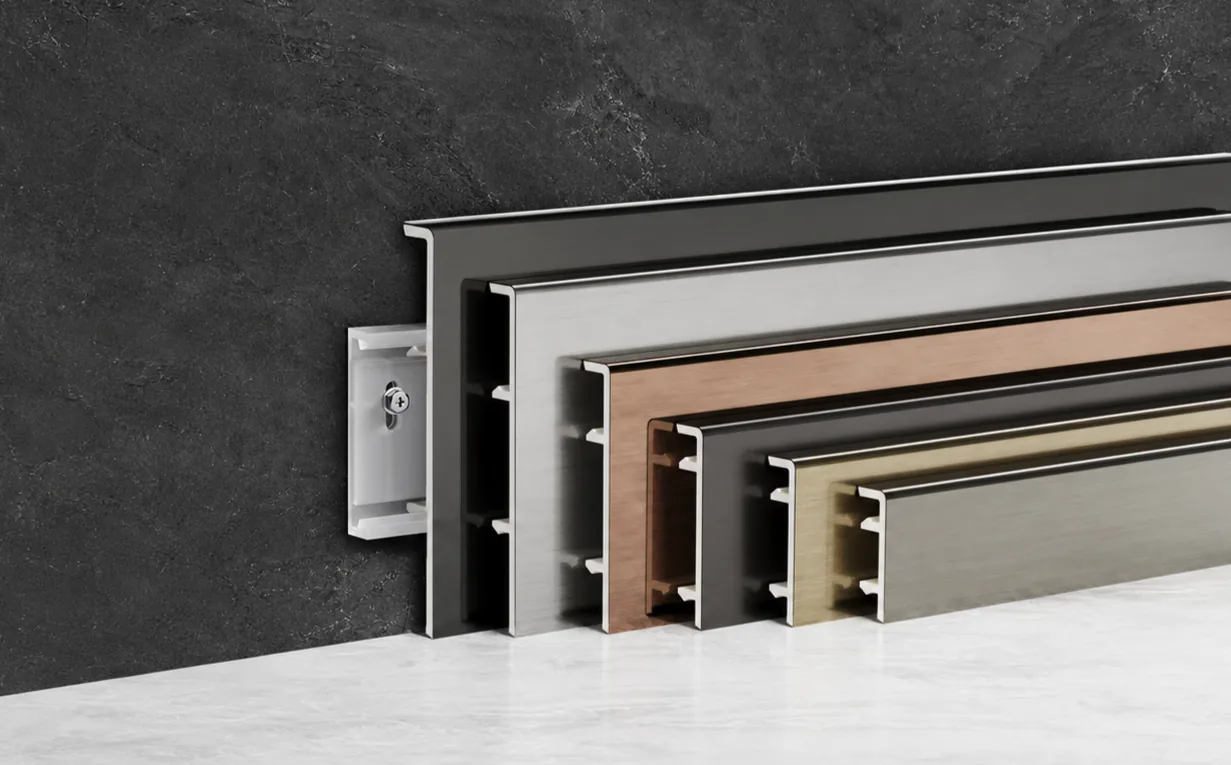
Low profiles support a minimal appearance, while taller profiles provide more wall protection.
Common project decisions should consider:
- Room proportions
- Ceiling height
- Expected impact level
- Floor expansion gap
- Wall panel dimensions
- Door frame height
- Local design preferences
There is no single baseboard height that works for every project. The correct dimension depends on both visual and technical requirements.
Coordinate the Finish
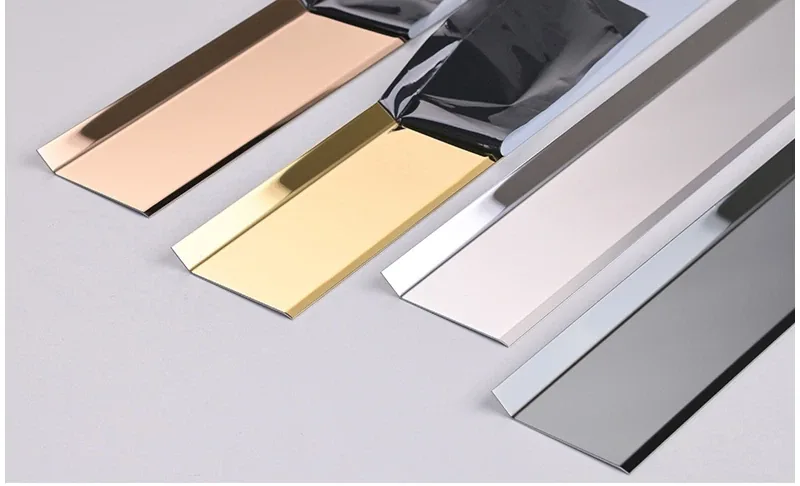
The baseboard may match or contrast with nearby elements.
Popular options include:
- Silver anodized
- Brushed aluminum
- Matte black
- White powder coating
- Champagne
- Bronze
- Gold
- Wood-effect finishes
- Custom RAL colors
Matching the baseboard with door frames and other metal trims creates a consistent finish. Using a contrasting color makes the profile a stronger architectural line.
Review Corners and Accessories
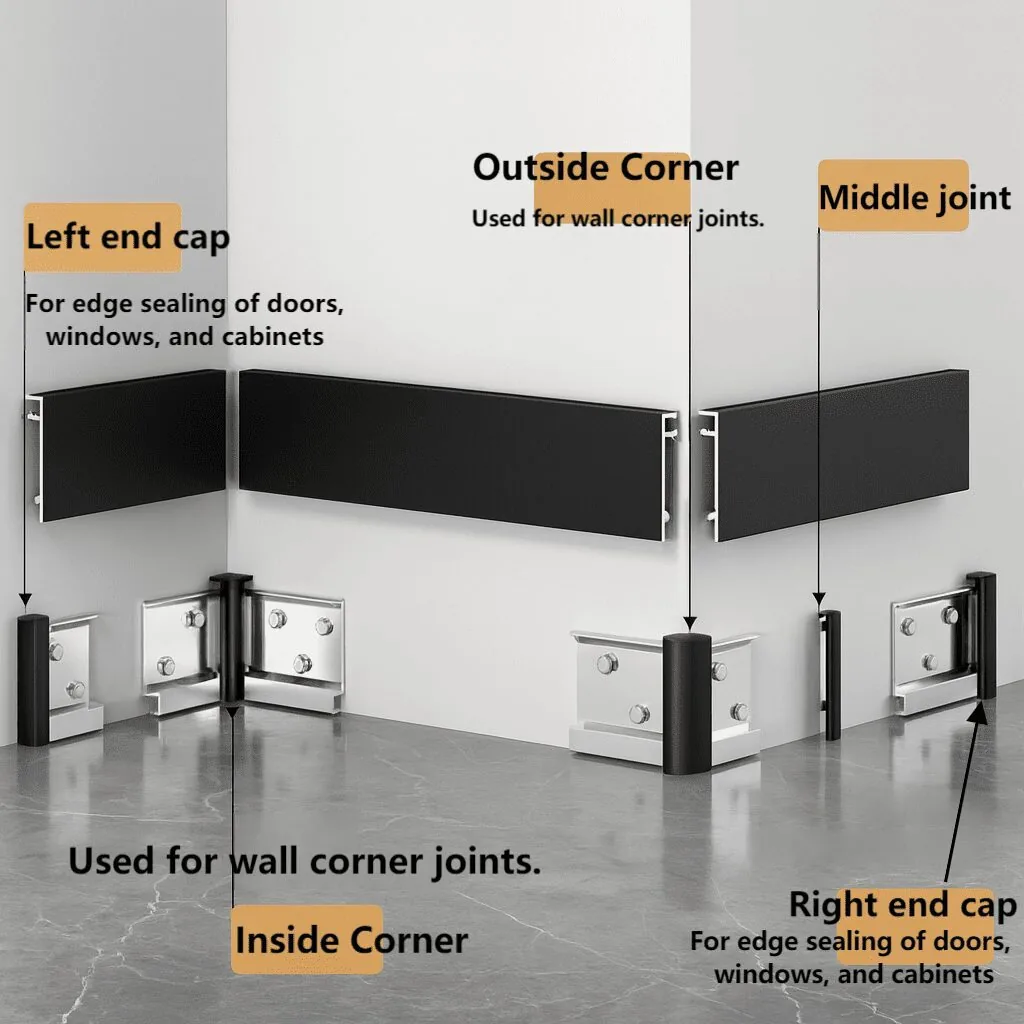
A complete baseboard system may require internal corners, external corners, connectors, end caps, fixing tracks, diffusers, and cable accessories.
Miter cutting can create a clean result, but prefabricated accessories often improve installation speed and consistency on large projects.
Frequently Asked Questions
Are aluminum baseboards suitable for wet areas?
Aluminum baseboards can be used in kitchens, bathrooms, and other areas where moisture may be present. The selected finish, fixing components, adhesive, and wall system must also be suitable for the environment.
Can modern baseboards hide electrical cables?
Some clip-on and LED profiles include internal space for low-voltage wires or small cables. However, the available space varies by design. Cable size and electrical requirements should be confirmed before selecting the profile.
Can recessed baseboards be installed after the wall is finished?
It may be possible, but it usually requires cutting or rebuilding part of the wall. Recessed profiles are easier and more economical to install when included in the original wall construction plan.
Are adhesive baseboards strong enough for commercial projects?
They can be suitable when the profile is lightweight, the substrate is stable, and the correct adhesive is used. For high-impact areas or uncertain wall surfaces, mechanical or clip-on fixing may provide greater security.
What finish is best for Modern Baseboards?
Matte black, brushed silver, champagne, white, and bronze are common choices. The best finish depends on the flooring, wall color, door frames, furniture, and other metal details in the project.
Can aluminum baseboard profiles be customized?
Yes. Aluminum extrusion allows manufacturers to adjust the profile shape, height, width, thickness, fixing structure, finish, and accessory design. Custom tooling is usually required for a completely new profile.
Conclusion
The best modern baseboards combine a clean appearance with practical installation and long-term wall protection.
Chenhao Aluminum supplies standard and custom aluminum baseboard profiles with OEM support, stable bulk production, factory pricing, and global shipping. For project-specific requirements, provide the profile drawing, finish, dimensions, estimated quantity, and installation details to receive a more accurate product recommendation.