A carpet transition looks simple, but the detail at the edge determines how well the flooring performs over time. If the carpet is not held correctly, the edge may lift, fray, or move. If the profile is too high or too narrow, the transition can also become uncomfortable underfoot.
For most projects, an aluminum carpet edge trim gives the installer a controlled transition line while protecting the exposed carpet boundary. Different profile shapes solve different problems.Below are five practical ways to transition carpet using different profile forms.
Why the Shape of Carpet Edge Trim Matters
The cross-section of a transition profile is not just a design feature. It determines where the load is carried and how the carpet edge is restrained.
Before choosing carpet edge trim, measure the finished floor heights, not only the thickness of the flooring materials. Carpet pile, underlay, adhesive bed, and subfloor preparation can change the final level.
Manufacturer’s Tip: Check the actual transition after both flooring build-ups are confirmed. Selecting the profile from nominal material thickness alone is one of the common reasons a transition sits too high or does not grip the carpet correctly.
1. Use Z-Bar Carpet Edge Trim for a Tucked Carpet-to-Hard-Floor Transition
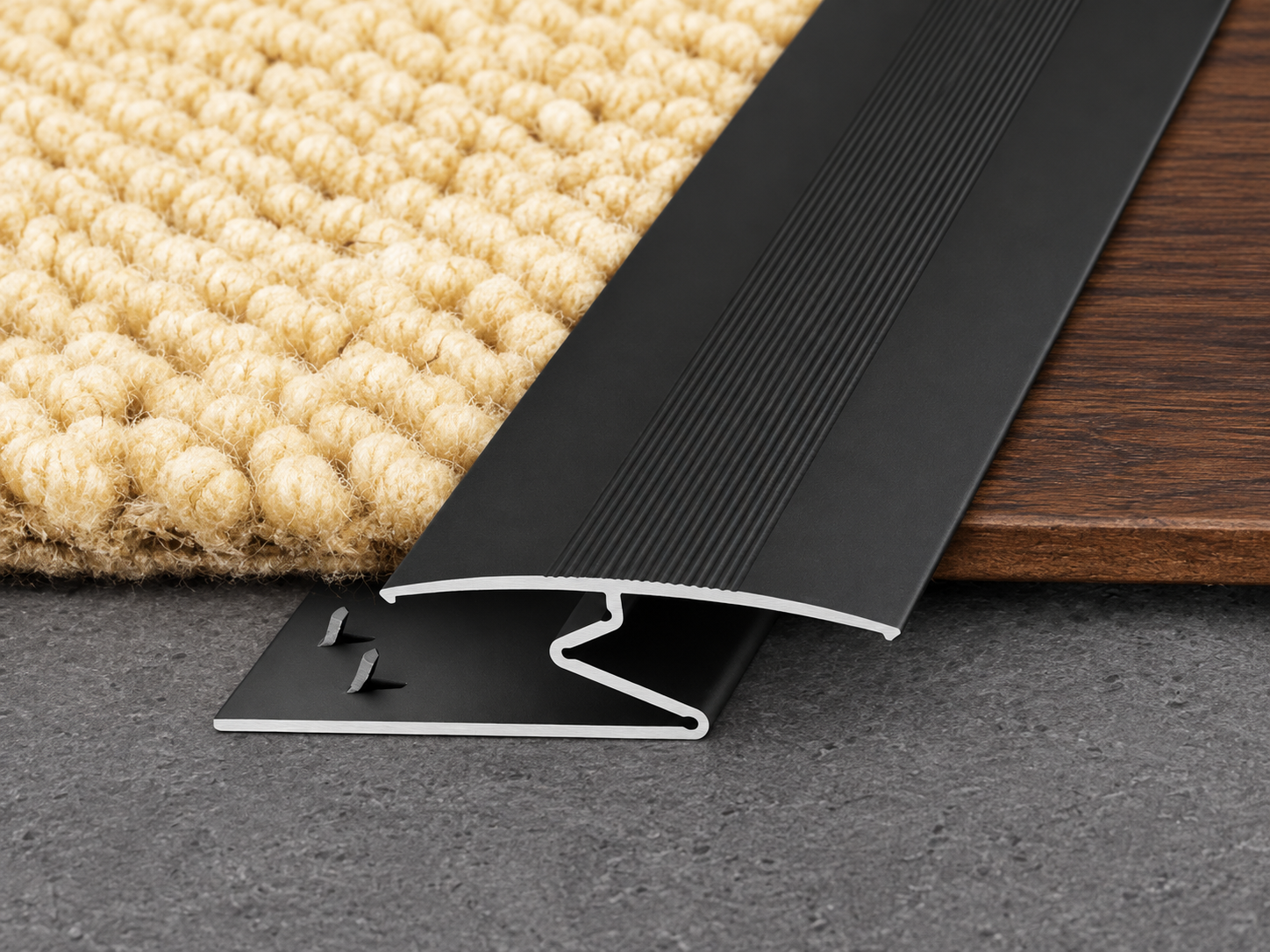
Z-bar is one of the most recognizable forms of carpet edge trim. Its cross-section bends back on itself in a Z-like form. This geometry allows the carpet edge to be held and tucked while the opposite side meets a hard flooring surface.
This profile is especially useful when the installer wants the carpet edge to look compact rather than covered by a wide surface plate. The carpet can be stretched toward the transition, secured, and then tucked into the profile. The visible part of the trim stays relatively narrow.
The reference product range uses Z-bar for transitions from carpet to laminate, wood, or LVT, including situations with a height difference of up to about 13 mm.
When Z-Bar Works Best
We recommend this type when the carpet is installed with tension and needs a firm edge against a hard floor. It is also suitable when a narrow and clean transition line is preferred instead of a wide cover strip.
The main advantage is control. Instead of allowing the cut carpet edge to remain exposed, the Z profile folds the termination into a defined metal section. This helps reduce edge movement and makes the transition easier to maintain.
Installation quality matters. The carpet must be cut accurately and stretched properly before the Z-bar is closed or adjusted. If the carpet is too loose, the profile cannot correct the installation by itself.
For larger projects, specify the carpet type and final floor height when ordering carpet edge trim. A small change in the profile height or gripping area can make installation much more consistent across repeated openings.
2. Connect Two Carpet Areas with H-Shaped Carpet Edge Trim
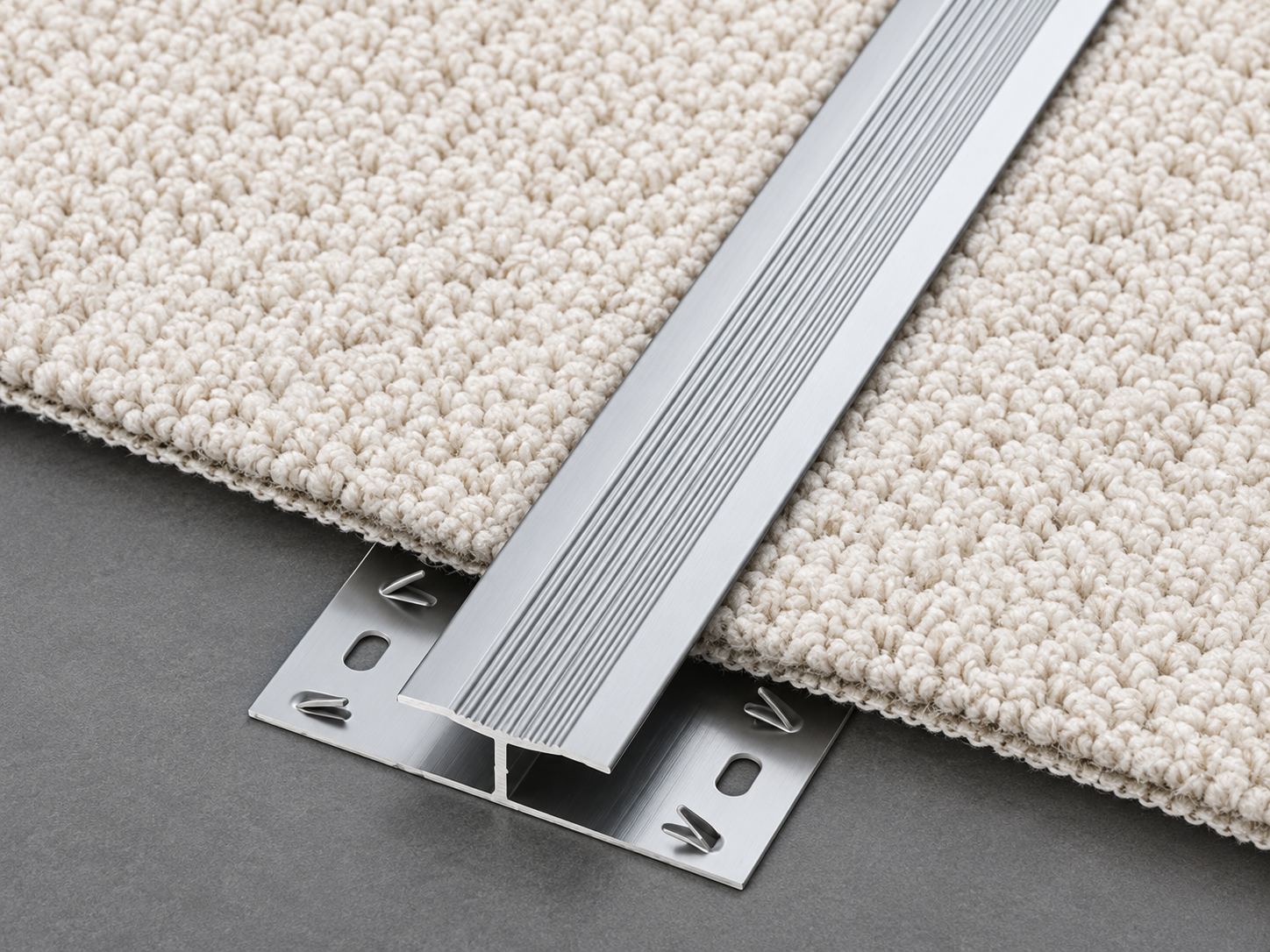
Not every transition is carpet to tile or carpet to wood. Sometimes two carpeted areas meet at a doorway, movement joint, or change in carpet finish. In this case, an H-shaped carpet edge trim can provide a balanced connection.
The reference carpet-to-carpet profile is described as an H-shaped aluminum extrusion. Typical listed heights include 8 mm, 10 mm, and 12 mm, with customized dimensions also available.
The H form is useful because the two sides of the profile can engage the flooring from opposite directions. Instead of treating one side as the finished edge and the other as the receiving floor, the section works as a connector between two similar materials.
Why Use an H-Shaped Profile?
A carpet-to-carpet joint can look uneven if the two edges are simply brought together without a defined transition. The pile may separate over time, and repeated foot traffic can disturb the seam.
H-shaped carpet edge trim creates a fixed center line and gives both carpet edges a structured termination. It can also be easier to replace one carpet area later because the transition remains clearly defined.
For specification work, pay attention to carpet thickness and backing construction. A low-profile carpet and a thicker carpet may require different profile dimensions even if the opening width is the same.
This type of carpet edge trim is a good option when the goal is a stable joint rather than a highly visible decorative threshold.
3. Finish One Carpet Edge with Single-Edge Carpet Trim
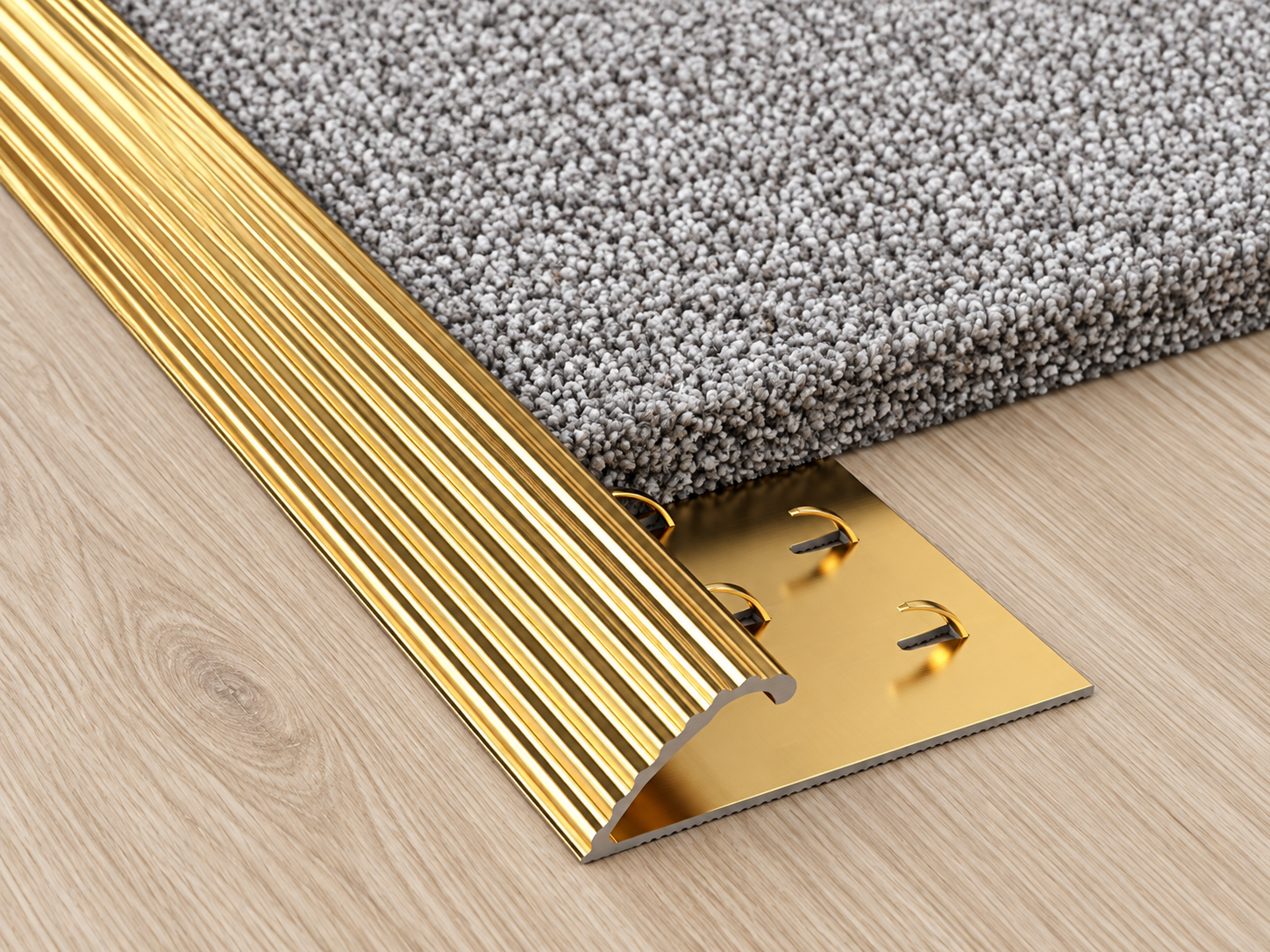
A single-edge profile is designed for a different situation: only one side of the carpet needs to be captured or protected.
This can occur where carpet ends against a thin resilient floor, a stone edge, or another hard surface that does not need to be enclosed by the same profile. The reference range positions single-edge trim as an aluminum transition for carpet meeting materials such as vinyl and other hard finishes.
Unlike a symmetrical connector, this carpet edge trim focuses on the carpet side. The profile creates a neat termination and helps keep the carpet edge from curling upward.
What to Check Before Using Single-Edge Trim
First, check the height of the exposed carpet edge after the underlay is installed. The trim should restrain the carpet without crushing the pile excessively.
Then consider the direction of foot traffic. If people regularly cross the edge at an angle, a smooth exposed surface is preferable to a sharp or oversized lip.
The fixing method also needs to suit the substrate. Depending on the profile design, carpet transition strips may use mechanical fasteners, adhesive, or a concealed fixing system. The reference range notes screw or nail fixing for many profiles, with self-adhesive and snap-in options available on some models.
For projects with many repeated openings, single-edge carpet edge trim can be practical because the same termination detail can be standardized throughout the project.
4. Bridge Carpet and Tile with Flat Carpet Edge Trim
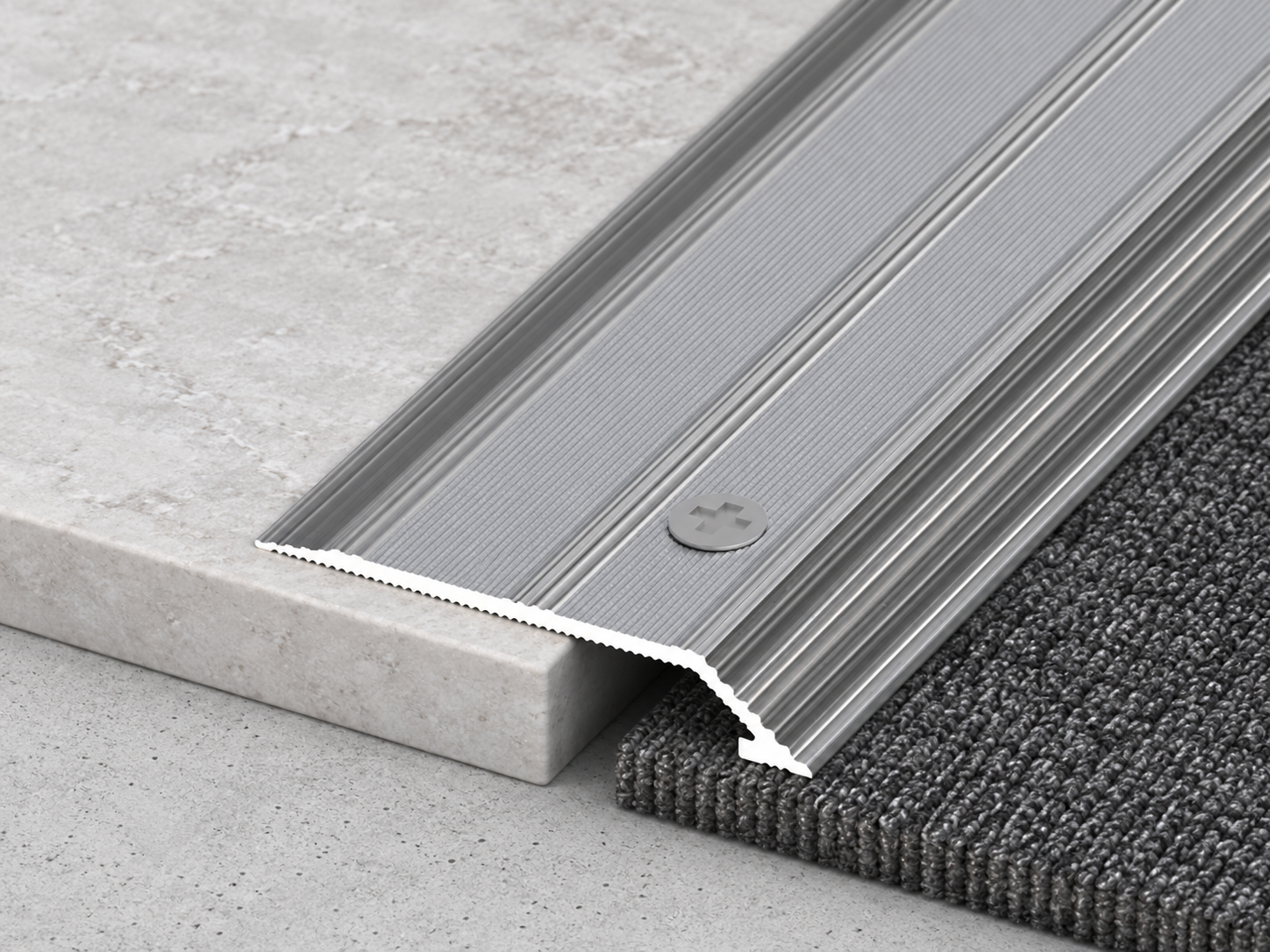
When carpet meets tile at a similar finished height, a flat transition profile can be one of the simplest solutions.
The carpet-to-tile product in the reference range uses a flat profile and is offered in several nominal heights, including 8 mm, 10 mm, and 12 mm, with customization available.
A flat carpet edge trim covers the joint from above rather than creating a deep tucked connection. This makes it useful when the transition line needs a broader contact surface or when the installer wants the exposed joint to be clearly protected.
Why Flat Profiles Are Useful at Tile Edges
Tile edges are hard and dimensionally stable, while carpet is softer and compressible. The transition must therefore deal with two very different behaviors.
A flat metal profile creates a controlled surface across the meeting point. It can reduce direct wear on the carpet edge and protect the tile edge from repeated contact. If the top face includes grooves or another slip-resistant texture, it can also improve footing across the joint.
However, flat carpet edge trim should not be used to hide a large floor-height difference. If the tile sits significantly above the carpet, a flat strip may create a noticeable step. In that case, an offset or sloped transition is usually more suitable.
As a manufacturer, we recommend confirming the finished height difference in millimeters before approving the section drawing. This is particularly important where tile build-up may vary because of adhesive thickness or substrate correction.
5. Use Rounded Z-Shaped Carpet Edge Trim for a Softer Multi-Level Transition
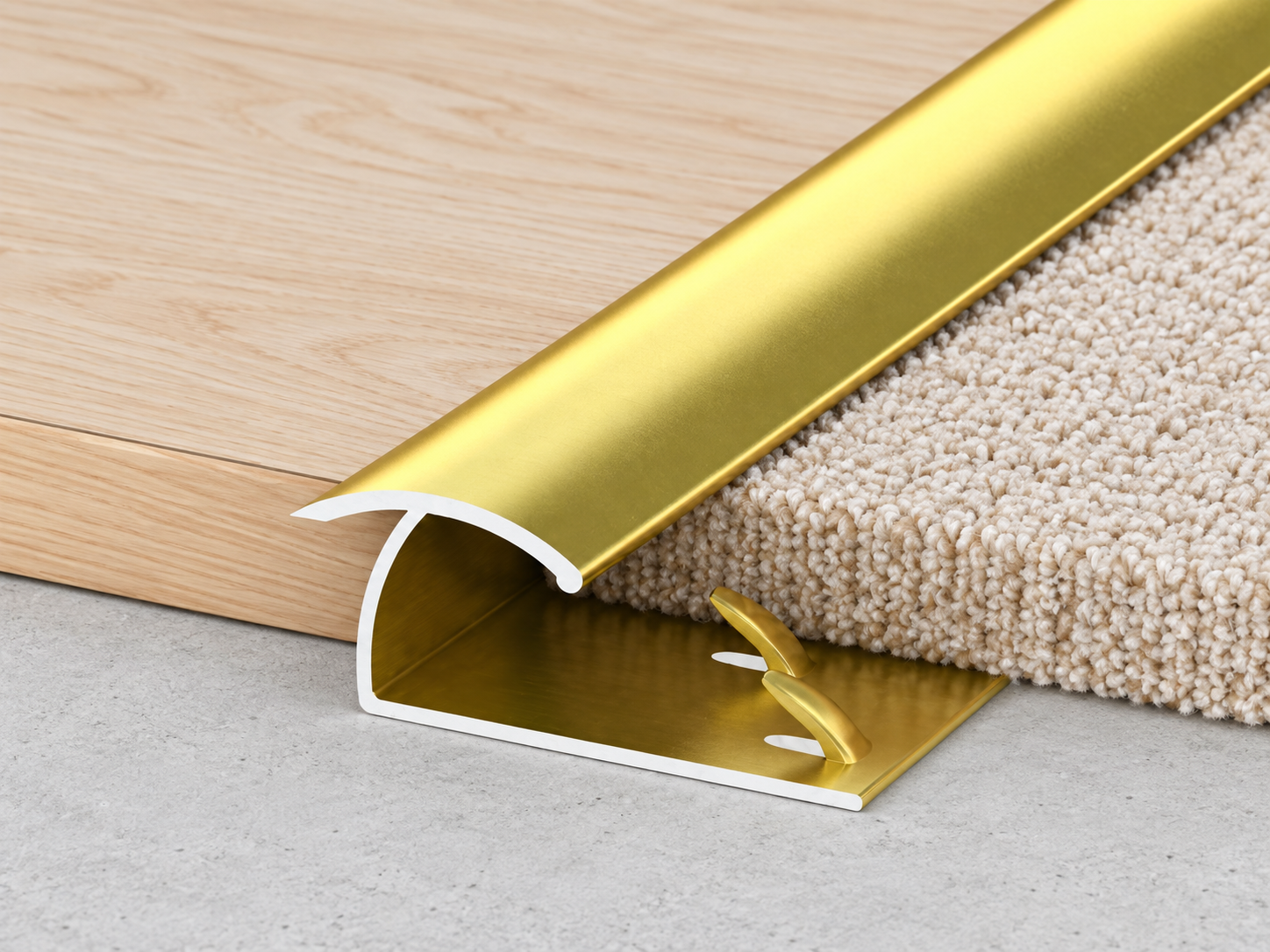
The fifth option combines Z-type geometry with a rounded exposed edge. This carpet-to-floor form is useful when the transition needs both secure carpet control and a softer visible nose.
The reference carpet-to-floor range identifies the profile as Z-shaped with a round edge, and offers customizable height, thickness, length, color, and surface treatment.
Compared with a sharper folded Z-bar, the rounded edge changes how the transition feels and looks underfoot. It can provide a more gradual visual line where carpet meets wood, laminate, or another hard floor.
When a Rounded Edge Is a Better Choice
Choose this carpet edge trim when a standard narrow Z-bar would look too abrupt or when the exposed metal edge needs a softer contour.
It is also worth considering in frequently crossed openings. A rounded upper surface can make the transition feel less severe, although the correct height relationship is still more important than the shape alone.
For design-led projects, the round edge can coordinate well with other curved details in the interior. The finish should support the surrounding floor design rather than become the main visual feature.
The key is not to select the round profile only because it looks softer in a sample. Confirm that the lower part of the section still fits the carpet build-up and provides enough holding area.
How to Choose the Right Carpet Edge Trim for a Project
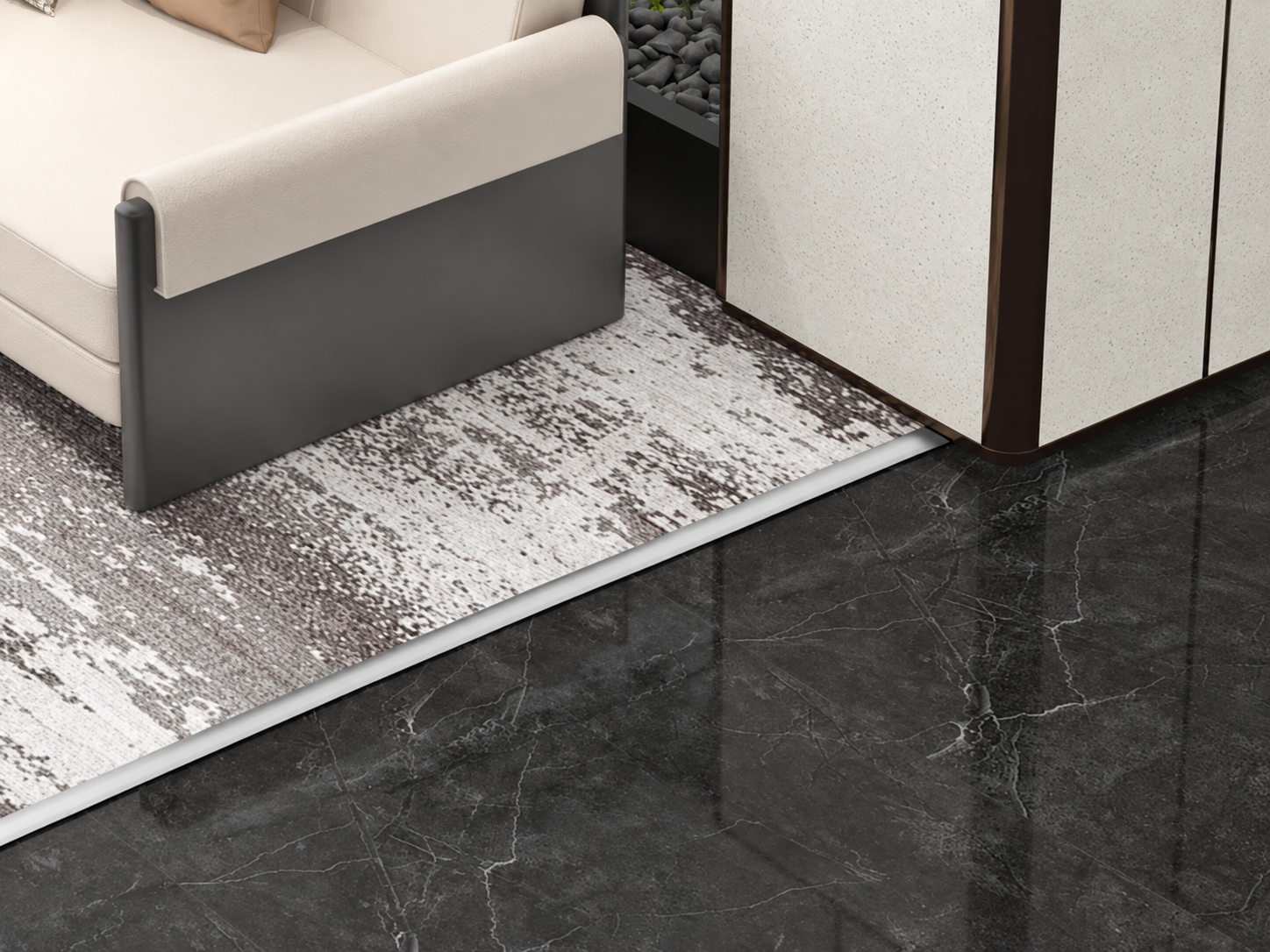
The five profiles above are not interchangeable. A good specification begins with the floor condition.
Start with the transition function. If the carpet needs to be tucked tightly against a hard floor, use a Z-type solution. If two carpet areas meet, consider an H-shaped connector. If one carpet edge simply needs a clean termination, a single-edge profile is often more direct. For similar-height carpet and tile, a flat bridge can work well.
Then check the level difference. The visible shape of carpet edge trim must suit the actual finished levels. Even a well-made profile will perform poorly if it is forced into the wrong height range.
Material also matters. Aluminum is widely used because it can be extruded into precise sections and supplied with anodized, polished, or powder-coated finishes.
Finally, consider the installation method. The fixing detail should match the substrate and the expected traffic. Mechanical fixing gives a direct connection to the base, while concealed systems may be preferred where visible screws are not acceptable.
Key Dimensions to Confirm Before Ordering Carpet Edge Trim
For standard or custom production, the section drawing should be checked against the project rather than approved from appearance alone.
The most important dimensions are:
- Finished carpet height, including underlay
- Finished height of the adjacent floor
- Required cover width across the joint
- Profile thickness and fixing position
- Required length and cutting allowance
The reference products show that transition strips can be produced in standard lengths around 2.44 m to 3 m, while thickness and other dimensions can be customized depending on the profile.
For bulk purchasing, consistent tolerances are especially important. A profile that varies slightly from batch to batch can create installation problems across a large project. Samples should therefore be checked together with the final carpet and adjacent flooring whenever possible.
Aluminum Carpet Edge Trim: Practical Points for B2B Buyers
For distributors and project buyers, product selection is only one part of the decision. Repeatability is equally important.
At Chenhao Aluminum Business, we manufacture aluminum profiles directly and can support standard or custom carpet edge trim for bulk supply. Custom work can include section dimensions, surface finish, color, fixing details, and packaging according to project or market requirements.
The purpose of customization should be practical. A new profile is justified when a standard section cannot meet the required floor height, cover width, appearance, or installation method. In many cases, adjusting an existing extrusion is more efficient than creating a completely new design.
We also recommend confirming the approved sample before mass production. This gives the contractor and purchasing team a common reference for profile shape and finish.
For OEM orders, drawings should clearly show the critical dimensions and tolerances. Packaging should also be planned around profile length because long aluminum trims can be damaged by bending or surface abrasion during transport.
Chenhao Aluminum Business can support factory pricing, stable production, OEM service, bulk orders, and global shipping. The aim is to supply a transition profile that fits the floor detail correctly rather than simply offer the largest possible range.
Common Mistakes When Specifying Carpet Edge Trim
One common mistake is choosing by finish first. Silver, black, bronze, or another finish may suit the interior, but color cannot compensate for an incorrect section.
Another mistake is ignoring the carpet backing. Two carpets with a similar overall thickness may behave differently at the edge. The way the backing grips, folds, or compresses affects the required profile.
A third mistake is using one carpet edge trim for every transition in the project. Standardization is useful, but only where the floor build-up is genuinely similar. A carpet-to-carpet doorway and a carpet-to-tile joint often need different geometry.
The better approach is to group transitions by floor condition, then select the smallest number of profiles that can solve those conditions properly.
Conclusion
There is no single carpet edge trim that is correct for every carpet transition. The profile shape should follow the way the carpet meets the next surface.
The most reliable selection process is to measure the completed floor levels, understand how the carpet must be held, and then match those conditions to the profile cross-section.
For standard or custom aluminum carpet edge trim, Chenhao Aluminum Business can support profile development, OEM requirements, bulk production, and international supply. A clear drawing and accurate floor build-up information are usually the best starting points for choosing the right transition.
Frequently Asked Questions About Carpet Edge Trim
What is carpet edge trim used for?
Carpet edge trim protects and secures the boundary of carpet where it meets another flooring material or another carpet area. Depending on the profile, it can grip, cover, bridge, or finish the carpet edge.
Which carpet edge trim is best for carpet to tile?
If the finished surfaces are close to the same level, a flat carpet-to-tile profile can work well. If the height difference is larger, use a profile designed to accommodate that offset rather than forcing a flat strip across the joint.
Is aluminum suitable for high-traffic carpet transitions?
Yes. Correctly specified aluminum profiles are commonly used for flooring transitions because the material is rigid and can be extruded into consistent cross-sections. With a suitable surface finish, aluminum also provides good corrosion resistance. The profile thickness and fixing method should still be selected for the expected traffic.
Can carpet edge trim be customized?
Yes. Aluminum carpet edge trim can be customized in dimensions, finish, color, fixing detail, and length. For OEM or project orders, provide the carpet build-up, adjacent floor height, preferred visible width, and installation method before finalizing the section.