Skirting boards may look like a small finishing detail, but they influence wall protection, floor transitions, cleaning and the overall appearance of an interior. With many types of skirting board available, choosing only by color or price can easily lead to the wrong specification.
Understanding how different types of skirting board perform under real project conditions makes it easier to avoid unnecessary maintenance and installation problems.
This guide explains how to compare the main types of skirting board from a practical product and engineering point of view. It covers materials, profiles, dimensions, finishes, installation methods, and application conditions so you can make a more reliable decision.
What Does a Skirting Board Actually Do?
A skirting board, also called a baseboard, is installed where the wall meets the floor. Its basic purpose is to cover the unfinished edge between these surfaces. It also provides protection and creates a more controlled architectural finish.
A properly selected skirting board can:
- Protect lower walls from shoes, carts, furniture, and cleaning equipment
- Cover small gaps between flooring and walls
- Create a clean visual transition
- Coordinate with tile trims, floor transition strips, stair nosing, and wall profiles
- Simplify cleaning and maintenance
The best choice depends on what the profile needs to do. This is why understanding the different types of skirting board is more useful than selecting a shape from a catalog.
Main Types of Skirting Board by Material
Material should usually be the first decision. It affects durability, moisture resistance, appearance, installation, maintenance, and cost.
1. Aluminum Skirting Board
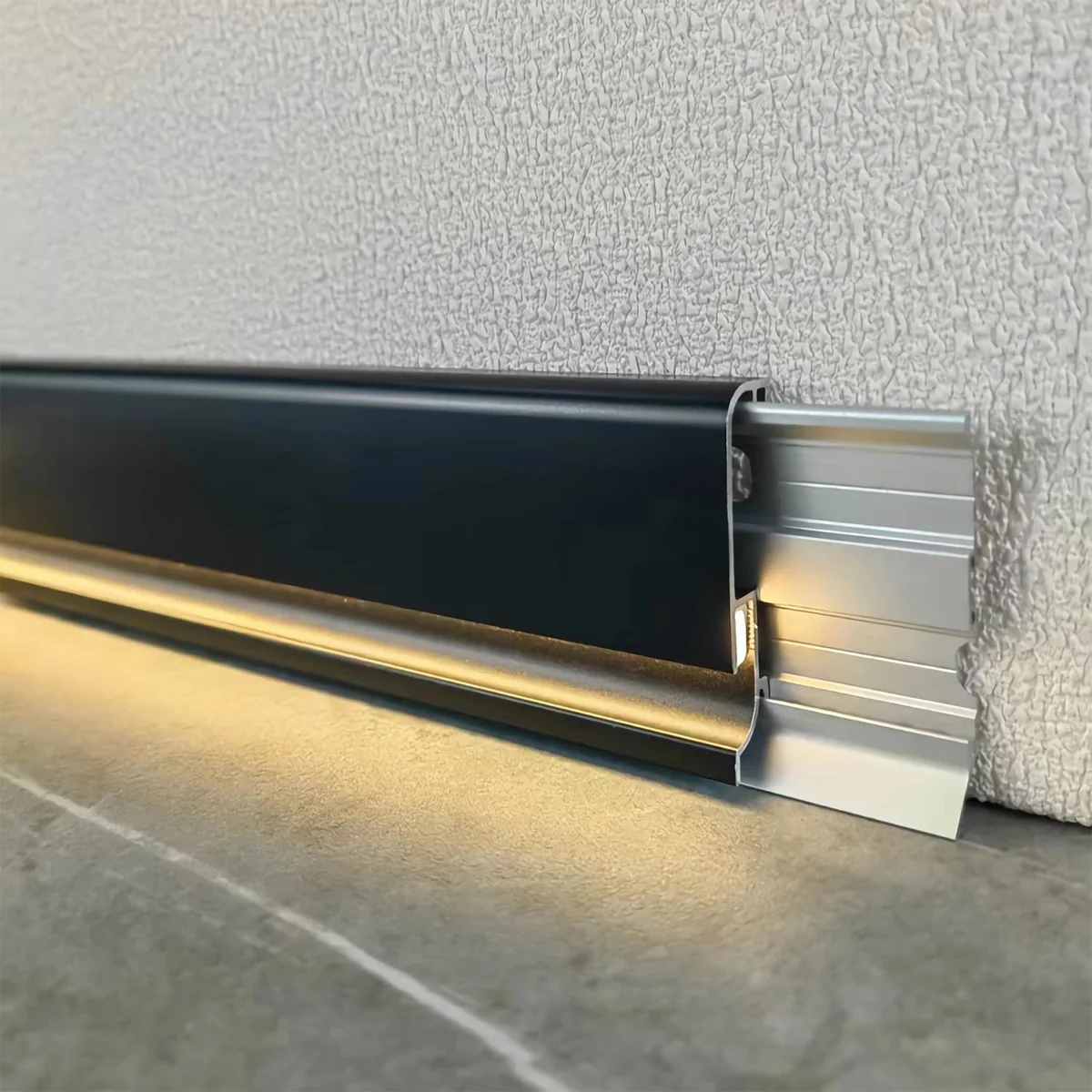
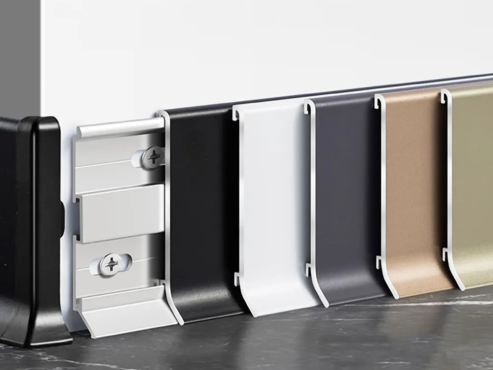
Aluminum skirting is widely used in modern residential and commercial interiors. It provides a clean architectural appearance and a good balance between strength, weight, corrosion resistance, and cost.
Unlike wood-based products, aluminum does not absorb moisture or swell. Extrusion also allows manufacturers to produce slim profiles, recessed systems, shadow gaps, LED channels, cable channels, and custom shapes.
Typical finishes include:
- Anodized silver or black
- Brushed surfaces
- Powder-coated colors
- Wood-grain effects
Among the common types of skirting board, aluminum is a practical choice when the project requires stable dimensions, low maintenance, modern styling, and bulk supply.
Manufacturer’s Tip: For humid areas or spaces that are cleaned frequently, anodized or properly powder-coated aluminum generally provides a more stable long-term surface than painted wood-based skirting.
2. Stainless Steel Skirting Board
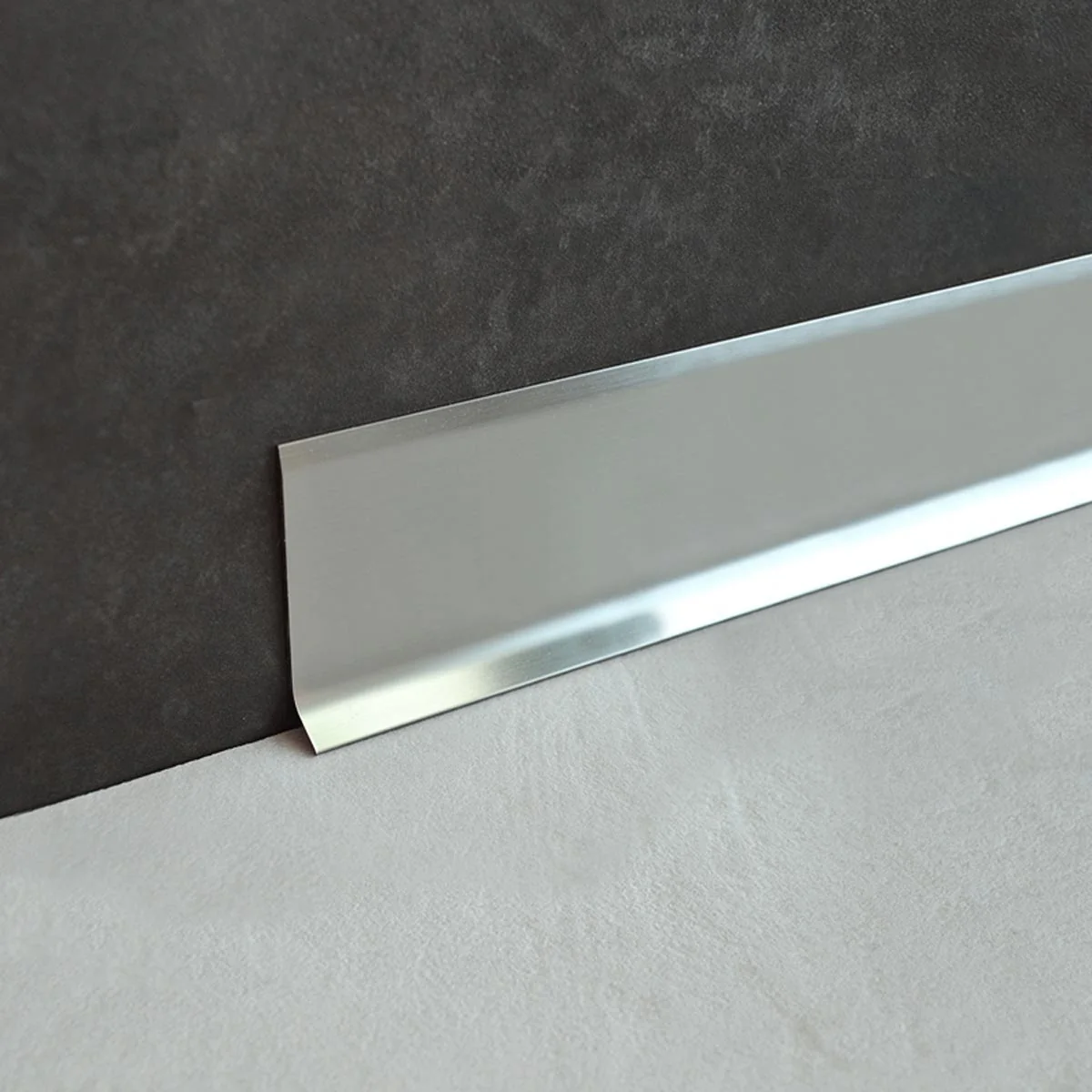
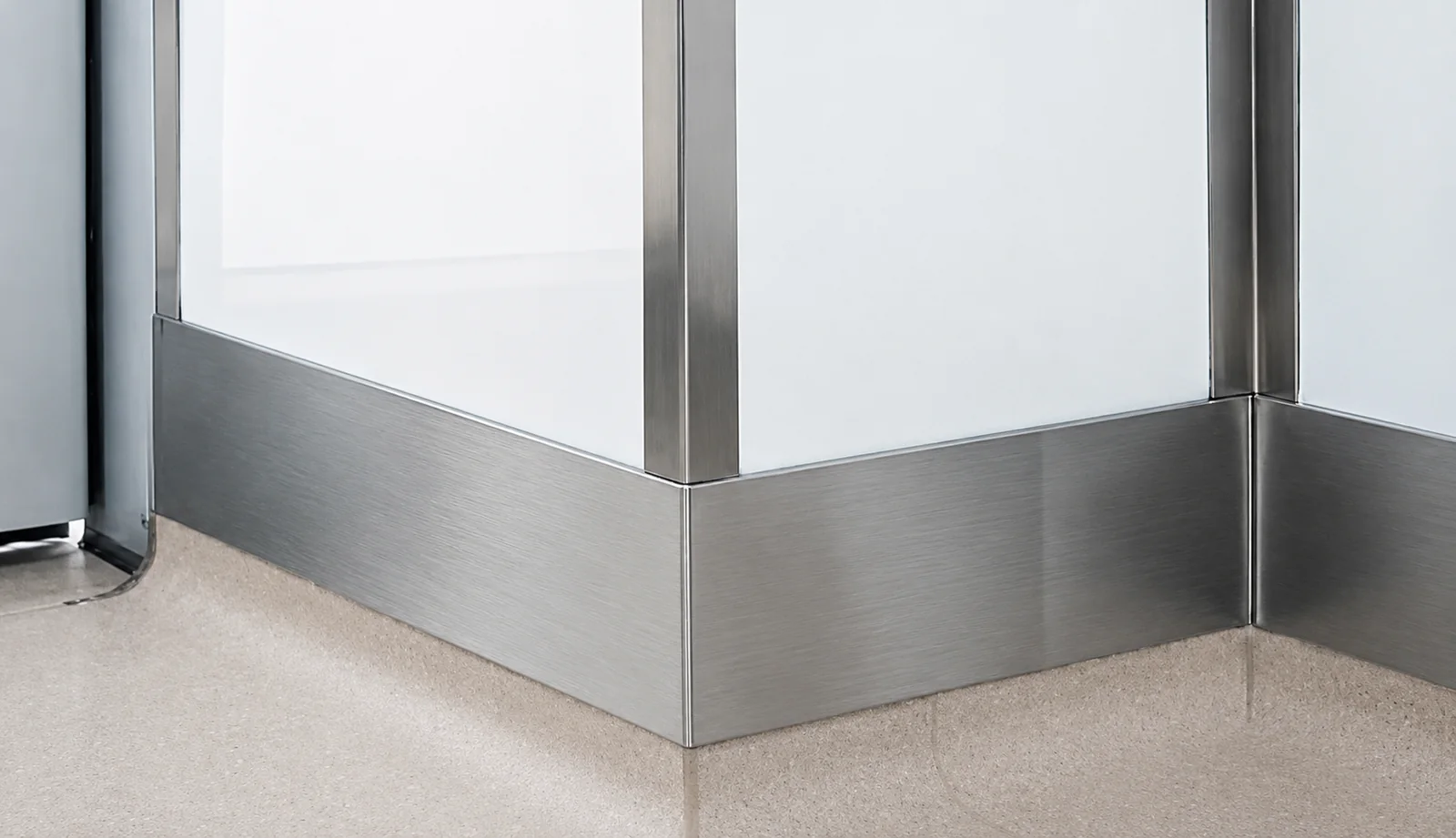
Stainless steel skirting is used when impact resistance, hygiene, chemical resistance, or a premium metallic appearance is important.
It is often specified for hospitals, commercial kitchens, laboratories, transport buildings, and high-traffic public spaces.
Compared with aluminum, stainless steel is heavier, usually more expensive, and more difficult to cut. It is therefore unnecessary for many standard interiors.
When comparing metal types of skirting board, aluminum is often suitable for general architectural use, while stainless steel is better for demanding environments.
3. MDF Skirting Board
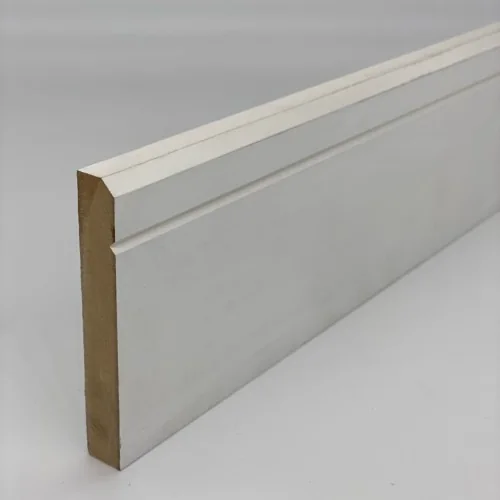
MDF skirting is economical, smooth, and easy to paint. It can be machined into decorative profiles such as Ogee, Torus, Ovolo, and other traditional shapes.
Its main benefits are low material cost, consistent machining, and a smooth painted finish. However, standard MDF is not ideal where frequent water exposure is expected. Moisture-resistant grades improve performance, but the actual board specification should still be confirmed before use in wet areas.
For painted decorative interiors, MDF remains one of the most common types of skirting board.
4. Solid Wood Skirting Board
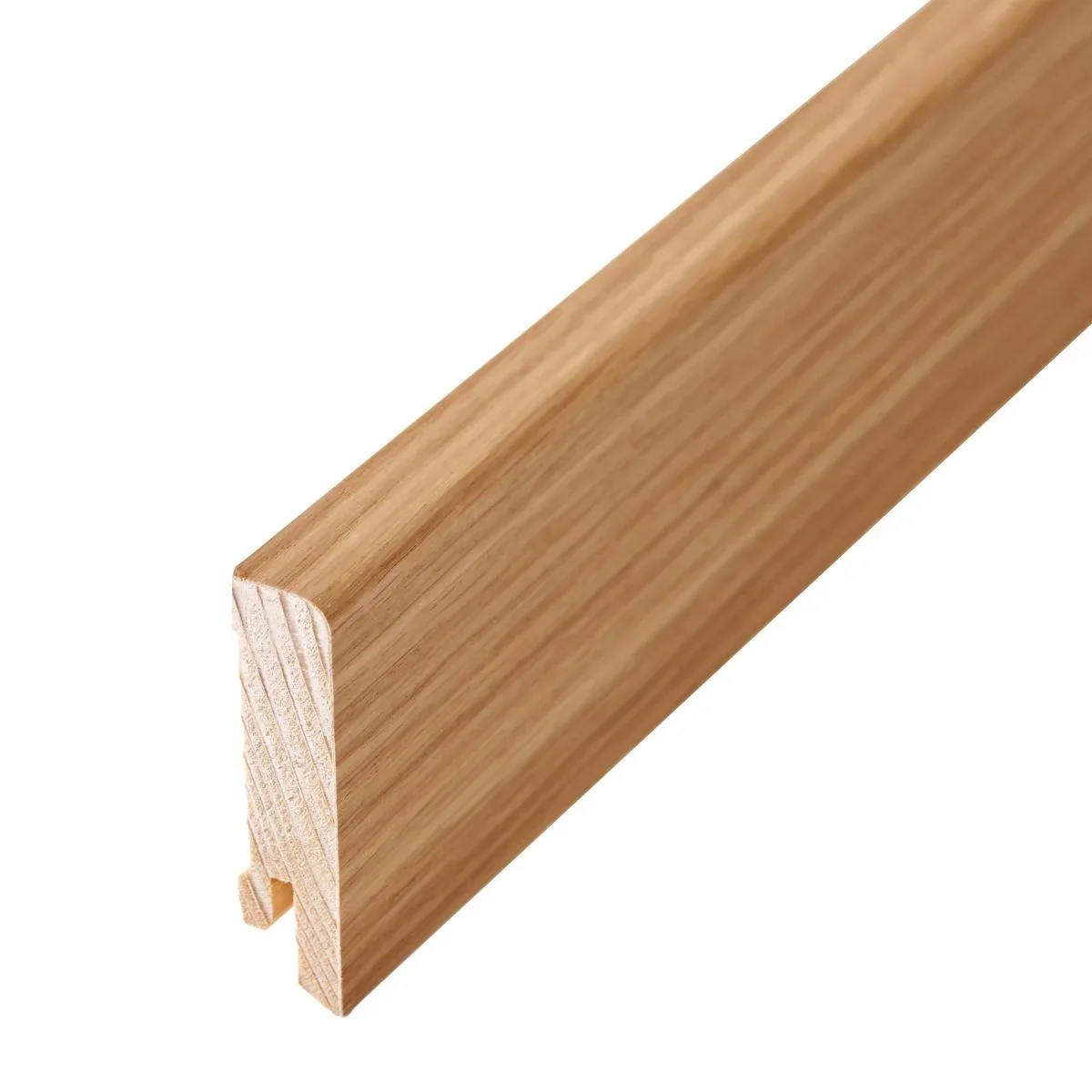
Solid wood provides a natural appearance and can be stained or painted to match timber floors, doors, and furniture.
It works especially well in traditional interiors, villas, heritage-style spaces, and projects where natural grain is part of the design.
Its main limitation is dimensional movement. Wood can expand, shrink, or warp when humidity changes, so moisture content, storage, and installation conditions matter.
5. PVC and Vinyl Skirting Board
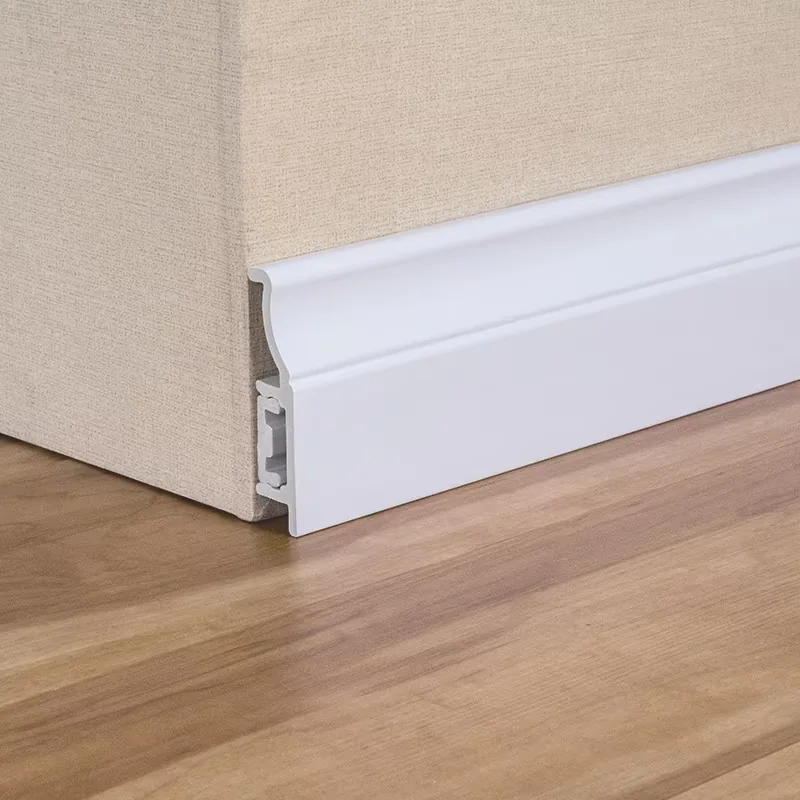
PVC and vinyl skirting are lightweight, economical, and water resistant. Flexible versions are useful for some commercial flooring systems and curved walls.
These types of skirting board are often used in utility areas, light commercial spaces, temporary fit-outs, and budget-sensitive projects.
The trade-off is lower rigidity and impact resistance compared with metal, and the appearance may be less suitable for premium architectural interiors.
6. Tile and Stone Skirting
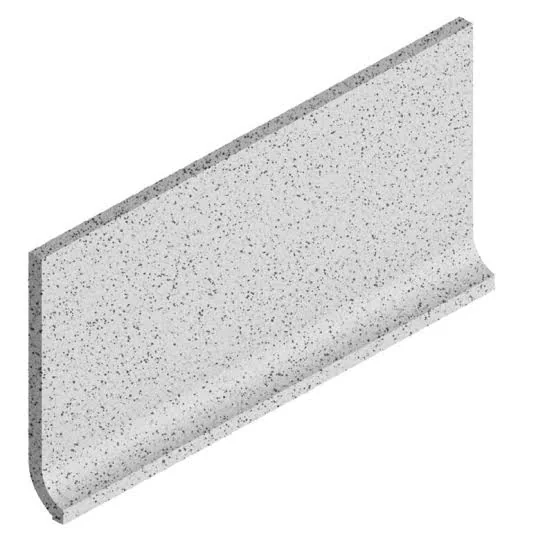
Some projects use strips of porcelain, ceramic tile, marble, or stone as skirting. This creates a direct visual connection with the floor and works well in bathrooms, lobbies, corridors, and luxury interiors.
The disadvantages are additional cutting, heavier installation, visible joints, and possible edge chipping. A metal edge profile may still be useful where the exposed top edge needs protection.
Types of Skirting Board by Profile Design
After material, profile shape is the next major choice. Different shapes affect appearance, cleaning, and installation.
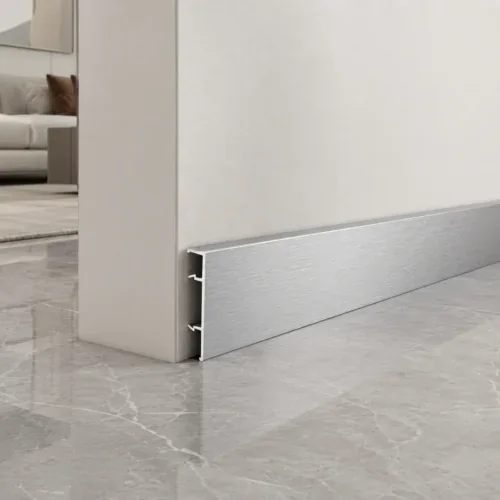
Square Edge Skirting
Square edge skirting has straight lines and a simple top edge. It suits contemporary interiors and coordinates easily with door frames, wall panels, and other architectural profiles.
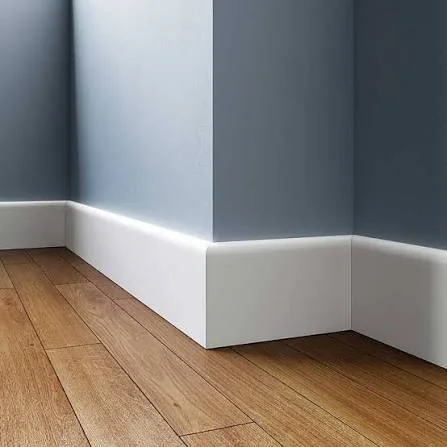
Bullnose or Pencil-Round Skirting
Bullnose skirting has a gently rounded top edge. It is practical, simple, and easier to clean than highly decorative profiles.
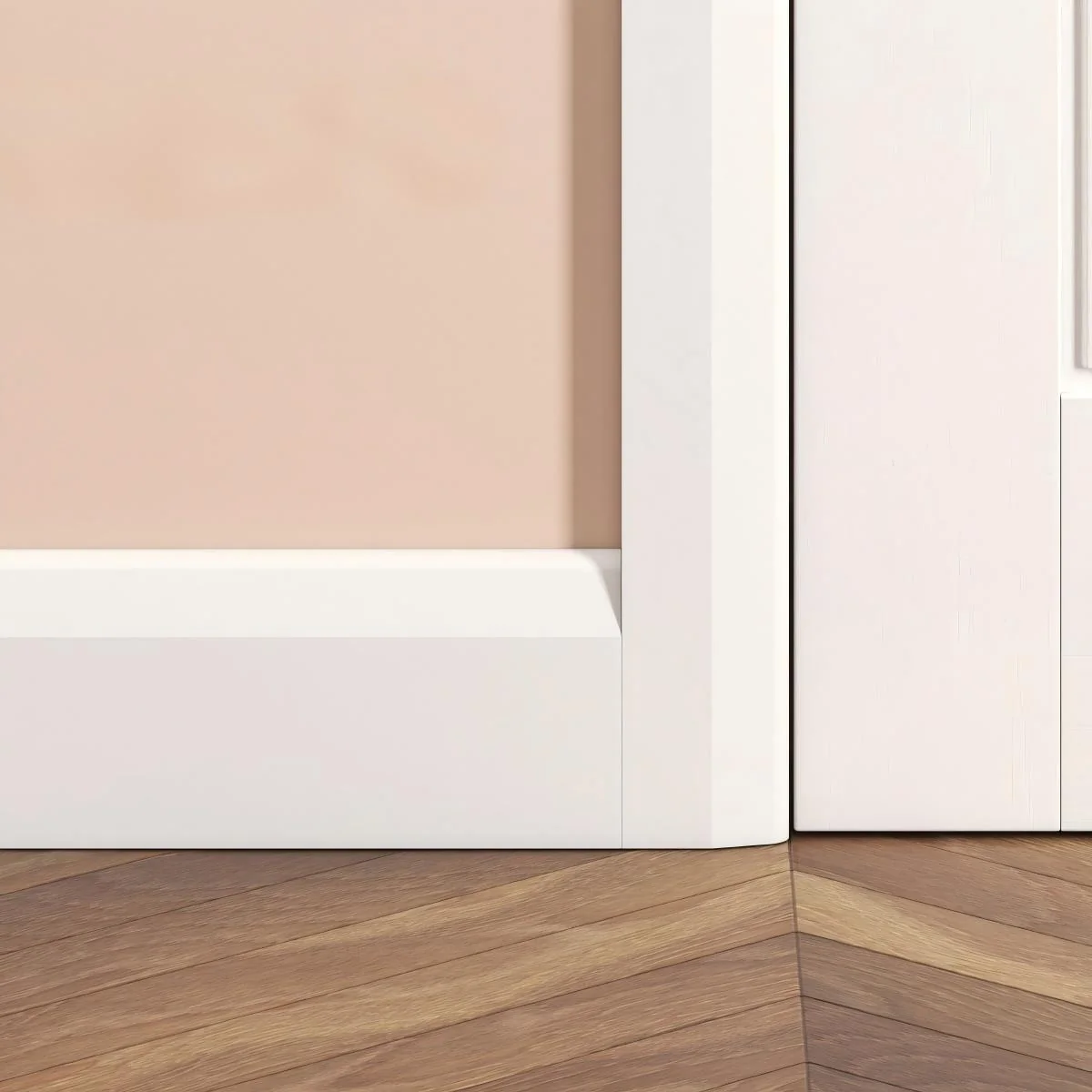
Chamfered Skirting
Chamfered profiles use an angled top or face. They suit modern interiors while adding slightly more detail than a basic square section.
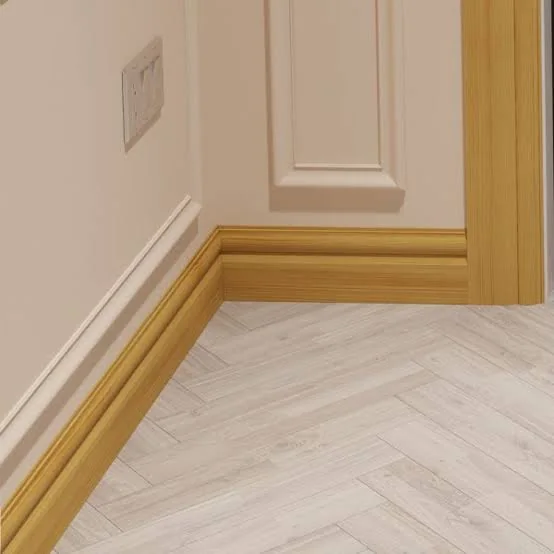
Torus, Ogee, and Ovolo Skirting
These are traditional decorative profiles, commonly produced in MDF or wood.
Torus uses a rounded detail, Ogee has a more pronounced curved shape, and Ovolo provides a softer classic profile.
They are suitable for traditional homes, hotels, renovation projects, and interiors where the skirting should be visible as a decorative feature.
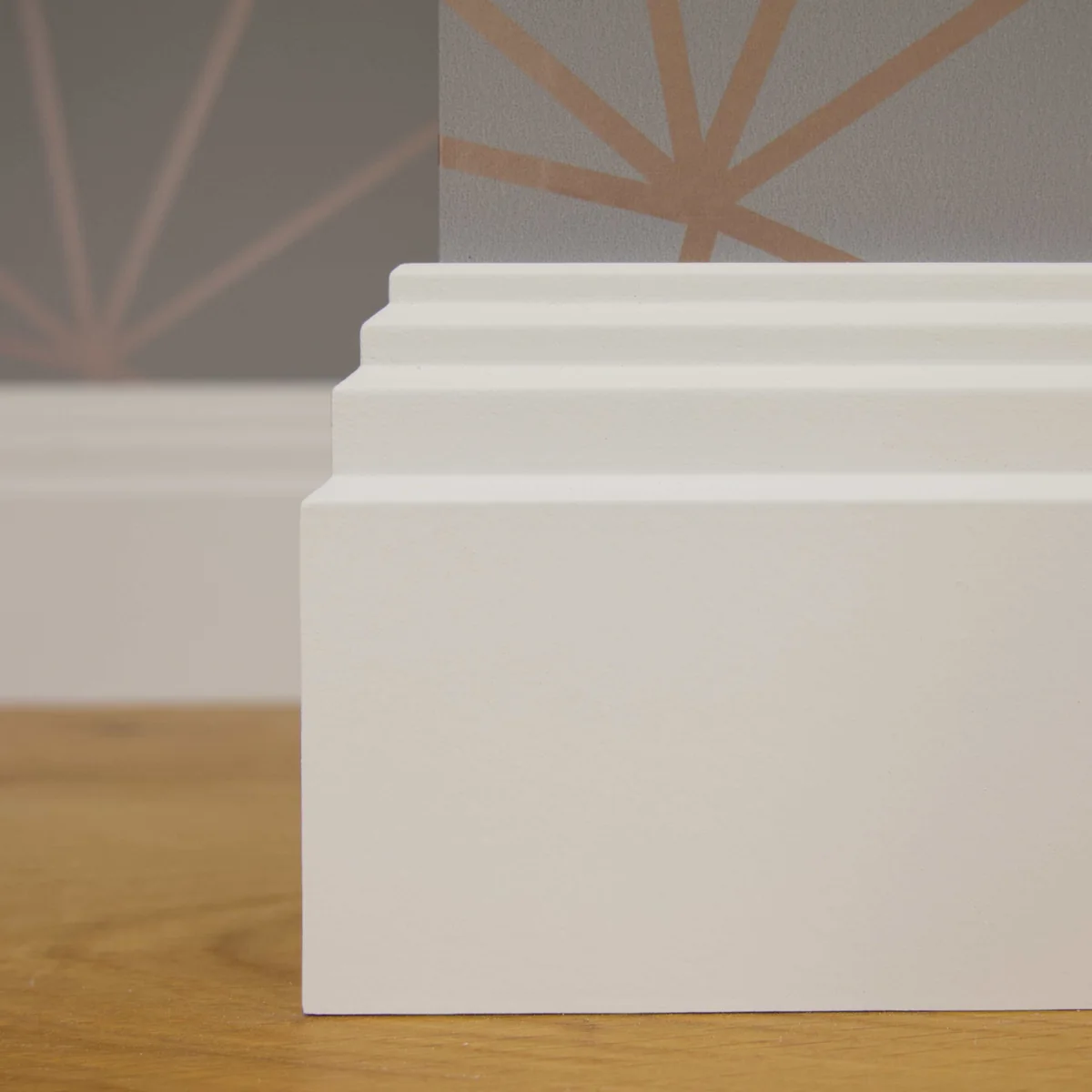
Stepped Skirting
Stepped profiles use one or more clean horizontal levels. They fit geometric, Art Deco, and modern design concepts.
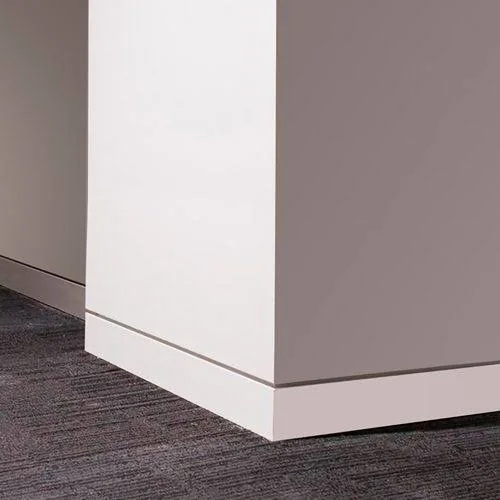
Flush or Recessed Skirting
Flush skirting is installed so the finished face sits in line with the wall or slightly behind it. Aluminum is particularly suitable because extrusion allows precise geometry.
This design reduces the visible wall projection and creates a clean modern finish. However, it needs better coordination with wall build-up and installation sequencing.
Among modern types of skirting board, flush and recessed profiles are popular where minimal visual lines are required.
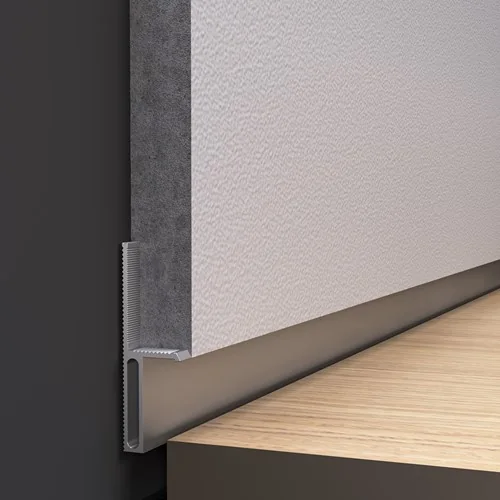
Shadow Gap Skirting
Shadow gap systems create a narrow recessed line at the bottom of the wall. The wall can appear to float above the floor.
This system requires accurate control of floor level, wall alignment, plaster thickness, and profile dimensions.
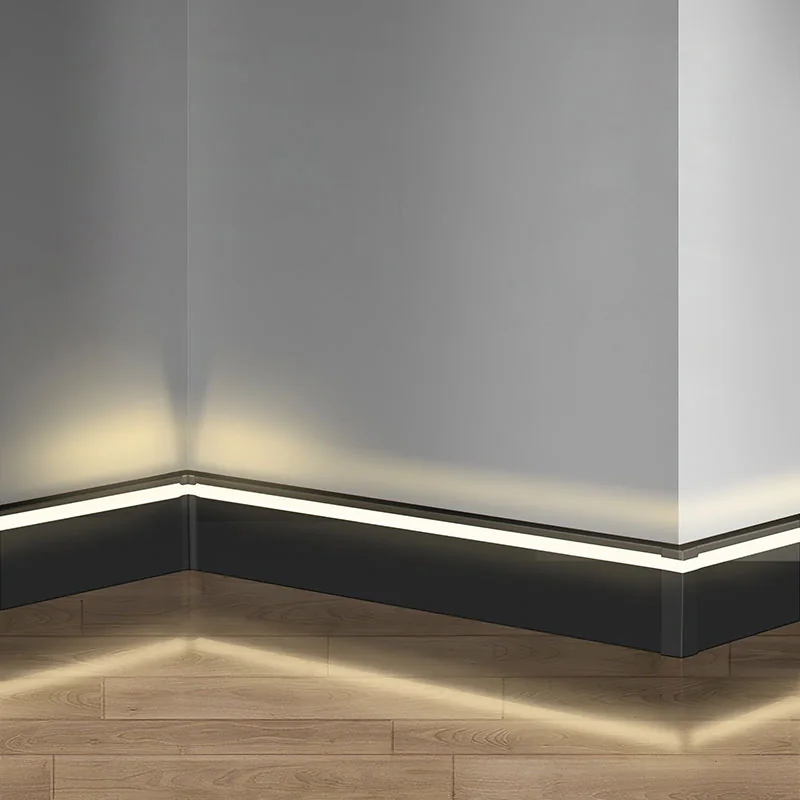
LED Skirting Board
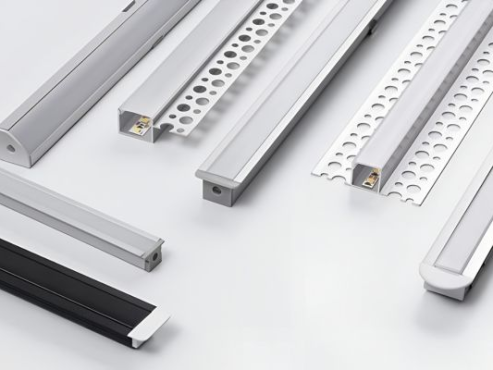
Some aluminum profiles integrate LED strips for low-level lighting. They can be used in hotels, corridors, cinemas, stairs, and modern residential interiors.
The section should provide enough room for the LED strip, diffuser, wiring, and future maintenance.
How to Choose Between Different Types of Skirting Board
The most reliable approach is to evaluate project requirements in a fixed order.
1. Start With the Installation Environment
For dry residential rooms, MDF, wood, aluminum, and PVC can all be considered.
For bathrooms, kitchens, wet areas, or frequently cleaned commercial spaces, moisture resistance becomes more important. Aluminum, stainless steel, PVC, tile, and stone generally perform better than standard wood-based boards.
For hospitals, food facilities, and other demanding areas, the surface may also need to resist strong cleaning routines and repeated impact.
The environment quickly eliminates unsuitable types of skirting board before decorative details are considered.
2. Match the Material to Traffic Level
A private bedroom and a shopping mall corridor do not need the same level of protection.
For low-traffic areas, MDF or wood may be adequate. For hotels, shops, schools, offices, and public buildings, metal skirting can offer better resistance to repeated knocks from luggage, carts, shoes, and cleaning machines.
For very demanding sites, stainless steel may justify its higher price.
3. Consider Moisture and Corrosion
Moisture is a major selection factor. Standard MDF can swell if water reaches damaged edges. Wood can move when humidity changes. PVC resists moisture but is less rigid than metal.
Aluminum is naturally corrosion resistant, and anodizing or powder coating adds surface protection. Stainless steel is also suitable for wet or hygienic environments when the correct grade and finish are specified.
When comparing types of skirting board for humid locations, material performance should come before decorative shape.
4. Choose the Right Height
Skirting height affects both protection and proportion.
Many projects use heights between about 60 mm and 150 mm, although smaller and larger profiles are also available. Taller boards provide more wall protection and a stronger visual presence. Lower profiles create a more discreet modern look.
For custom aluminum profiles, the height can often be adjusted during extrusion tooling development, provided the section remains suitable for production.
5. Check Depth and Floor Coverage
Do not evaluate only the front height. Profile depth is equally important.
The skirting must cover the flooring edge or expansion gap without projecting too far into the room. In recessed systems, plasterboard, plaster, wall panels, tile adhesive, and final floor thickness can all affect the finished position.
This is especially important for custom types of skirting board because a few millimeters can change whether the profile fits correctly on site.
6. Select the Installation Method
Common installation methods include:
- Adhesive fixing
- Screws and mechanical fasteners
- Concealed clips
- Base channels
- Recessed installation before plastering
- Tile adhesive for ceramic or stone skirting
A renovation often benefits from a simple surface-mounted profile. New construction allows more freedom to use recessed, concealed, or shadow-gap systems.
Installation method also affects labor cost. A visually complex solution may not be economical if it requires significant wall preparation or specialist installation.
7. Coordinate the Finish With Other Profiles
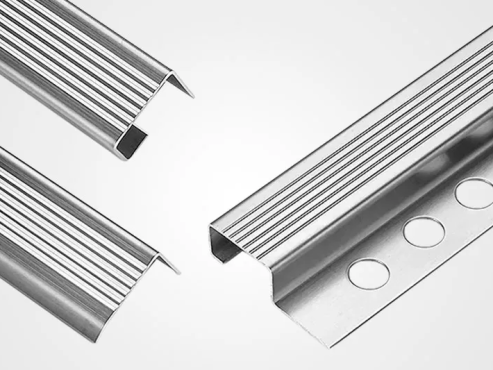
Skirting should be considered together with tile edge trims, floor transition strips, stair nosing, wall panel trims, door frames, and corner guards.
Using compatible finishes creates a more consistent interior. For example, black anodized aluminum skirting can be paired with black tile trims and floor profiles.
This can also simplify sourcing when several finishing profiles are required for the same project.
8. Think About Cleaning and Maintenance
Decorative profiles create more ledges where dust can collect. Smooth square, rounded, flush, and metal profiles are generally easier to wipe clean.
For hotels, hospitals, stores, offices, and public buildings, maintenance should be considered at the specification stage rather than after installation.
A slightly higher material cost can be economical over time if it reduces repainting, replacement, and cleaning work.
Quick Comparison of Common Types of Skirting Board
| Material | Main Strength | Main Limitation | Typical Use |
|---|---|---|---|
| Aluminum | Durable, lightweight, corrosion resistant, customizable | Costs more than basic MDF or PVC | Modern residential and commercial interiors |
| Stainless Steel | High durability and hygiene | Higher cost and harder cutting | Hospitals, kitchens, heavy-traffic areas |
| MDF | Economical and easy to paint | Moisture sensitivity | Dry residential and decorative interiors |
| Solid Wood | Natural appearance | Can move with humidity | Traditional and premium interiors |
| PVC/Vinyl | Water resistant and low cost | Lower rigidity and premium feel | Utility and budget-sensitive projects |
| Tile/Stone | Matches flooring and resists moisture | Heavier installation | Bathrooms, lobbies, stone or tile interiors |
The table is a starting point only. Final selection should combine material, profile, dimensions, finish, installation method, and environment.
Which Types of Skirting Board Suit Different Projects?
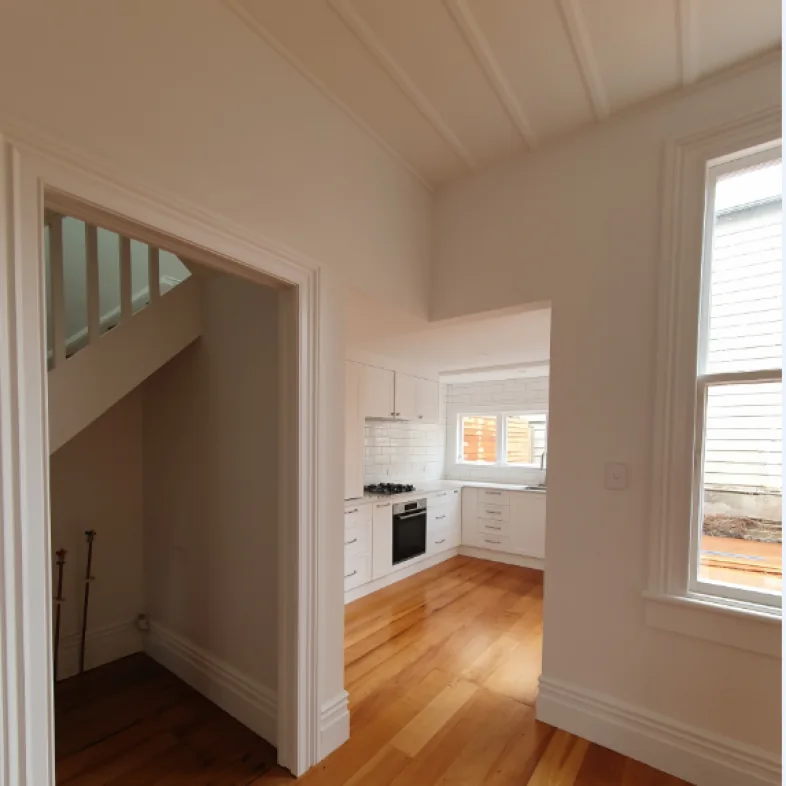
Modern Apartments and Villas
Square-edge aluminum, recessed aluminum, shadow-gap profiles, and simple painted MDF are common choices.
Choose aluminum when moisture resistance, durability, or a metallic finish matters. Choose MDF when painted decorative continuity and lower material cost are more important.
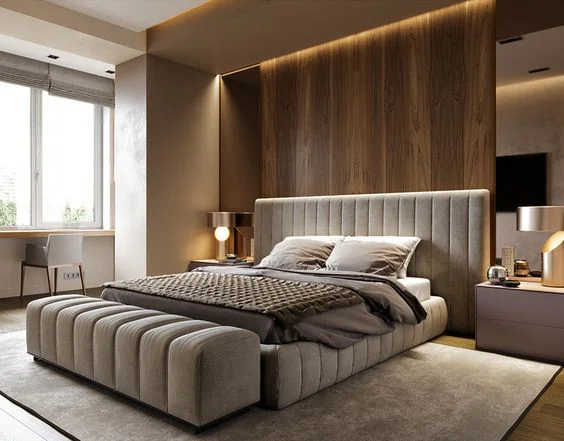
Hotels, Offices, and Retail Spaces
These interiors need a balance of appearance, impact resistance, maintenance, and consistent supply.
Aluminum skirting is often practical because it is available in many finishes and can coordinate with other metal trims.
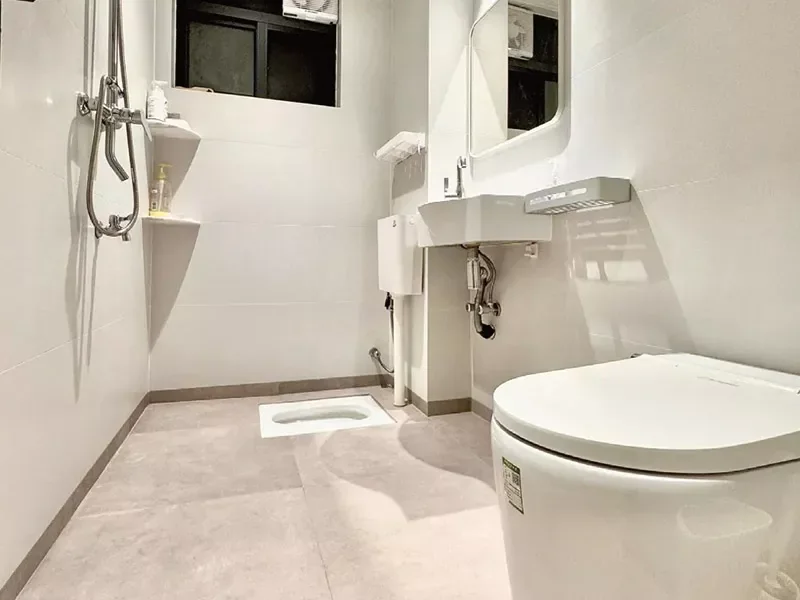
Bathrooms and Kitchens
Water resistance is critical. Aluminum, stainless steel, PVC, tile, and stone are generally more suitable than untreated wood or standard MDF.
Hospitals and Food Areas
Hygiene, cleaning chemicals, and impact resistance matter more than decorative detail. Stainless steel or suitable metal systems are commonly considered, depending on the specification.
Renovation Projects
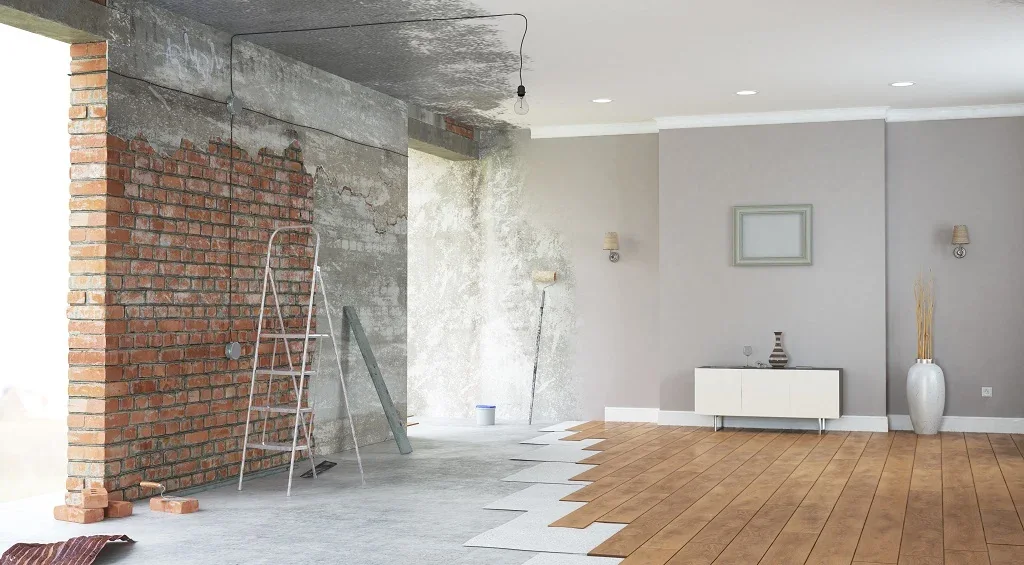
Surface-mounted types of skirting board usually reduce installation complexity. Clip-on aluminum, adhesive-fixed profiles, MDF, and PVC can be easier to use than recessed profiles that require changes to the wall.
What Should Buyers Check Before Ordering?
For bulk orders, specification control is as important as choosing the product. Different types of skirting board may look similar in a catalog while using different material grades, dimensions, surface treatments, or fixing systems.
Before ordering, confirm:
- Material grade or alloy
- Profile drawing and dimensions
- Metal wall thickness
- Surface treatment and color reference
- Standard or custom length
- Corner pieces, end caps, connectors, and clips
- Installation method
- Packaging requirements
- Sample approval
- Quantity and delivery schedule
- OEM labeling or private packaging if required
For aluminum profiles, repeatability matters. The supplier should be able to maintain profile dimensions and surface finish across different production batches.
Manufacturer’s Tip: Approve a physical sample when color matching is important. Anodized and powder-coated surfaces can look different under actual project lighting compared with photos or screens.
Standard or Custom Types of Skirting Board?
Standard profiles are usually the fastest and most economical choice when the required height, depth, finish, and installation method already exist.
Custom profiles are useful when a project needs:
- A special height or depth
- A recessed installation system
- An integrated LED channel
- Cable management space
- A special clip design
- A project-specific architectural shape
- A custom surface finish
- OEM or private-label requirements
As a direct manufacturer, Chenhao Aluminum can support standard and custom aluminum skirting profiles for bulk projects. Custom extrusion allows the section to be developed around actual installation conditions rather than forcing the project to adapt to an unsuitable standard profile.
For distribution programs or large projects, tooling cost, minimum order quantity, expected volume, and repeat demand should be evaluated before developing a custom section.
Why Aluminum Is Often Chosen for Modern Skirting
Among the main types of skirting board, aluminum offers a useful combination of stable dimensions, corrosion resistance, low weight, precise extrusion, multiple finishes, concealed installation options, and custom profile capability.
It is not automatically the best material for every project.
Traditional interiors may suit wood or decorative MDF better. Heavy-duty hygienic areas may justify stainless steel. Budget utility spaces may use PVC.
The correct material is the one that matches the real application.
FAQs About Types of Skirting Board
What Is the Most Durable Type of Skirting Board?
For demanding interiors, stainless steel and aluminum are among the most durable choices.
Stainless steel offers higher impact and chemical resistance, while aluminum provides a lighter and often more economical solution for general commercial use.
Which Skirting Board Is Best for Bathrooms?
Moisture-resistant materials such as aluminum, stainless steel, PVC, tile, and stone are generally preferred.
The best option depends on the wall finish, flooring system, design requirements, and cleaning conditions.
Is MDF or Aluminum Skirting Better?
MDF is economical and works well for painted decorative interiors.
Aluminum is more resistant to moisture, supports precise modern profiles, and generally requires less repainting or surface maintenance.
The correct choice depends on the project rather than the material alone.
What Skirting Board Is Best for Modern Interiors?
Square-edge, flush, recessed, shadow-gap, and slim aluminum profiles are common choices because they create clean lines and coordinate well with other architectural trims.
Can Skirting Boards Be Customized?
Yes.
Wood and MDF can be machined into decorative profiles, while aluminum can be extruded into custom cross-sections.
Custom aluminum types of skirting board can include special heights, finishes, clip systems, LED channels, cable spaces, and OEM requirements.
Conclusion: Choosing the Right Types of Skirting Board
There is no single skirting board that is best for every project. The right decision comes from balancing environment, traffic, moisture exposure, profile shape, installation method, dimensions, finish, maintenance, and budget.
When comparing types of skirting board, start with performance requirements first. Then choose the profile style and finish. This approach reduces installation problems and helps the finished interior perform as expected over time.
Different types of skirting board solve different technical and design problems, so the final specification should always be based on the actual installation environment rather than appearance alone.
Chenhao Aluminum is a direct manufacturer of aluminum architectural profiles and supports standard profiles, custom sections, OEM service, bulk supply, factory pricing, and global shipping. If you are comparing types of skirting board for a project or product range, providing drawings, dimensions, finish requirements, and estimated quantities will make technical evaluation and quotation more accurate.