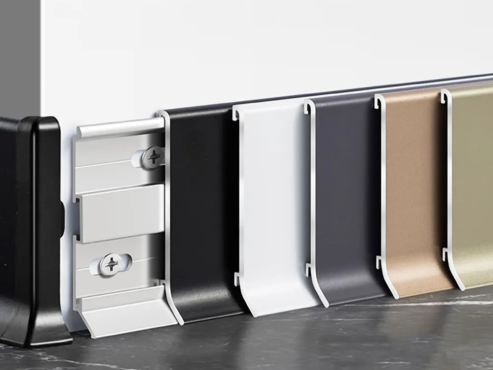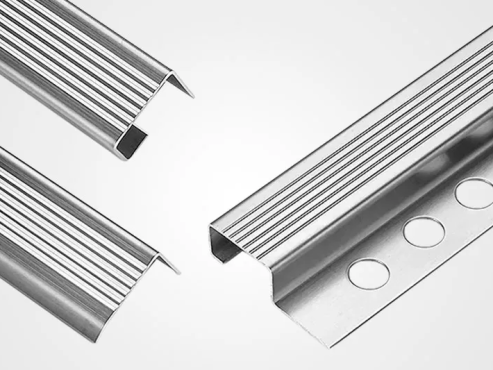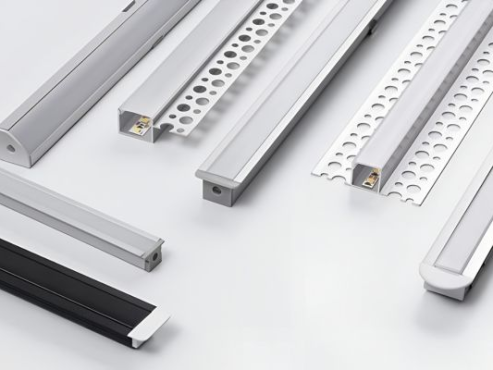
A plastic skirting board is often considered when a project needs a practical, moisture-resistant, and cost-efficient finish between the wall and floor. It is especially common in areas where traditional wood or MDF skirting may require more maintenance.
However, plastic is not automatically the best material for every project.
The right choice depends on the environment, expected impact, installation method, appearance requirements and total project budget.
This guide explains where a plastic skirting board performs well, where its limitations become important, and what should be checked before specifying or purchasing it.
What Is a Plastic Skirting Board?
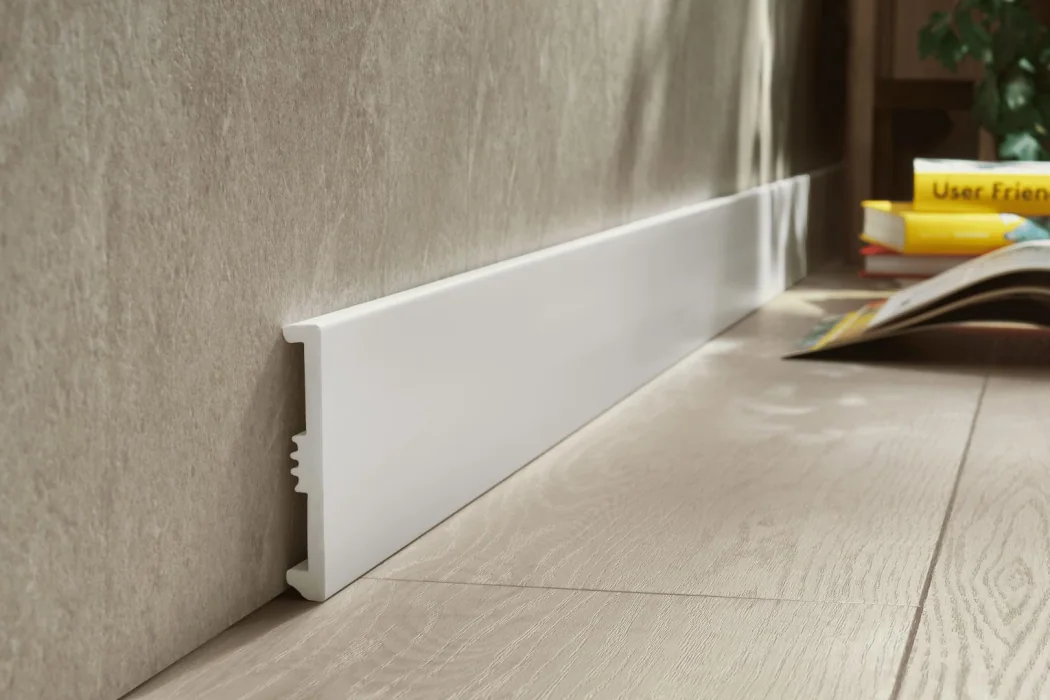
A plastic skirting board is a baseboard profile made primarily from a polymer material. PVC is one of the most common materials, although vinyl and other engineered plastic formulations may also be used.
It is installed along the bottom of a wall, usually where the finished wall surface meets tile, vinyl flooring, laminate, carpet, or another floor covering.
PVC skirting, in particular, is known for being lightweight, water resistant, relatively easy to install, and available in different colors and styles. These properties are among the reasons plastic profiles are frequently considered for kitchens, bathrooms, commercial interiors, and other areas exposed to regular cleaning or moisture.
It is important, however, not to treat every plastic skirting board as technically identical. Polymer formulation, wall thickness, profile geometry, surface treatment, and manufacturing quality can significantly affect the finished product.
Key Benefits of Plastic Skirting Board
1. Good Resistance to Moisture
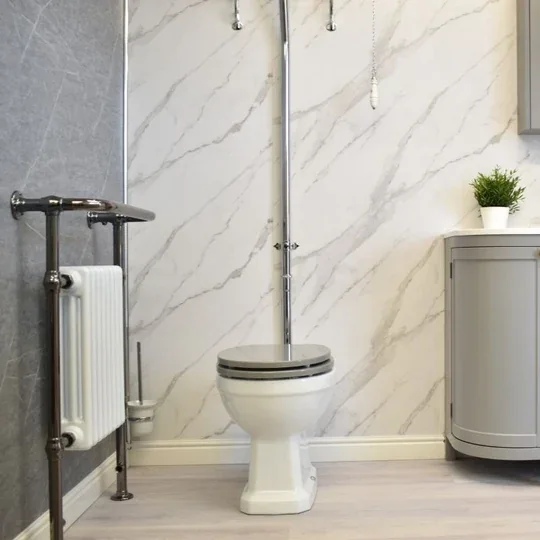
One of the main advantages of a plastic skirting board is its resistance to water.
Unlike untreated wood or some MDF products, PVC does not absorb water in the same way as wood-based materials. This makes it useful around floors that are frequently wet-cleaned or in rooms where occasional splashes are expected.
Common applications include:
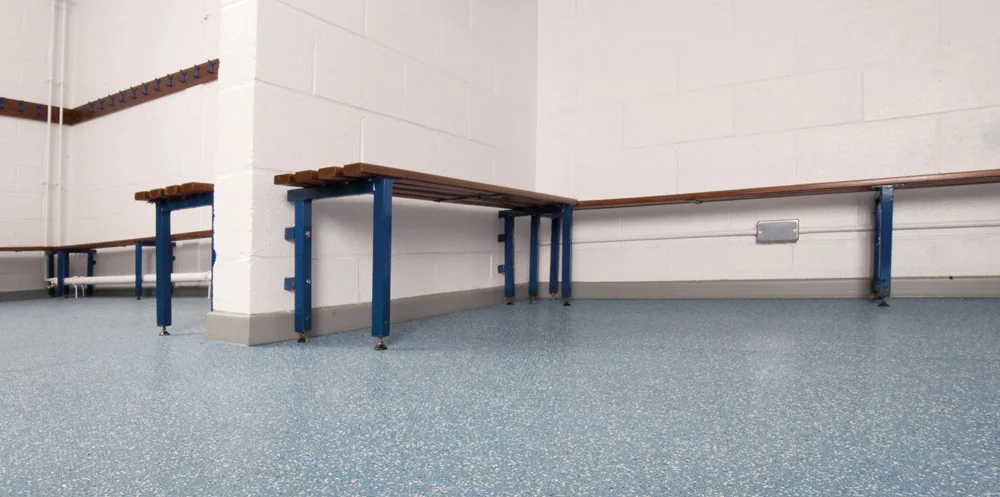
- Bathrooms
- Kitchens
- Utility areas
- Changing rooms
- Retail spaces
- Corridors
- Healthcare interiors
- Some hospitality projects
PVC skirting is commonly selected for environments where water and chemical resistance are useful properties.
That does not mean the entire wall-to-floor assembly becomes waterproof simply by installing plastic skirting. Moisture can still enter through poorly sealed joints, corners, penetrations, or gaps behind the profile.
For wet environments, the detail behind the skirting remains important.
2. Competitive Material Cost
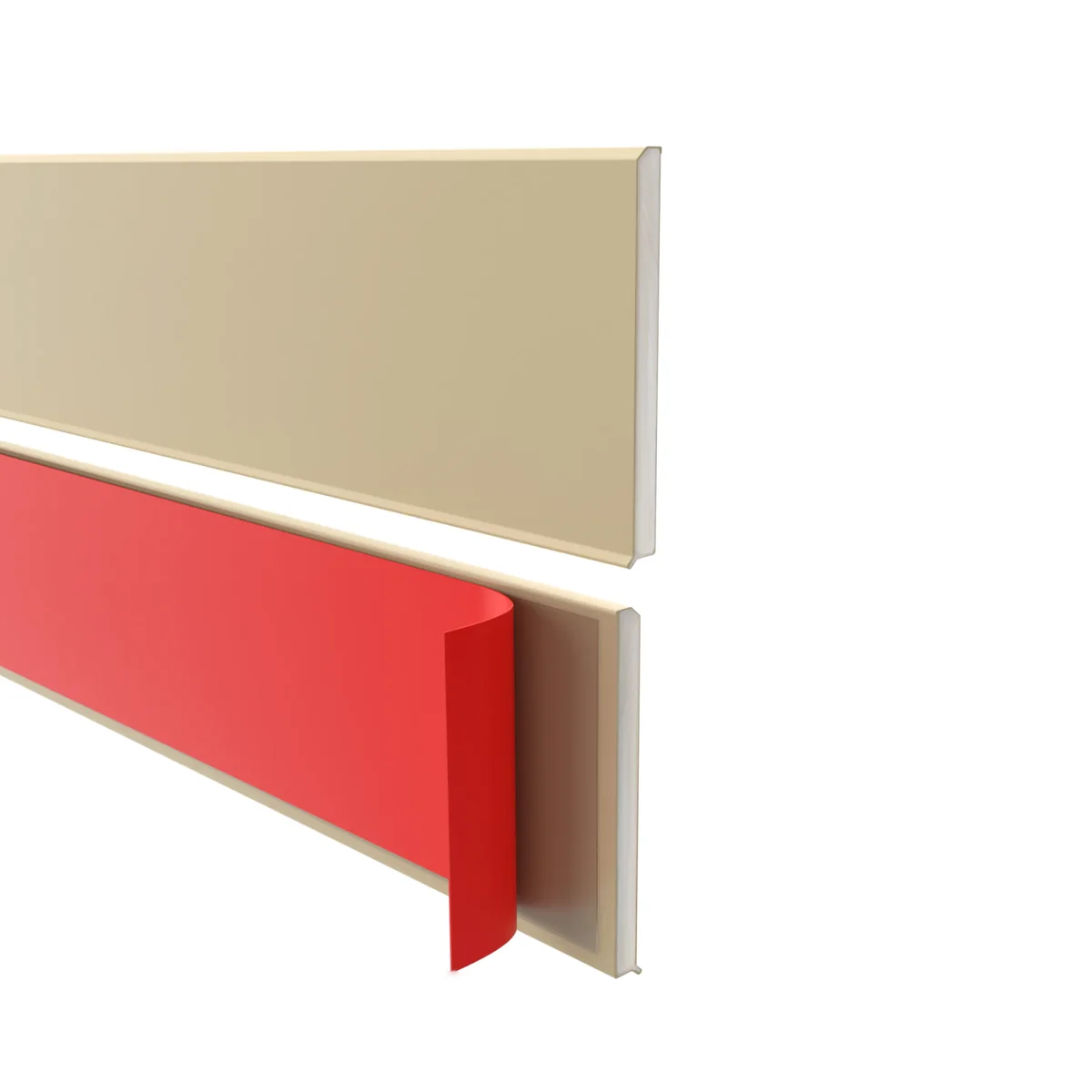
Cost is another reason a plastic skirting board is attractive for many projects.
Compared with stainless steel, solid timber, or some specialized architectural profiles, standard PVC skirting can offer a lower initial material cost.
The difference becomes more noticeable when thousands of meters are required.
A very thin profile may have a lower purchase price but may also deform more easily during handling or installation.
For this reason, comparing products only by unit price rarely gives an accurate picture of total value.
3. Lightweight and Easy to Handle
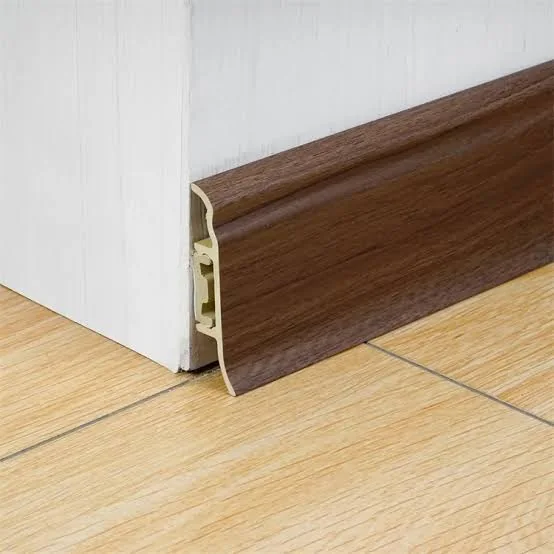
A typical plastic skirting board is much lighter than stainless steel and many solid timber profiles.
That provides several practical advantages during transportation and installation.
Long lengths can generally be moved around a project more easily. Cutting usually requires simpler equipment, depending on the profile design and polymer formulation.
Installation methods can include:
- Adhesive fixing
- Clips
- Screws
- Integrated mounting bases
- Combination fixing systems
The exact method should always follow the profile design and installation instructions.
Light weight can also reduce handling difficulty on large projects where installers are moving material between multiple floors or rooms.
4. Simple Routine Maintenance
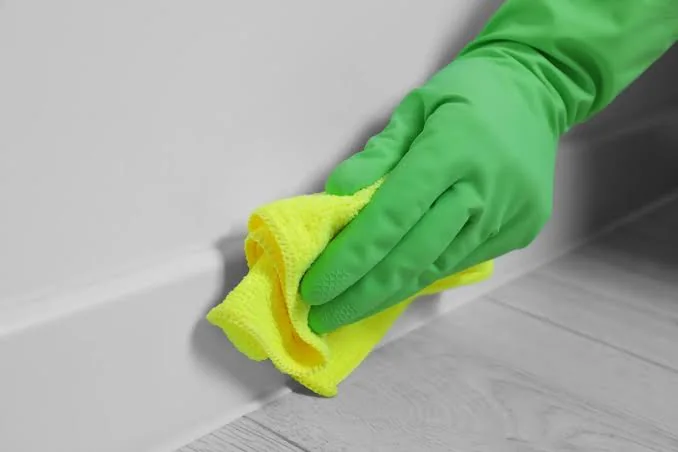
A plastic skirting board normally has a relatively smooth, non-porous surface.
For routine cleaning, this is useful because dirt can usually be removed without sanding, staining, or repainting the profile.
PVC and vinyl skirting products are frequently associated with easy maintenance and resistance to moisture and stains.
This can be valuable in spaces with frequent cleaning schedules.
However, cleaning chemicals should still be checked for compatibility with the specific polymer. Strong solvents or aggressive chemicals can damage some plastics or change the surface appearance.
Manufacturer’s Tip: If the project uses specialized disinfectants or industrial cleaning agents, request a chemical-resistance test or material compatibility information before confirming a large order.
5. Wide Choice of Colors and Profiles
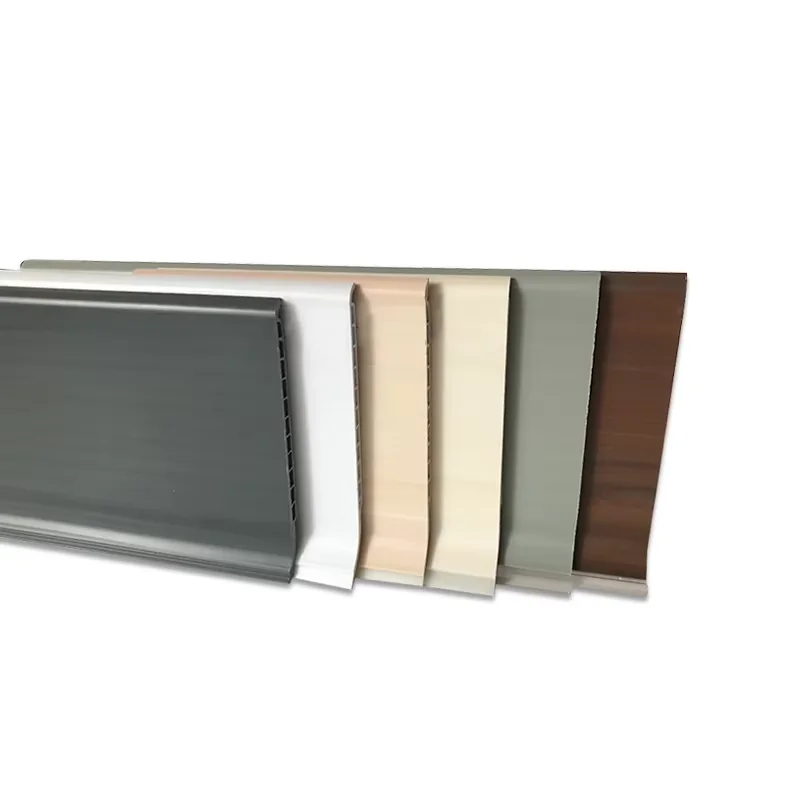
Plastic extrusion allows a plastic skirting board to be produced in many shapes.
Depending on tooling and production capabilities, manufacturers can create:
- Flat profiles
- Rounded profiles
- Flexible profiles
- Cove-shaped profiles
- Decorative designs
- Cable-management profiles
- Clip-on systems
- Profiles with soft sealing edges
Color options can also be broad.
White, grey, black, beige, and wood-effect finishes are commonly used to coordinate the skirting with walls, floors, doors, or other decorative trims.
This flexibility is useful when the skirting must satisfy both functional and visual requirements without moving to a more expensive material.
6. Useful Resistance to Everyday Corrosion
Metal profiles need the correct alloy and surface treatment for their environment. A plastic skirting board, by comparison, will not rust in the conventional sense.
That can make plastic attractive around environments exposed to water or where rust staining would be unacceptable.
This does not mean plastic is unaffected by its surroundings. Heat, ultraviolet exposure, chemicals, and mechanical loading can still influence its performance.
The practical advantage is therefore better described as corrosion resistance rather than complete environmental resistance.
Is Plastic Skirting Board a Good Choice for Commercial Projects?
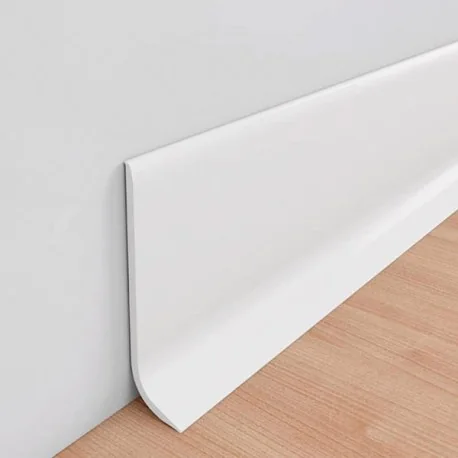
A plastic skirting board can be a very sensible specification for commercial interiors, particularly when the main priorities are moisture resistance, straightforward maintenance, quick installation, and controlled material cost.
The decision becomes stronger when the design does not require a premium metallic appearance.
The main question should not be, “Is plastic good or bad?”
A better question is:
Does the material provide the required performance for this particular installation?
The same selection principle applies to other architectural finishing profiles. Floor transitions, tile trims, and stair nosings must be selected according to the surfaces being protected, installation conditions, traffic level, height differences, and expected wear rather than appearance alone.
For skirting, the same engineering logic should apply.
Important Limitations of Plastic Skirting Board
The advantages are clear, but a plastic skirting board also has limitations that should be understood before specification.
1. Lower Resistance to Heavy Impact Than Metal
Plastic can handle normal knocks, but it should not automatically be considered a heavy-duty material.
In areas regularly exposed to carts, machinery, heavy luggage, pallet movement, or repeated impact, some plastic profiles may dent, crack, bend, or become detached.
For demanding environments, aluminum or stainless steel skirting may offer better mechanical protection.
Metal skirting products are commonly selected for their durability and suitability for high-traffic areas.
The final decision should consider both the profile geometry and the material. A well-designed thick plastic profile may outperform a poorly designed thin profile, so material name alone is not enough.
2. Thermal Expansion Must Be Considered
Plastic changes dimension as temperature changes.
This is particularly important for long continuous runs.
If a plastic skirting board is installed too tightly between fixed points, temperature movement can contribute to:
- Buckling
- Joint opening
- Distortion
- Stress around corners
- Adhesive failure
Installers should follow the manufacturer’s recommended joint spacing and fixing method.
This becomes more important near windows, heating systems, entrances, or other areas with larger temperature variations.
3. Surface Appearance May Be Less Premium
A good plastic skirting board can look clean and modern, but plastic and metal create different visual effects.
For premium commercial interiors, luxury hotels, high-end retail, or minimalist architectural projects, anodized aluminum or stainless steel may provide a sharper and more refined appearance.
Metal skirting is often selected where durability is combined with a contemporary architectural finish.
Plastic is usually strongest when functionality, practical maintenance, and cost efficiency are more important than a metallic architectural finish.
This is a design consideration rather than a defect.
4. Color Stability Depends on Material Quality
Not every plastic skirting board has the same resistance to light and aging.
Low-quality formulations may show color change over time, particularly when exposed to strong sunlight or unsuitable chemicals.
For indoor areas away from direct sunlight, this may be a minor concern.
For spaces with significant UV exposure, ask the supplier about:
- UV stabilizers
- Color-fastness testing
- Recommended installation environment
- Aging performance
- Batch-to-batch color control
A physical sample should preferably be approved before mass production when color matching is important.
5. Fire Performance Requires Verification
Plastic materials have different fire characteristics from aluminum, stainless steel, or other non-combustible materials.
A plastic skirting board should therefore not be specified based only on dimensions and appearance where fire-performance rules apply.
Requirements vary by building type and market.
Before purchasing, verify the applicable:
- Fire classification
- Test method
- Building regulations
- Project specification
- Supporting test reports
This is particularly important in public buildings, transportation facilities, healthcare projects, and other regulated environments.
Do not assume that every PVC profile has the same fire performance simply because the base material is similar.
6. Installation Depends Heavily on the Substrate
A good plastic skirting board can still fail if it is installed on a poor surface.
Common problems include:
- Dusty walls
- Uneven plaster
- Moist substrates
- Incorrect adhesive
- Excessive wall movement
- Poorly prepared corners
- Insufficient fixing points
Adhesive installation is convenient, but the adhesive must be compatible with both the plastic profile and the wall surface.
Before large-scale installation, we recommend making a small trial area under actual site conditions.
This simple step can identify adhesion or alignment problems before they affect hundreds of meters of material.
Plastic Skirting Board vs. Other Common Materials
There is no single skirting material that is best for every application.
Here is a practical comparison:
| Material | Moisture Resistance | Impact Resistance | Maintenance | Typical Cost Level | Appearance |
|---|---|---|---|---|---|
| Plastic/PVC | High | Moderate | Low | Low to Moderate | Practical and versatile |
| MDF | Moderate, depending on grade | Moderate | Moderate | Low to Moderate | Smooth and paintable |
| Solid Wood | Depends on treatment | Good | Moderate to High | Moderate to High | Natural and traditional |
| Aluminum | High | Good | Low | Moderate to High | Clean and modern |
| Stainless Steel | High | Very High | Low | High | Premium and industrial |
Wood, MDF, vinyl, PVC, aluminum, and stainless steel are all established skirting materials, but their moisture behavior, durability, appearance, and maintenance requirements differ.
A plastic skirting board is particularly competitive when moisture resistance and cost efficiency are priorities.
Aluminum or stainless steel becomes more attractive when heavy-duty performance, a precise metallic finish, or long-term resistance to repeated physical impact is more important.
How to Choose the Right Plastic Skirting Board
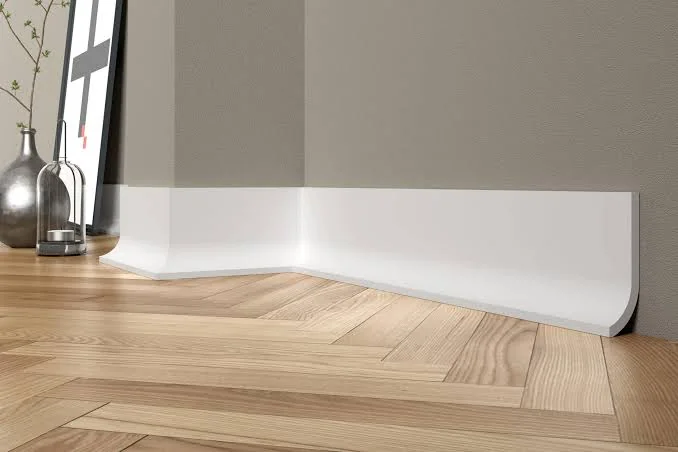
Before confirming an order, check more than the overall height and color.
Check the Material Formulation
Ask what the product is actually made from.
“Plastic” is a broad description. A plastic skirting board may be PVC, vinyl, or another polymer-based material.
The supplier should be able to identify the material clearly.
If the project has special requirements, request relevant technical documentation instead of relying only on a product name.
Select the Right Profile Thickness
Profile thickness affects stiffness, handling, impact performance, and cost.
A thin profile may work perfectly for light-duty decorative use.
A heavier profile may be more suitable for busy corridors or commercial areas.
We recommend matching thickness to actual service conditions instead of simply choosing the lowest-cost option.
Confirm the Installation System
Check whether the plastic skirting board is designed for:
- Direct adhesive installation
- Mechanical fixing
- Hidden clips
- A separate mounting base
- A combination of methods
The installation system affects labor cost, replacement, alignment, and long-term stability.
For renovation projects, also check whether the wall is flat enough for the proposed profile.
Confirm Color Before Bulk Production
Colors shown on screens are not always accurate.
For large projects or distribution orders, approve a physical sample or master color reference.
Also confirm whether future production batches can be matched to the original color.
This is especially important when the plastic skirting board will be supplied in several phases.
Evaluate Packaging
Long plastic profiles can be scratched, bent, or compressed during logistics if packaging is inadequate.
For export shipments, discuss:
- Pieces per bundle
- Protective film
- Carton strength
- Internal protection
- Palletizing
- Maximum bundle length
Packaging quality is part of product quality when material must travel through several warehouses and handling stages before installation.
When Should You Consider an Alternative?
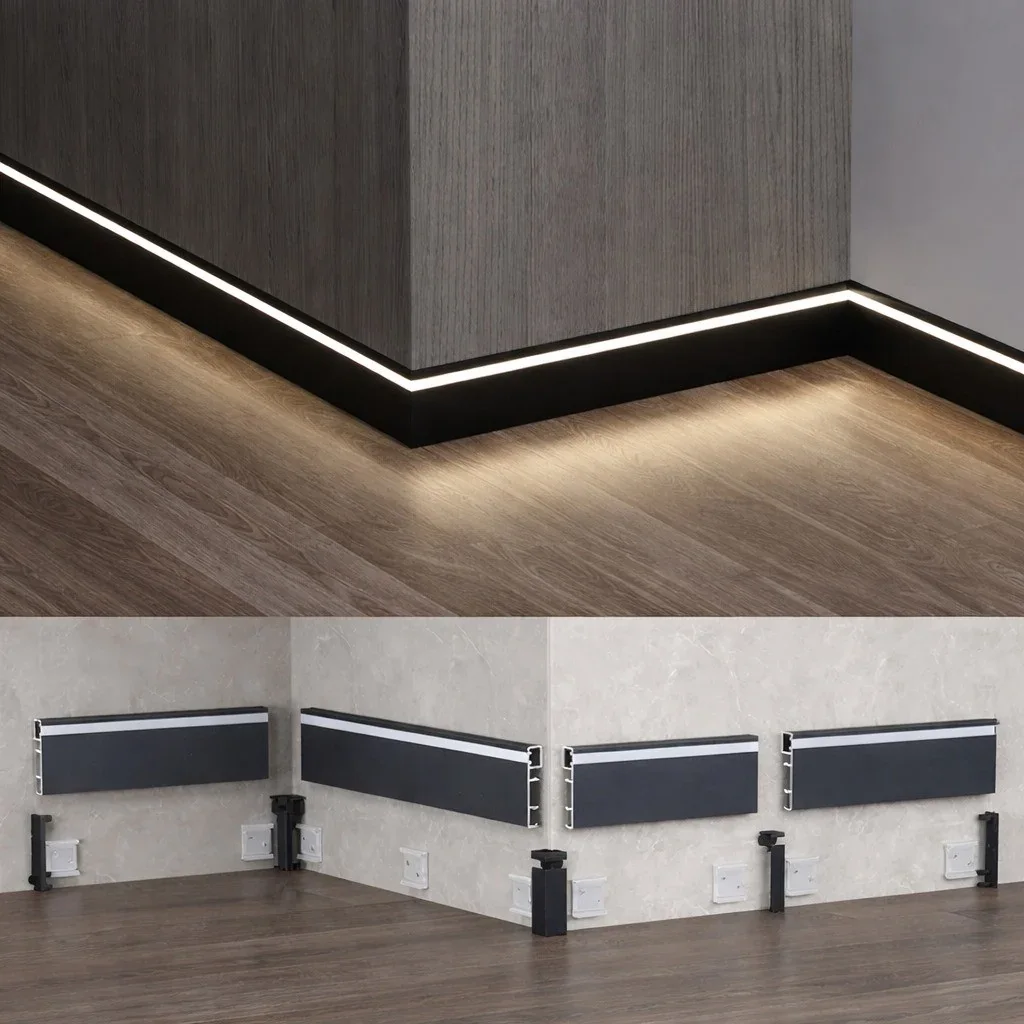
A plastic skirting board may not be the first recommendation when:
- Heavy impact is expected
- The specification requires a premium metal finish
- The profile will experience high temperatures
- Strong UV exposure is unavoidable
- Fire regulations require performance not provided by the selected product
- Extremely high dimensional stability is required
- The design calls for very thin, rigid architectural lines
In these cases, aluminum or stainless steel may deserve closer consideration.
The purpose is not to select the strongest material available. It is to select the material that provides the required performance without unnecessary cost.
Manufacturer’s Checklist Before Ordering
Before approving a plastic skirting board for a project or product range, we recommend confirming the following information with the supplier:
- Exact raw material or polymer type
- Profile height, width, and wall thickness
- Standard length and length tolerance
- Color and surface requirements
- UV requirements, if applicable
- Fire classification, if required
- Recommended adhesive or fixing method
- Corner and connector accessories
- Packaging method
- Order quantity and production batch requirements
- Required test reports
- Approved pre-production sample
For custom extrusion, provide drawings with dimensions and tolerances wherever possible.
Technical drawings reduce misunderstandings and make it easier to evaluate whether the profile can be produced consistently.
Is Plastic Skirting Board Really a Smart Choice?
For the right environment, yes.
A plastic skirting board offers a practical combination of moisture resistance, low maintenance, light weight, installation convenience, design flexibility, and competitive cost. Those advantages make it a useful alternative to traditional wood-based skirting in many interior projects.
Its limitations should still be taken seriously.
Plastic generally should not be selected without checking impact requirements, thermal movement, UV exposure, fire performance, substrate conditions, and expected appearance.
For light- to medium-duty applications where moisture and maintenance are major concerns, PVC and similar plastic profiles can provide excellent value. For high-impact or premium architectural applications, aluminum or stainless steel may be the better long-term choice.
Conclusion
A plastic skirting board is not simply a cheaper substitute for wood or metal. It is a different material solution with its own advantages and engineering limitations.
The best approach is to define the installation conditions first and select the material second.
When choosing a plastic skirting board, compare material formulation, dimensions, fixing system, accessories, technical documentation, and sample quality rather than focusing only on price per meter.
As a manufacturer, we recommend testing the actual profile under the intended installation conditions before confirming a large order. A properly selected and correctly installed plastic skirting board can provide a clean, practical, and durable wall-to-floor finish without adding unnecessary complexity or cost to the project.