Stair edges receive more concentrated wear than almost any other part of a staircase. Every person walking up or down places pressure near the front of the tread. In busy buildings, this repeated contact can gradually damage tile, concrete, wood, vinyl, or other flooring materials.
Aluminum stair nosing provides a practical way to protect this vulnerable area while also creating a more clearly defined stair edge. Installed along the front of the tread, it forms a durable barrier between foot traffic and the underlying stair material.
This guide explains how aluminum stair nosing works, why it performs well in high-traffic applications, the main types available, and what should be considered before specifying it for a project.
What Is Aluminum Stair Nosing?
Aluminum stair nosing is an extruded profile installed along the leading edge of a stair tread. Depending on the profile design, it may cover only the upper edge or extend downward to protect part of the stair riser.
The stair edge is a particularly vulnerable point because it receives repeated foot contact and impact. Stair nosing works as a protective layer over this area.
The basic principle is similar to other architectural edge profiles. Just as tile trim protects exposed tile edges, stair nosing protects an exposed and heavily loaded part of the staircase.
However, stairs usually require more attention to mechanical wear and slip resistance because the edge is directly exposed to continuous foot traffic.
Why Aluminum Stair Nosing Works Well in High-Traffic Areas

Material selection becomes more important as traffic increases. A stair edge that performs adequately in a private residence may not provide the same service life in a shopping center, office building, school, or station.
There are several reasons why aluminum stair nosing is commonly selected for these applications.
1. It Protects the Most Vulnerable Part of the Step
The front edge of a stair is often the first area to show visible wear.
Tile can chip. Concrete corners may gradually break down. Timber can become worn or rounded. Some resilient floor coverings may begin to lift or deteriorate near the edge.
A metal profile distributes everyday contact over a stronger surface instead of allowing footwear to repeatedly strike the flooring edge directly.
This protection can be particularly valuable where stairs experience thousands of cycles of use over their service life.
The profile will still experience wear, but replacing or maintaining a stair nosing is generally more manageable than rebuilding a damaged stair edge.
2. Aluminum Offers a Good Strength-to-Weight Balance
One advantage of aluminum extrusion is that useful structural shapes can be produced without excessive profile weight.
This makes aluminum stair nosing easier to transport, handle, cut, and position during installation than many heavier metal alternatives.
Aluminum profiles can also be extruded into detailed cross-sections. Manufacturers can therefore produce different tread widths, riser depths, fixing channels, insert recesses, and anchoring flanges for different flooring systems.
This flexibility is one reason aluminum is widely used for architectural finishing profiles.
3. It Provides Good Corrosion Resistance
Aluminum does not rust in the same way as carbon steel. Its naturally forming oxide layer helps protect the underlying metal.
For applications requiring greater surface durability, anodized aluminum stair nosing is commonly used. Anodizing strengthens the protective surface layer and can provide consistent finishes such as silver, bronze, black, or gold depending on the treatment system.
For exterior or moisture-exposed installations, the exact alloy, anodizing specification, drainage conditions, chemicals, and local environment should still be evaluated rather than assuming every aluminum profile is suitable.
As a manufacturer, we recommend confirming environmental conditions early when profiles will be used outdoors or in demanding locations.
Aluminum Stair Nosing Can Improve Stair Grip

Protecting the edge is only one part of stair performance.
Stairs also need a stable walking surface. For this reason, many aluminum stair nosing profiles incorporate additional anti-slip features.
Common designs include:
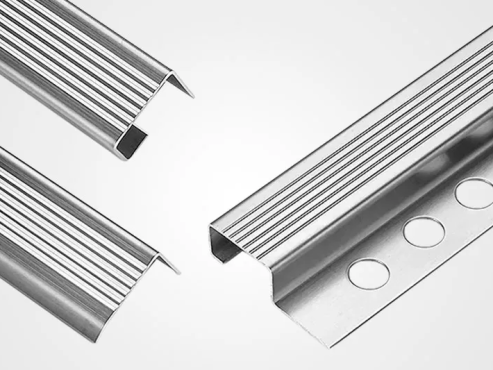
- Grooved aluminum surfaces
- Knurled tread areas
- Rubber inserts
- PVC inserts
- Abrasive or carborundum inserts
- Multiple anti-slip channels
Profiles with replaceable rubber or abrasive inserts combine a rigid aluminum base with a higher-friction walking surface. NIUYUAN’s product range, for example, includes rubber-insert, knurled, and carborundum-style aluminum profiles intended to improve grip.
The correct option depends on expected traffic, whether the staircase is indoors or outdoors, cleaning requirements, footwear, moisture, and applicable local regulations.
For busy public stairs, we normally recommend evaluating slip performance as a technical requirement rather than choosing the profile only by appearance.
Main Types of Aluminum Stair Nosing
Not every staircase requires the same profile.
The correct design depends largely on the stair material, project stage, expected loading, and installation method.
Surface-Mounted Aluminum Stair Nosing
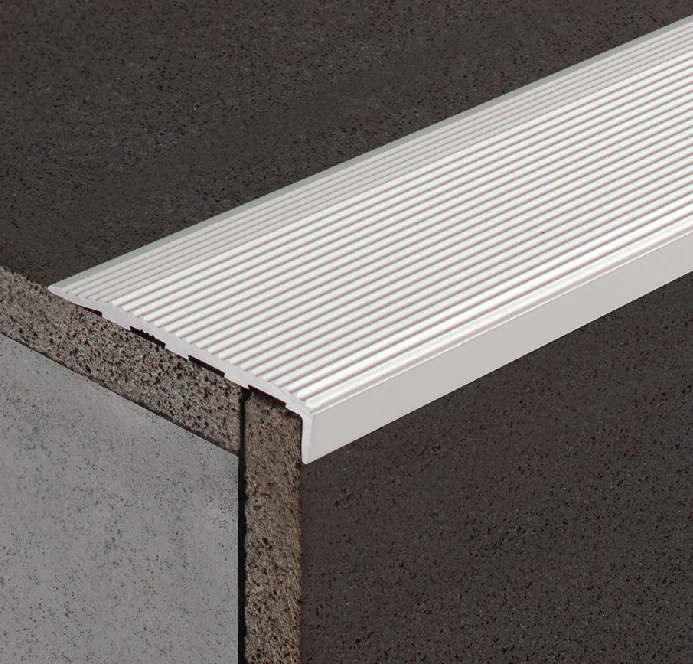
Surface-mounted profiles are fitted over an existing stair edge.
They are commonly used for:
- Renovation projects
- Existing concrete stairs
- Existing tiled stairs
- Timber staircases
- Repairs to worn stair edges
- Retrofit safety improvements
Many surface-mounted profiles have an L-shaped section that covers both the front portion of the tread and part of the riser.
Fixing may involve construction adhesive, mechanical fasteners, or a combination of both depending on the substrate and profile design.
Because the finished flooring does not normally need to be completely removed, this type of aluminum stair nosing can reduce disruption during refurbishment.
Tile-In Aluminum Stair Nosing
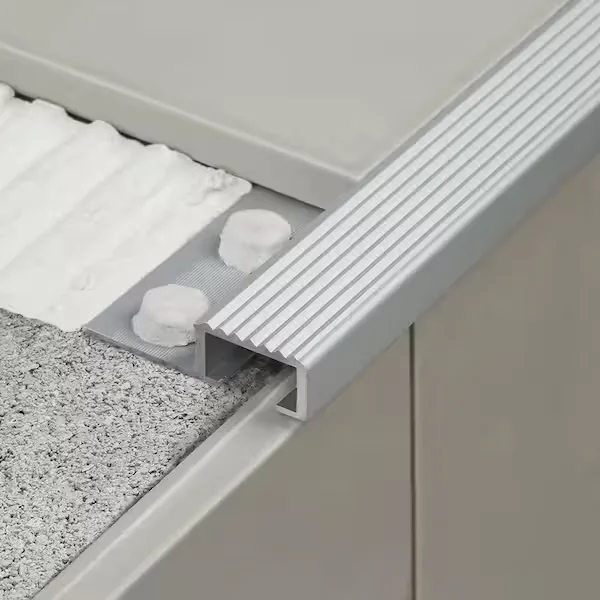
Tile-in profiles are designed to be installed while the staircase is being tiled.
A perforated anchoring flange is embedded beneath the tile or within the tile adhesive. The visible section then forms the finished front edge of the stair.
This installation produces a more integrated appearance because the profile becomes part of the flooring system rather than being applied afterward.
For new tiled staircases, selecting the nosing before tile installation usually gives installers better control over:
- Profile height
- Tile thickness compatibility
- Edge alignment
- Adhesive coverage
- Finished appearance
Tile-in aluminum stair nosing should therefore be specified early rather than treated as a final accessory.
Aluminum Stair Nosing with Rubber Insert
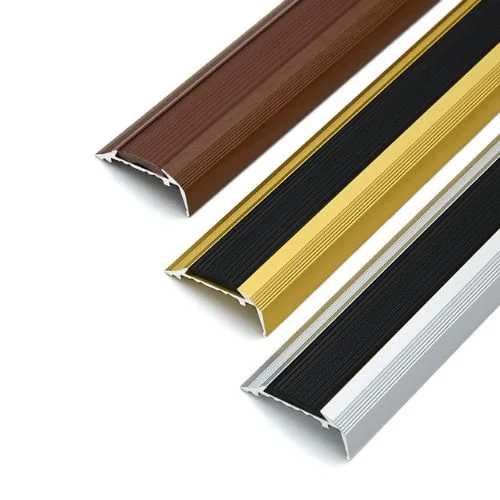
A rubber insert can provide additional grip and a visual contrast between the stair edge and surrounding flooring.
The aluminum base supplies structural support, while the insert provides the walking surface.
Depending on the profile, inserts may also be replaceable. This can be useful in high-traffic projects because a worn insert may be renewed without replacing the complete aluminum base.
Aluminum Stair Nosing with Abrasive Insert
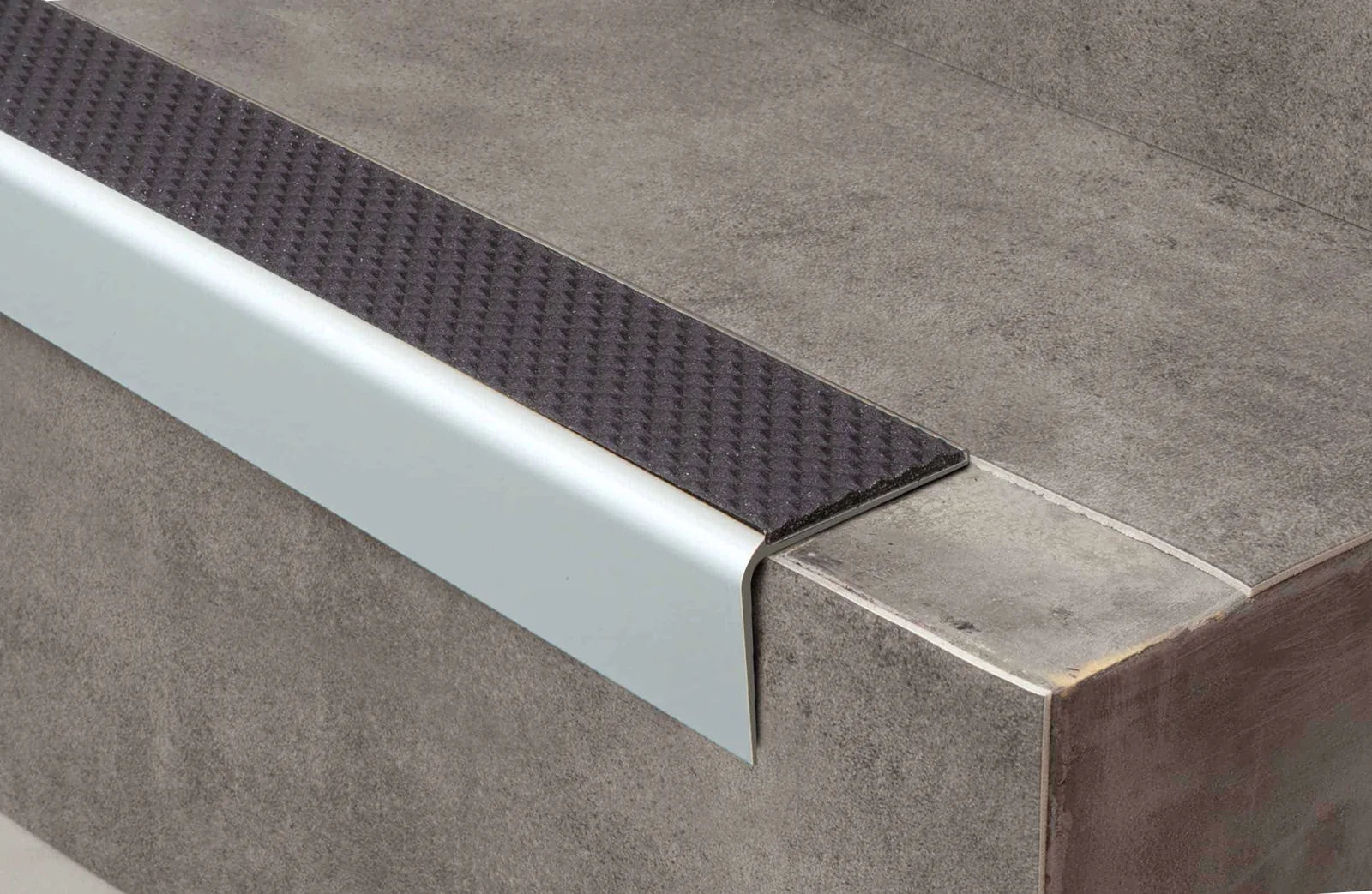
For environments where strong slip resistance is required, profiles can incorporate abrasive inserts such as carborundum.
These designs are frequently considered for heavily used stairways, entrances, public facilities, and some outdoor applications.
The abrasive section should be selected according to the project’s required slip resistance, cleaning procedures, environmental exposure, and applicable standards.
Extruded Grooved Aluminum Stair Nosing
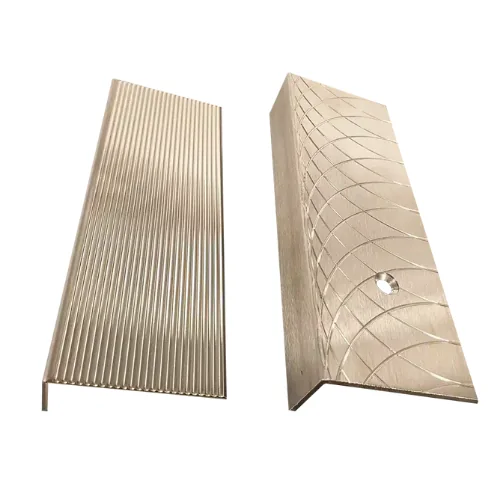
Some applications do not require a separate insert.
Instead, the aluminum tread surface itself is formed with grooves, ribs, or knurling.
This produces a relatively simple construction with fewer separate components.
It can be a practical choice when moderate grip, easy maintenance, and a clean architectural appearance are priorities.
Aluminum Stair Nosing Compared with Other Materials
Aluminum is not the only stair nosing material available.
The most suitable choice depends on the application.
| Material | Main Advantages | Typical Considerations | Common Applications |
|---|---|---|---|
| Aluminum | Lightweight, corrosion resistant, easy to fabricate, wide range of finishes | Can dent under severe concentrated impact | Offices, schools, retail, hotels, general commercial projects |
| Stainless Steel | High strength and excellent wear resistance | Heavier, harder to cut, generally higher cost | Transportation, industrial and demanding commercial areas |
| Brass | Distinctive appearance and good durability | Higher material cost and changing surface patina | Hotels, heritage interiors, premium projects |
| Rubber | Good grip and quieter underfoot | Usually less rigid than metal profiles | Indoor institutional and residential stairs |
| PVC | Lightweight and economical | Lower resistance to heavy mechanical wear | Light-duty indoor applications |
For many general commercial applications, aluminum stair nosing provides a useful balance between durability, installation efficiency, appearance, and cost.
However, extremely aggressive environments or stairs exposed to heavy carts, industrial equipment, or strong chemicals may justify stainless steel or another specialized material.
Material choice should always follow actual operating conditions.
How to Choose Aluminum Stair Nosing for a Project
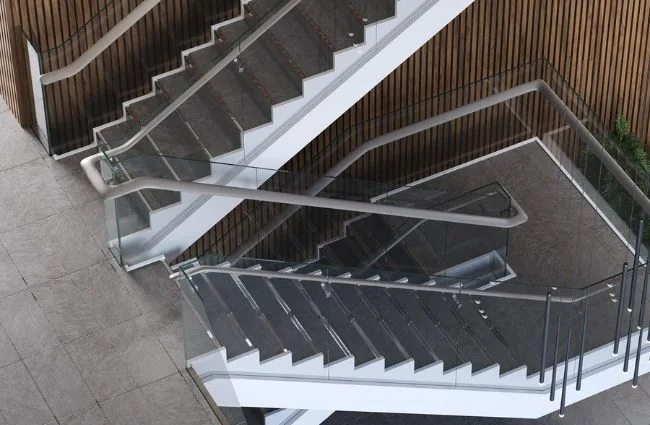
Selecting a profile simply because its color matches the floor is not enough.
Several technical factors should be reviewed first.
Check the Stair Substrate
Identify whether the stairs are made or finished with:
- Concrete
- Ceramic or porcelain tile
- Natural stone
- Timber
- Carpet
- Vinyl or resilient flooring
Different substrates require different fixing systems and profile shapes.
Measure the Stair Edge Carefully
Check tread depth, riser geometry, flooring thickness, edge radius, and available fixing area.
For tile-in systems, the profile height should be compatible with the tile and adhesive layer.
For retrofit profiles, make sure the nosing sits securely against both the tread and front edge without rocking.
Consider Traffic Level
A lightly used residential staircase has very different requirements from a school or transportation facility.
As traffic increases, give greater attention to:
- Aluminum wall thickness
- Profile rigidity
- Insert durability
- Mechanical fixing
- Wear resistance
- Ease of replacing inserts
For heavy commercial use, choosing a slightly stronger aluminum stair nosing profile at the specification stage can reduce maintenance problems later.
Review Slip Resistance
Do not assume that every grooved metal surface provides the same level of grip.
For areas with moisture, dust, outdoor exposure, or heavy traffic, consider a profile with a dedicated anti-slip insert or tested anti-slip surface.
Relevant accessibility and building requirements also vary by region, so local specifications should always be checked before final selection.
Correct Installation Matters as Much as Profile Quality
Even high-quality aluminum stair nosing will not perform correctly if the substrate is uneven or the fixing method is unsuitable.
Basic installation normally involves the following steps.
1. Prepare the Stair Edge
Remove dust, oil, loose material, old adhesive, and other contamination.
The surface should be solid, dry, and reasonably level.
Small defects in concrete or timber should be repaired before the profile is installed.
2. Measure Every Step
Do not assume every stair has exactly the same width.
Measure each tread individually, particularly in renovation projects and older buildings.
3. Cut the Aluminum Profile
Aluminum is relatively easy to cut with appropriate metal-cutting equipment.
After cutting, remove burrs and sharp edges with a file.
This small step improves both handling safety and the quality of the finished joint. The manufacturer’s stair-nosing installation guidance similarly recommends measuring individual steps, dry fitting profiles, and smoothing freshly cut aluminum edges before final installation.
4. Dry Fit Before Fixing
Position the aluminum stair nosing without adhesive first.
Check:
- Length
- Edge alignment
- Contact with the substrate
- Screw-hole positions
- Adjacent flooring
- End conditions
Correcting a measurement is much easier before adhesive has been applied.
5. Secure the Profile
Depending on the design, installation may use:
- Construction adhesive
- Screws
- Anchors
- Adhesive plus screws
- Tile adhesive for embedded profiles
The fixing system should match the substrate and expected traffic.
For high-traffic stairs, mechanical fixing combined with an appropriate adhesive may provide better stability than relying on a weak adhesive alone.
Manufacturer’s Tip: The profile should sit firmly against the stair without gaps or movement. If it rocks during dry fitting, correct the substrate before final fixing instead of forcing the profile into place.
Where Is Aluminum Stair Nosing Commonly Used?
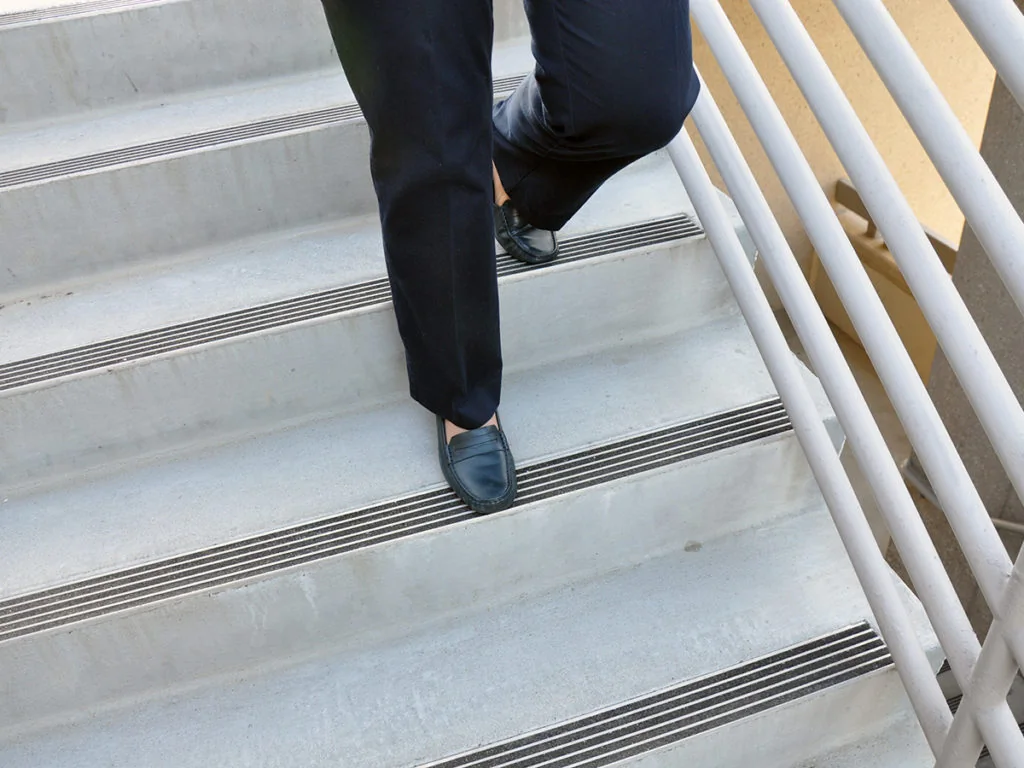
Because aluminum profiles can be produced in many configurations, they are suitable for a broad range of projects.
Typical applications include:
- Office buildings
- Shopping centers
- Hotels
- Restaurants
- Schools and universities
- Apartment buildings
- Hospitals
- Public buildings
- Sports facilities
- Warehouses
- Transportation facilities
- Residential staircases
The product is particularly useful where stairs require both edge protection and a clean architectural finish.
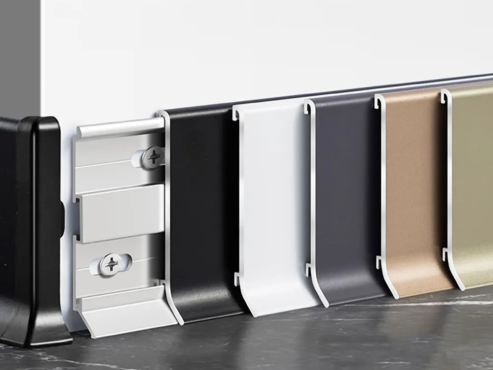
For projects with consistent interior details, the finish of aluminum stair nosing can also be coordinated with aluminum tile trims, skirting profiles, floor transition strips, and other architectural profiles.
Maintenance and Long-Term Performance
One advantage of aluminum stair profiles is relatively simple maintenance.
Routine care usually includes:
- Removing dust and grit from grooves
- Cleaning inserts according to their material
- Checking screws periodically
- Inspecting adhesive joints
- Replacing heavily worn anti-slip inserts
- Checking for impact damage
Avoid aggressive cleaning chemicals unless compatibility with the aluminum finish has been confirmed.
In high-traffic buildings, periodic inspection is more useful than waiting until the profile becomes loose.
A loose aluminum stair nosing should be repaired promptly because movement can enlarge screw holes, damage the underlying edge, or create an uneven walking surface.
Frequently Asked Questions
Is aluminum stair nosing suitable for heavy foot traffic?
Yes, correctly specified aluminum stair profiles are widely used in busy commercial environments. The profile thickness, alloy, fixing method, surface design, and anti-slip insert should be selected according to the actual traffic level.
For exceptionally severe mechanical loading, stainless steel or another heavy-duty system may be more appropriate.
Can aluminum stair nosing be installed on existing stairs?
Yes. Surface-mounted profiles are specifically useful for retrofit work.
They can often be installed over existing concrete, tile, wood, or other solid substrates after proper surface preparation.
Is anodized aluminum better for stair nosing?
Anodizing provides additional surface protection and creates a durable decorative finish.
It is particularly useful where the stair profile is exposed to frequent handling, moisture, or more demanding environmental conditions.
Can aluminum stair nosing be used with tile?
Yes.
Tile-in profiles can be embedded during installation, while surface-mounted profiles can be used for certain completed tiled staircases.
For new tiled stairs, embedded systems often create the cleanest integrated finish.
Can aluminum stair nosing include anti-slip inserts?
Yes. Rubber, PVC, abrasive, and carborundum inserts are available in different profile systems.
The insert should be selected according to traffic, environmental conditions, maintenance requirements, and applicable slip-resistance requirements.
How should aluminum stair nosing be specified for bulk projects?
Provide the supplier with as much technical information as possible, including:
- Profile drawing
- Stair dimensions
- Flooring material
- Aluminum alloy or temper requirements
- Length
- Finish
- Color
- Insert material
- Fixing method
- Required quantity
- Packaging requirements
- Relevant testing or compliance requirements
For large projects or distribution programs, reviewing physical samples before bulk production is also advisable.
Conclusion
High-traffic staircases need more than an attractive finished edge. They need protection against repeated abrasion, impact, and daily use.
Aluminum stair nosing provides a practical solution by reinforcing the most exposed part of the stair while allowing designers and contractors to incorporate anti-slip surfaces, different finishes, and installation systems into the same profile.
Its lightweight construction, corrosion resistance, easy fabrication, and broad range of extruded designs make it suitable for many commercial and architectural applications.
For standard projects, a well-selected aluminum stair nosing can provide reliable long-term edge protection without making installation unnecessarily complicated. For large-volume or specialized projects, working with a manufacturer that can control profile dimensions, finishes, inserts, and custom extrusion requirements can also help ensure that the finished product matches the technical needs of the staircase.