A tiled surface can be well installed and still look unfinished if the exposed edge is not handled correctly. The edge is also one of the areas that can chip when it receives regular contact. This is why the edge finish should be considered before installation rather than treated as a small detail at the end.
Two common choices are ceramic tile trim and metal tile trim. Ceramic trim is often selected when the edge should stay visually close to the tile. Metal trim creates a separate protective line and offers more freedom in profile shape and finish.
This guide explains the practical differences between the two materials and the common profile shapes available, helping you choose an edge finish that suits both the tile and the application.
What Is Tile Trim?
Tile trim is a finishing piece used to cover an exposed tile edge. It hides the raw side of the tile, gives the installation a more complete appearance, and can reduce direct impact on vulnerable edges.
The trim may be made from ceramic, porcelain, aluminum, stainless steel, or other materials. The material affects both the appearance and the way the finished edge performs.
Ceramic tile trim is usually produced as a shaped tile piece and installed as part of the tiled surface. Metal tile trim is normally a separate profile. Many metal designs include an anchoring section that is fixed beneath or beside the tile while the visible section forms the finished edge.
The basic difference is easy to understand: ceramic usually continues the tile surface, while metal creates a more defined border.
Ceramic Tile Trim vs. Metal Tile Trim: What Is the Main Difference?
The choice is not simply traditional versus modern.
Ceramic is often preferred when close color and surface coordination matter most. Metal is more suitable when the edge needs additional protection, a precise profile, or a finish that can be repeated across different tile ranges. Ceramic or porcelain trims and metal profiles also differ in durability and profile flexibility.
| Factor | Ceramic Tile Trim | Metal Tile Trim |
|---|---|---|
| Appearance | Blends closely with the tile | Creates a defined edge |
| Impact protection | Moderate | Generally stronger |
| Shape options | Depends on the tile collection | Broad profile choice |
| Finish choice | Limited by available tile finishes | Many surface finishes |
| Customization | Relatively limited | Flexible, especially with aluminum |
| Future sourcing | Depends on tile availability | Easier with standard profiles |
This difference becomes more important as project scale increases. A matching ceramic edge can work very well for a decorative wall, while a repeated project specification may benefit more from a standard metal profile.
Common Ceramic Tile Trim Shapes
Ceramic trims are available in different shapes, and each one creates a slightly different edge.
Tile manufacturers commonly offer coordinated pieces such as bullnose, quarter round, and narrow liner trims. However, the exact options depend on the tile collection.
Bullnose Ceramic Tile Trim
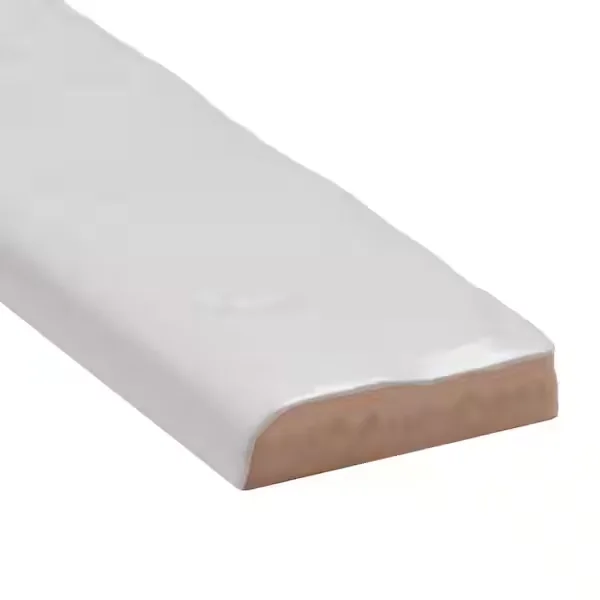
Bullnose is one of the most familiar ceramic edge finishes.
It is usually a flat tile piece with one rounded finished edge. This removes the sharp appearance of a square cut and allows the tiled surface to end more naturally.
Bullnose ceramic tile trim works well when you want the edge piece to remain clearly connected to the main tile design.
Some collections also include double bullnose pieces. These have two finished edges and can be useful where two sides of the piece remain visible.
The main benefit of bullnose is simplicity. It gives the edge a finished appearance without introducing another material.
Quarter Round Tile Trim
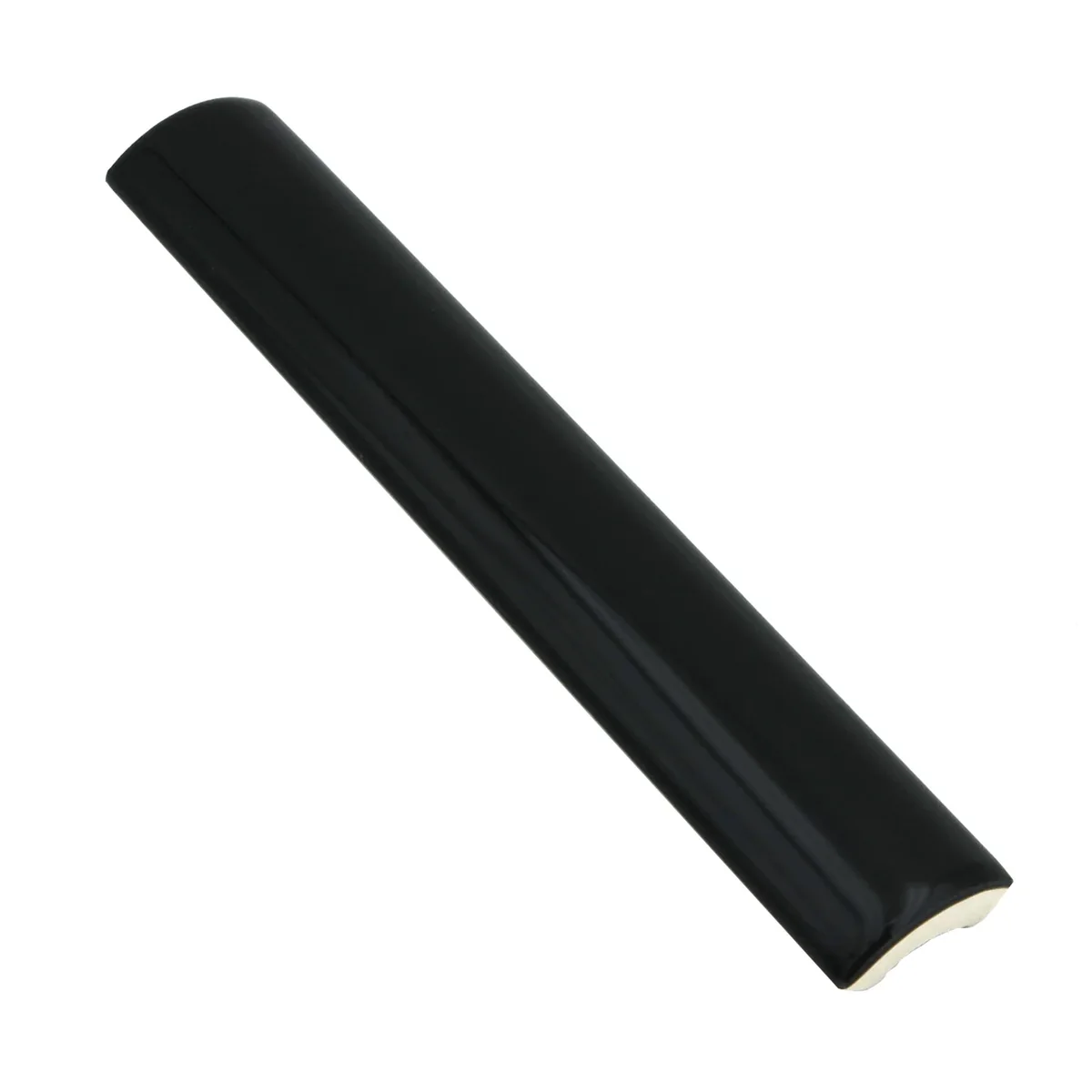
Quarter round has a more pronounced curved profile.
Instead of simply rounding the edge of a flat tile, the piece forms a small rounded section along the boundary. This gives the edge more depth and makes the trim itself more visible.
Quarter round pieces can work particularly well with traditional ceramic wall tiles or designs where a softer edge is preferred. Coordinating quarter-round pieces and corner components are available in established ceramic tile ranges.
Because the profile projects further than a bullnose, it becomes more of a decorative detail.
Pencil and Liner Trim
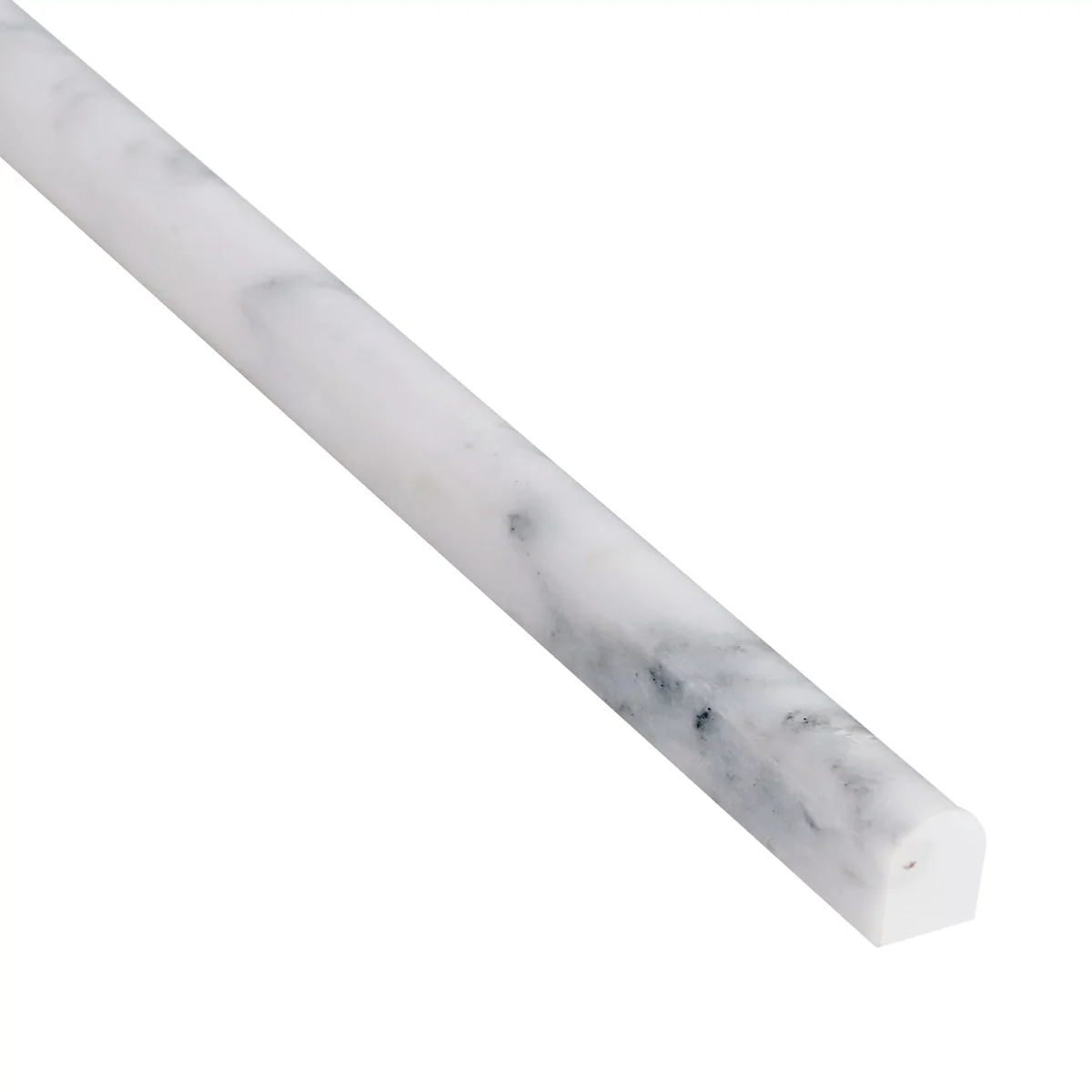
Pencil or liner trims are narrow pieces used to create a fine border.
They can finish an edge or provide a small decorative break in a tiled surface. Their narrow form makes them useful when a full-width bullnose would appear too heavy.
These styles are more decorative than protective.
They also demonstrate one important limitation of ceramic trim: the available shape, size, and color depend on what the tile manufacturer produces for that particular collection.
Common Metal Tile Trim Shapes
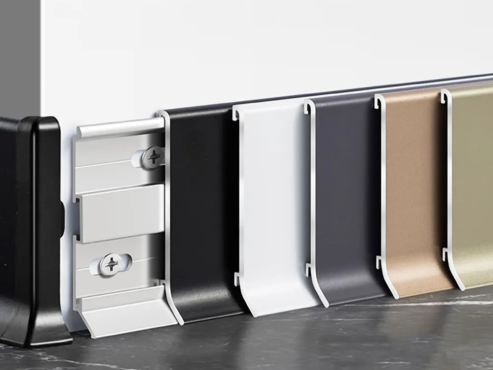
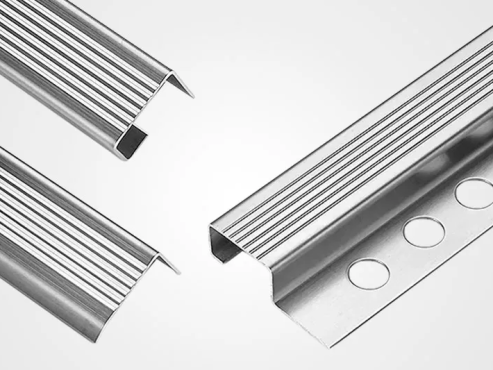
Metal profiles provide more freedom in cross-section.
The visible edge may be very narrow, rounded, or square, while much of the fixing section remains hidden after installation. Straight, round, and square profiles are among the common forms used for tile finishing.
For most projects, these three shapes cover a large share of requirements.
Straight or L-Shaped Metal Tile Trim
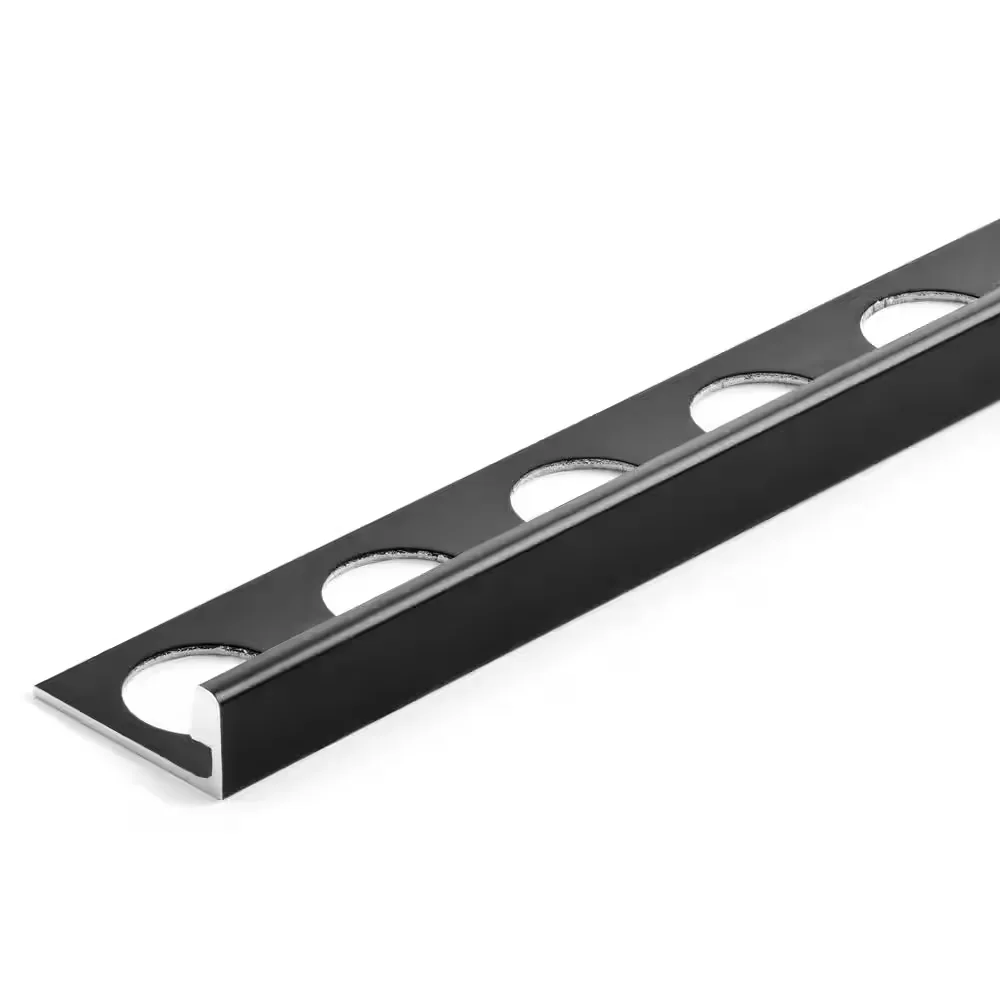
A straight profile creates a simple line along the side of the tile.
The basic L-shaped design is one of the least visually intrusive forms of metal tile trim. Once installed, only a narrow section normally remains visible.
This makes it useful when the purpose is to protect and finish the edge without turning the trim into a major decorative feature. Straight-edge profiles are commonly used where a clean, minimalist edge is required.
For distributors, straight profiles are also practical because a relatively simple design can work with many tile styles.
Round-Edge Metal Tile Trim
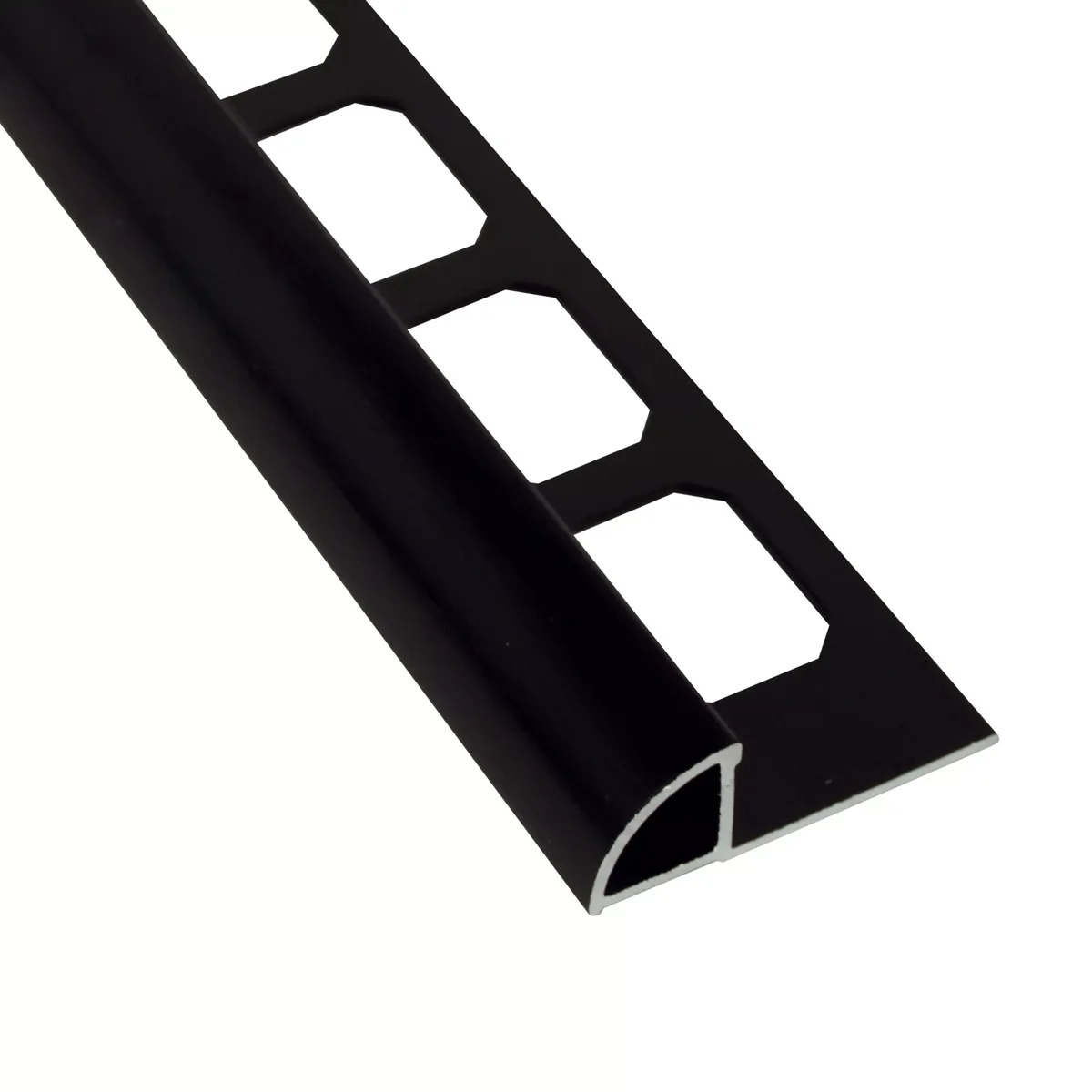
Round-edge trim has a curved visible face.
The rounded section softens the appearance of the tile boundary and reduces the visual sharpness of the corner. Round-edge profiles are commonly used where a softer transition is preferred.
This profile can be a good alternative to ceramic bullnose when the project needs a rounded edge but also requires the durability of metal.
It is more noticeable than a basic straight profile, so the finish should be coordinated with the surrounding design.
Square-Edge Metal Tile Trim
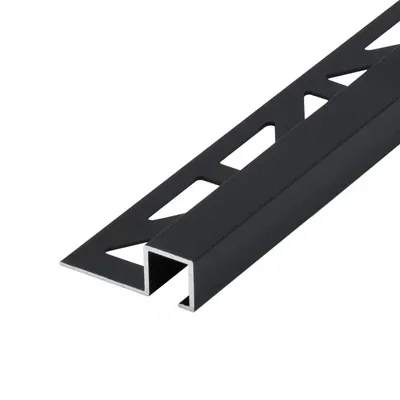
Square profiles create a more defined architectural line.
The visible section has a straight, box-like form that frames the edge rather than hiding it. This makes square metal tile trim suitable for modern tile layouts where clean geometric details are part of the design.
Compared with round profiles, square trims usually have a stronger visual presence.
They can work particularly well when other metal details in the project also use straight lines.
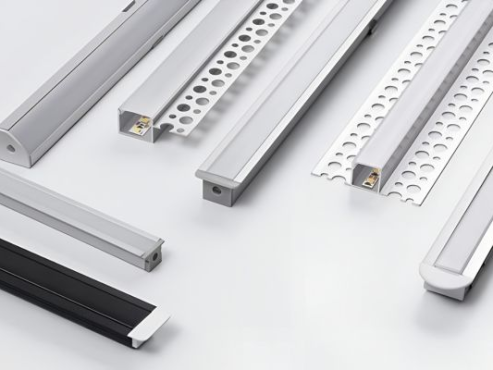
Other Metal Profile Designs
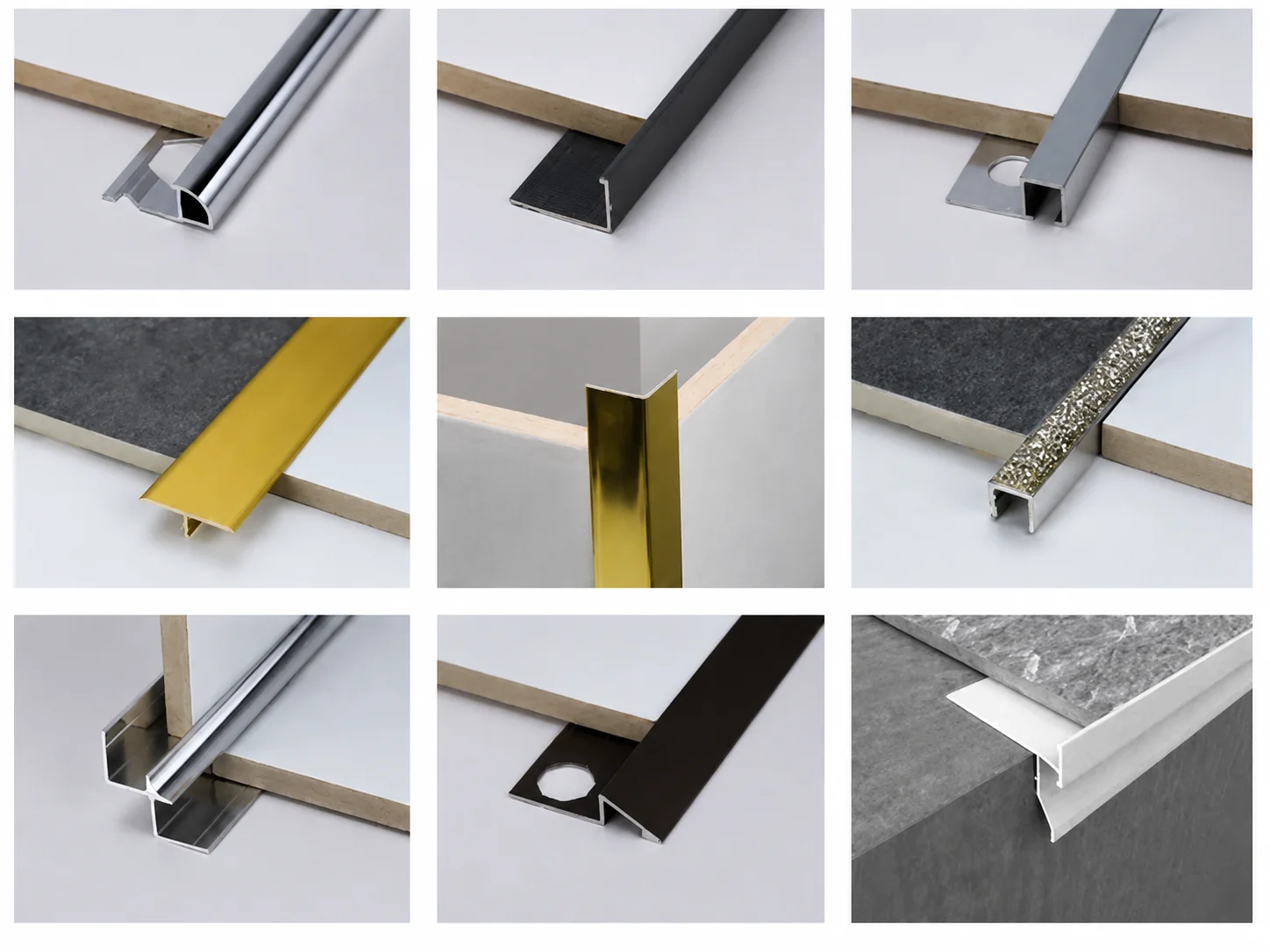
Metal profiles are not limited to these basic shapes.
Different sections can be developed for special corners or decorative requirements. Aluminum is particularly suitable for this because extrusion allows the profile cross-section to be controlled during production.
However, a custom profile should have a clear purpose. If a standard straight or square profile already meets the project requirement, adding unnecessary complexity may only increase tooling and purchasing costs.
Which Option Provides Better Edge Protection?
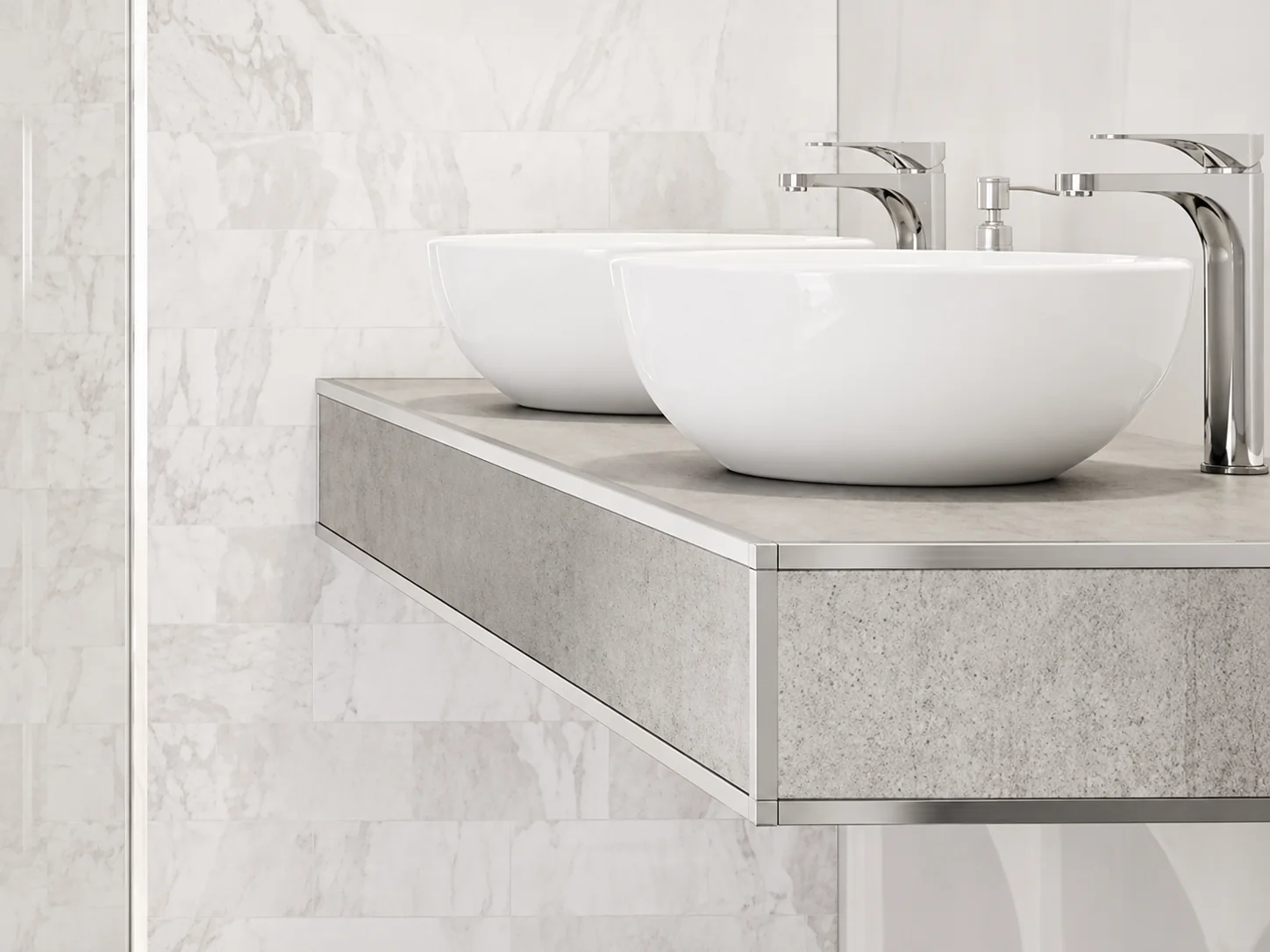
If protection is the main concern, metal normally has the advantage.
Ceramic and porcelain have hard surfaces, but exposed or cut edges remain more vulnerable to impact. A ceramic finishing piece removes the raw edge, but the trim itself is still a brittle tile product. The reference material comparison similarly rates ceramic or porcelain below aluminum and stainless steel in durability.
For this reason, ceramic tile trim performs best where heavy impact is not expected. It provides a proper finished edge for normal use, but it should not be treated as a metal guard.
Metal tile trim creates a more resistant barrier between the tile and outside contact.
Aluminum is suitable for many general architectural applications. Stainless steel can be considered where greater resistance is required.
This does not mean every edge needs metal. On a lightly used decorative wall, additional impact resistance may provide little practical benefit.
The material should match the actual level of exposure.
Which Tile Trim Looks Better?
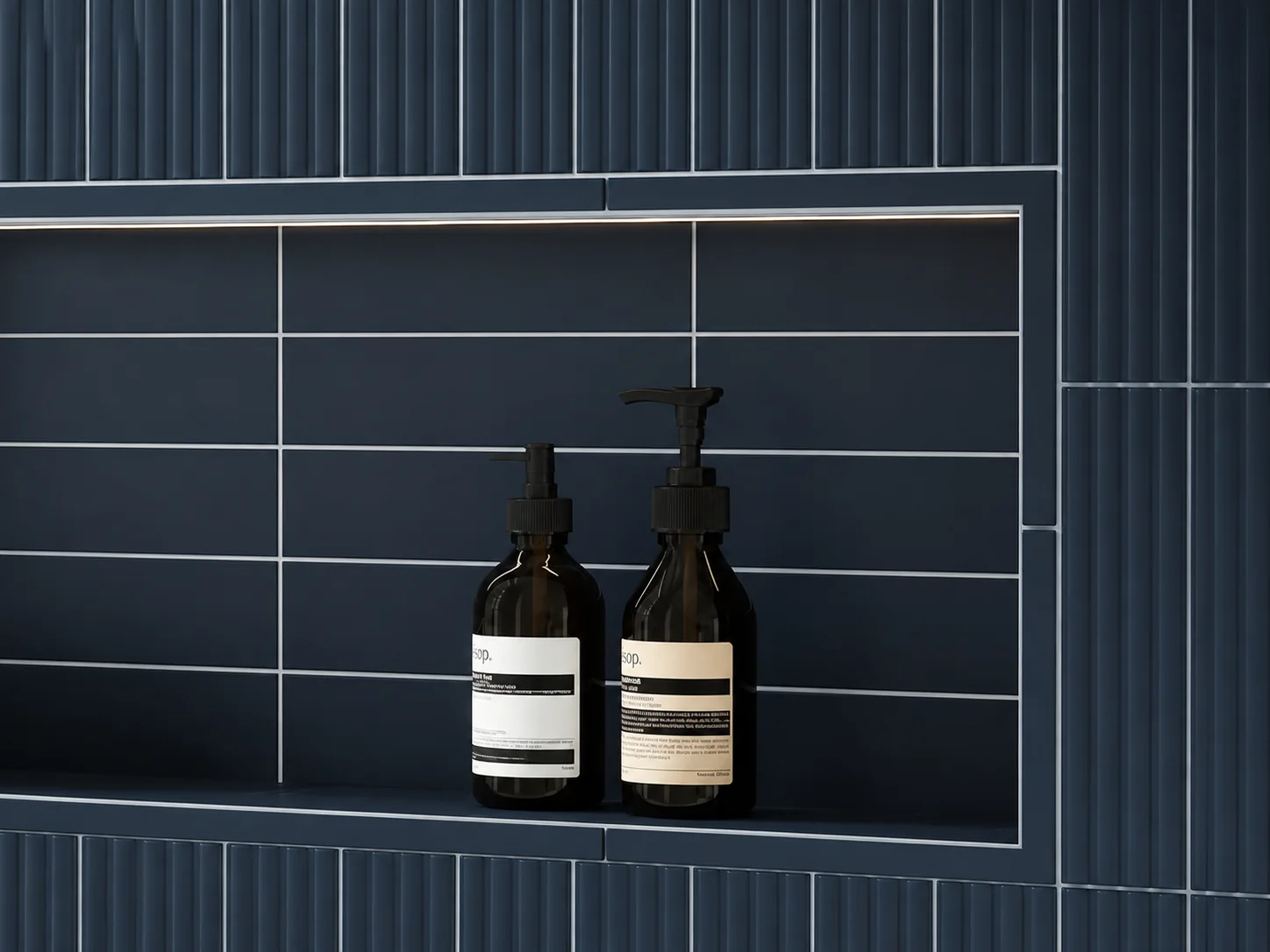
There is no universal answer because the materials create different visual effects.
Ceramic usually blends in.
When the trim comes from the same tile range, the color and surface can continue around the edge with little contrast. This is often the main reason for choosing ceramic tile trim.
Metal normally defines the boundary.
A narrow brushed, anodized, or coated line can frame the tile and coordinate with other details in the space.
The design decision can therefore be simplified:
- Choose ceramic when you want the edge to remain part of the tile.
- Choose metal when you want a more clearly defined finishing line.
Neither approach is more professional by itself. The important question is whether the trim supports the intended design.
How Does Installation Differ?
The two materials also require slightly different handling.
Installing Ceramic Tile Trim
Ceramic trim is installed much like the surrounding tile.
The piece is positioned in tile adhesive and aligned with the main surface. Grout is then used as part of the finished tile layout.
Cutting requires care. Shaped ceramic pieces can chip if the wrong cutting method is used.
The installer should also check how the trim meets corners before fixing the surrounding tiles. A small alignment problem can become much more noticeable at the finished edge.
Installing Metal Tile Trim
Tile-in metal profiles are normally planned before the edge tile is fixed.
The anchoring section is placed into the adhesive or mortar, and the tile is installed against the visible trim edge. Embedded metal legs are commonly used in tile-in architectural profiles to create a stable connection.
Accurate sizing is important.
The profile needs to suit the actual tile thickness so that the finished surface sits correctly against the trim.
Manufacturer’s Tip: Check the real tile thickness with a sample before confirming a bulk trim order. Nominal dimensions are useful for planning, but checking the actual material gives a more reliable result.
Both systems work well when they are planned early. Problems are more likely when the trim is selected after the tile layout has already been fixed.
For a concise practical walkthrough, read our guide to installing metal Tile Trim correctly.
Maintenance and Future Replacement
Ceramic trim is maintained in much the same way as the surrounding tile. This keeps cleaning simple and gives the installation a consistent surface.
The bigger issue can be replacement.
A ceramic tile collection may change or be discontinued. If a matching trim piece is damaged several years later, finding the same shape and finish may become difficult. This sourcing limitation is also noted when ceramic and porcelain trim are compared with metal alternatives.
Metal profiles are less dependent on one tile collection.
A standard aluminum finish can work with several tile designs, making it easier to maintain the same edge specification across different project stages.
Decorative metal surfaces still require suitable cleaning. Abrasive products should be avoided when they could scratch the finish.
For larger developments, future availability is worth considering during specification rather than only when repairs are required.
When Is Ceramic Tile Trim the Better Choice?
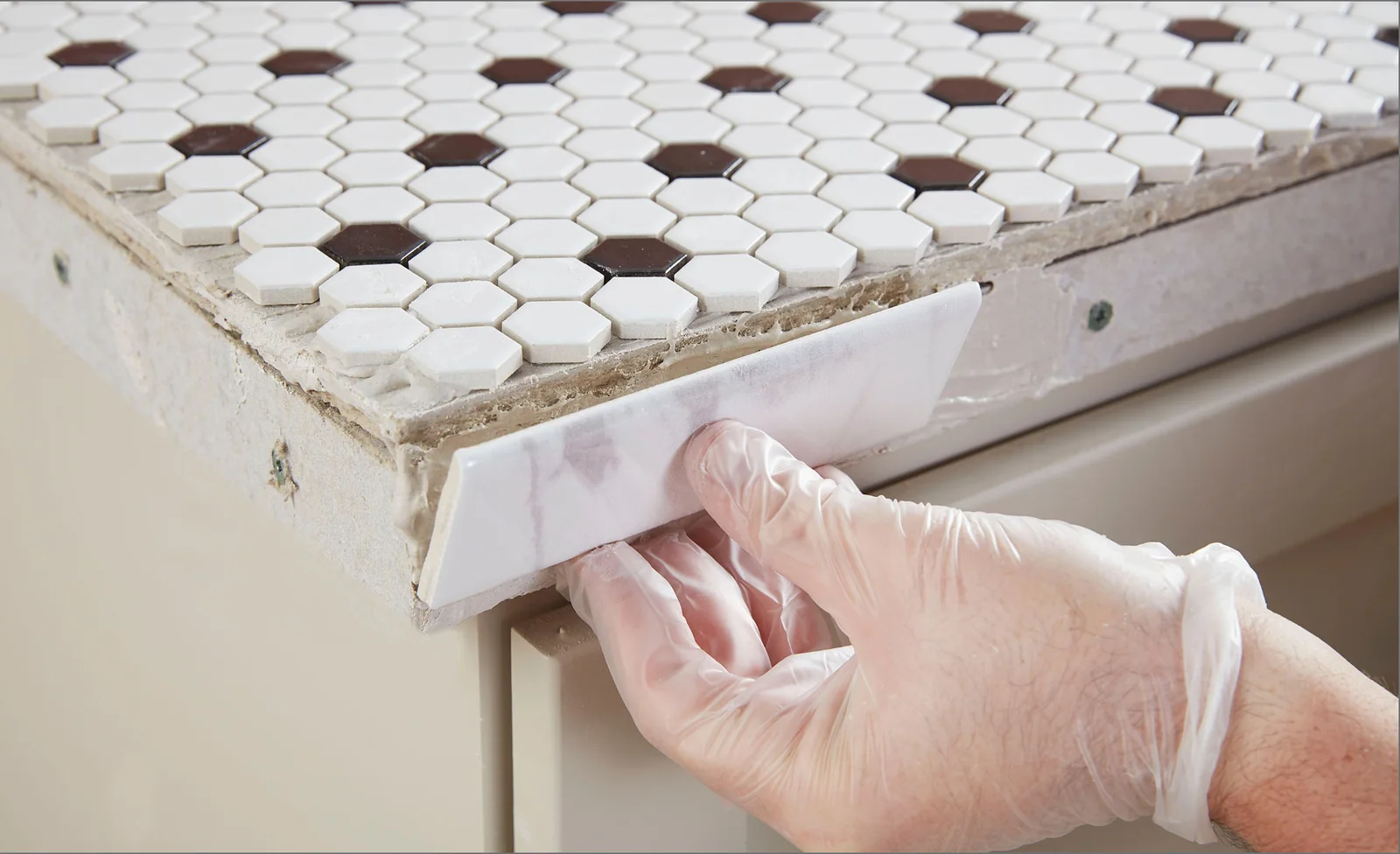
Ceramic tile trim is a good option when visual matching is the main priority and the edge does not require heavy protection.
It is particularly suitable when:
- the selected tile collection already has a matching edge piece;
- the design requires a continuous ceramic appearance;
- the edge has relatively low impact exposure.
For example, a decorative tiled wall may look more natural with a coordinated bullnose than with a contrasting metal line.
If the matching ceramic piece already solves the design requirement, there is no reason to introduce metal simply because it is stronger.
When Is Metal Tile Trim the Better Choice?
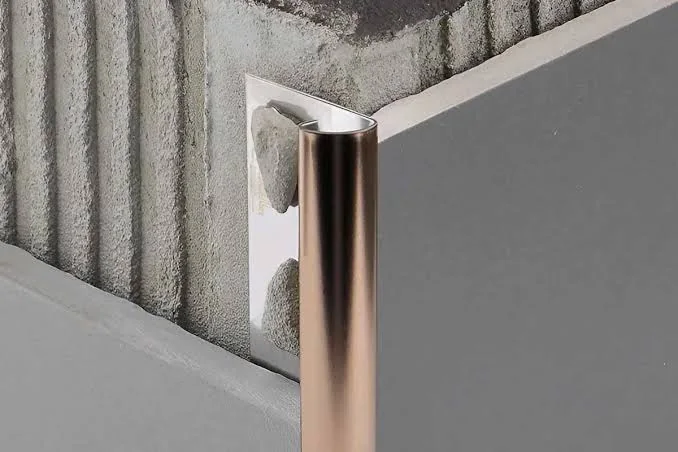
Metal becomes more practical when protection, repeatability, or profile flexibility has greater importance.
Consider metal tile trim when:
- the edge receives regular contact;
- one trim design needs to work with several tile ranges;
- the project requires a specific profile or finish.
Aluminum provides additional flexibility because it can be extruded into different sections and finished by anodizing, brushing, polishing, or powder coating.
For repeated projects, using one consistent profile can also make specification and purchasing easier.
The key advantage is not simply that metal is stronger. It is that the profile can be controlled more independently from the tile itself.
Ceramic Tile Trim or Metal Tile Trim for Wet Areas?
Both materials can work in wet-area tile installations when they are correctly specified.
Ceramic has the advantage of remaining visually consistent with the tile. When a matching edge piece is available, it provides a straightforward finish.
Metal provides more physical protection, but the material and surface treatment should suit the environment.
Aluminum is widely used for general interior tile profiles, while stainless steel offers higher durability for more demanding applications.
The important point is not to assume that every wet area requires the same solution.
Consider the actual exposure, cleaning conditions, and expected use.
What Should You Check Before Ordering?
Before placing an order, start with the edge condition rather than the trim catalog.
For ceramic products, check whether the required shape is available in the selected tile collection. Also confirm that enough matching pieces can be supplied for the full project.
For metal tile trim, three points deserve particular attention:
- actual tile thickness;
- profile shape;
- surface finish.
If several tile types are being used, check whether one trim depth can work with all of them.
We recommend approving a physical sample before bulk production when fit or finish is important. A small test at this stage can prevent a much larger issue during installation.
Standard or Custom Metal Tile Trim?
A standard profile is usually the most efficient choice when it already meets the project requirements.
Custom metal tile trim becomes useful when a project needs a special cross-section, a different visible width, or a profile intended for repeated OEM supply.
As a direct aluminum manufacturer, Chenhao Aluminum Business supplies both standard and customized profiles. Custom extrusion, OEM service, bulk production, and project-specific finishes can be provided when required.
Customization should solve a practical problem.
For example, adjusting a profile to suit a repeated tile thickness may be worthwhile for a distributor or large project. Creating a new extrusion only to make a very small visual change may not be necessary.
Stable dimensions and finish consistency are usually more important than making the profile complicated.
Conclusion
Both ceramic tile trim and metal tile trim can create a professional edge, but they solve the requirement in different ways.
Start with the application. Then consider the required appearance, edge exposure, and future supply.
For projects requiring aluminum tile profiles, Chenhao Aluminum Business provides factory-direct supply, stable bulk production, custom profiles, OEM service, and global shipping. Confirming the tile thickness and required profile shape before ordering is the most useful place to start.